By GPC News Desk
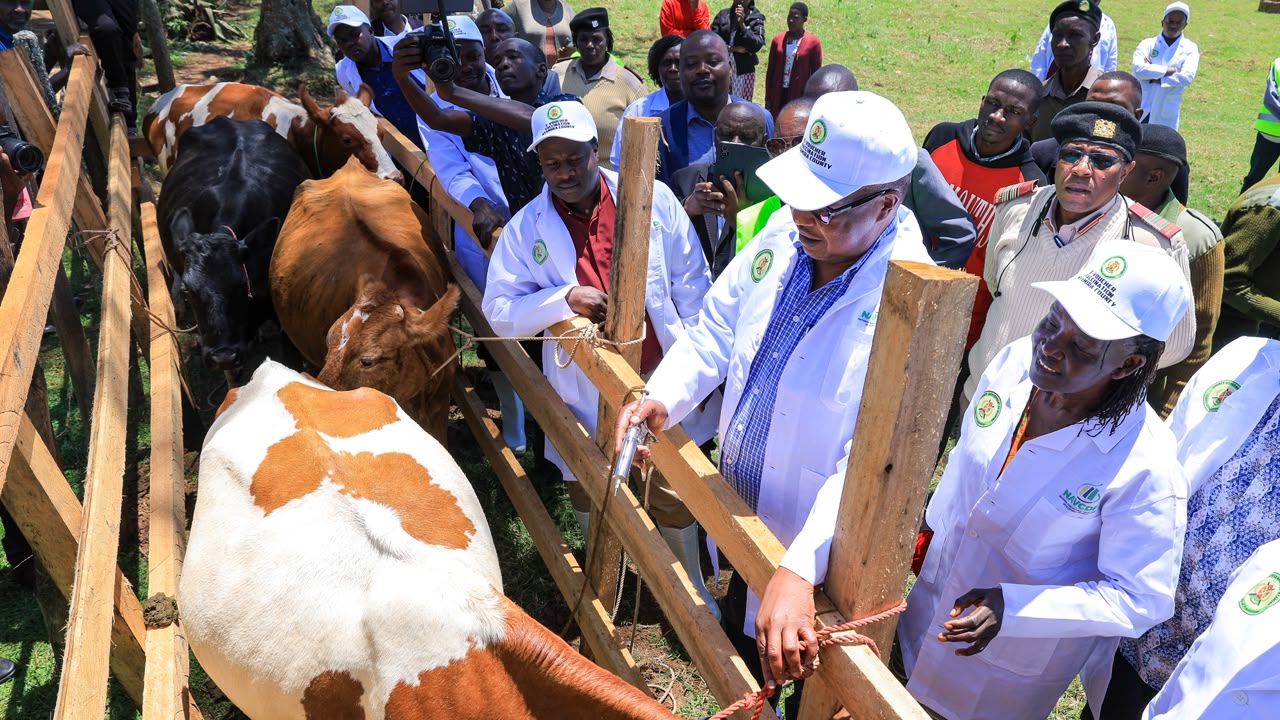
A two-month vaccination campaign targeting more than 113,800 cattle has been launched in Nyamira as the county steps up efforts to contain Foot and Mouth Disease (FMD).
Governor Amos Nyaribo launched the campaign on Tuesday at Riokenye Farm in Nyansiongo Ward, Borabu Sub-County, where he said the vaccination exercise would make disease prevention more accessible and affordable to farmers.
Also Read
Under the National Agricultural Value Chain Development Project (NAVCDP), the county will subsidise the cost of vaccination, with the government contributing Sh110 per animal while farmers pay Sh50.
“Our officers are moving from farm to farm for the next two months vaccinating our cows,” Nyaribo said, urging farmers to register their animals and ensure they are vaccinated.
The governor also called on farmers to encourage their neighbours to participate in the campaign, saying collective vaccination would help prevent the spread of the disease.
“This is how we will protect all our cattle and contain this deadly disease,” he said.
Foot and Mouth Disease is a highly contagious viral disease affecting cloven-hoofed animals, including cattle, sheep, goats and pigs.
Outbreaks can cause significant economic losses through reduced productivity, restrictions on livestock movement and disruption of livestock markets.
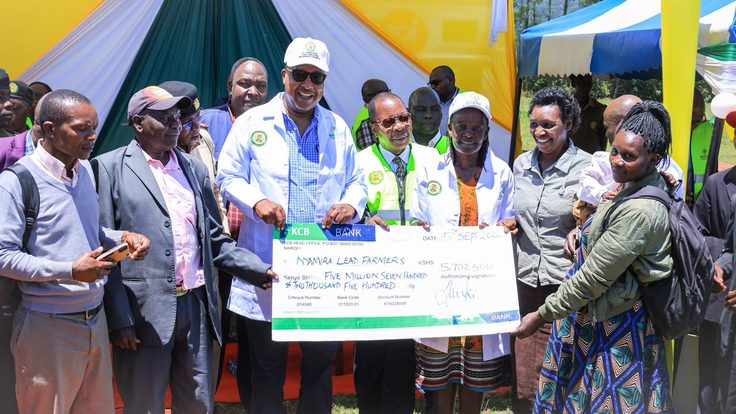
The vaccination campaign was launched alongside the disbursement of Sh32.6 million in inclusion and enterprise grants to farmer organisations, as well as Sh3.8 million for 40 Farmer-Led Demonstration Farms.
Of the Sh32.6 million, Sh11.3 million will go to 13 ward-based Community SACCOs through matching grants, while Sh17.1 million will be issued as Enterprise Development Grants to Kemera and Bisembe Farmers Cooperative Societies.
Another Sh4.2 million will be provided as inclusion grants to nine Farmer Producer Organisations (FPOs).
The 40 demonstration farms will focus on dairy and coffee value chains, with the county government saying the initiative is intended to promote improved technologies and climate-resilient agricultural practices.
Nyaribo said the investments were designed to address challenges facing farmers, including livestock diseases, limited access to finance, poor aggregation and marketing, low levels of value addition and climate-related risks.
He urged beneficiary SACCOs to use the funds responsibly, strengthen governance and savings mobilisation, and provide affordable agricultural financing to their members.
The governor also called for greater inclusion of women and young people in accessing opportunities created through the programme.
“We are moving from fragmented production to organised farmer institutions and from production of raw commodities to value addition,” Nyaribo said.
He said the county administration would continue placing farmers at the centre of its agricultural transformation agenda, with investments in livestock health, farmer institutions, finance, technology and market access.