By Ongaga Ongaga
A neurosurgical partnership between Jaramogi Oginga Odinga Teaching and Referral Hospital (JOOTRH) and the Kisumu Neuroscience Initiative has surpassed a major milestone, with 700 brain and spine surgeries performed since the collaboration began in 2017.
The partnership is now entering a new phase focused on building sustainable local capacity, as 41 patients undergo assessment and treatment during an ongoing neurosurgical camp that runs until September 11, 2026.
Also Read
While the collaboration has traditionally focused on giving patients access to highly specialised brain and spine procedures, the partners are now seeking to establish a long-term model for training Kenyan specialists and strengthening neurosurgical services in the region.
The expanded partnership brings on board the Foundation for International Education in Neurological Surgery (FIENS), which is working with JOOTRH and the Kisumu Neuroscience Initiative to move the programme beyond periodic surgical camps and towards sustained development of local neurosurgical expertise.
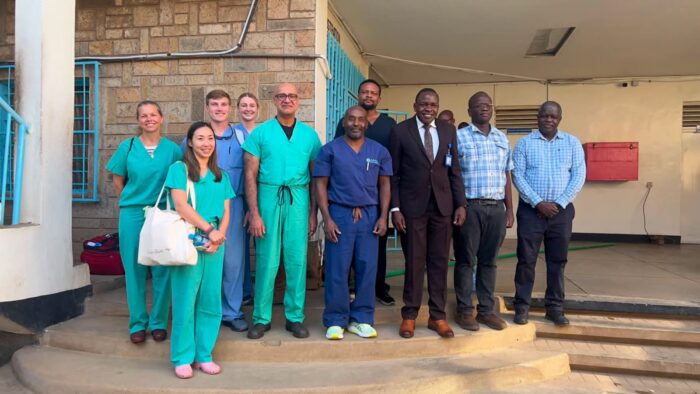
International specialists, including experts from New York, are working alongside JOOTRH clinicians during the current camp, with representatives of medical technology company Medtronic also participating.
The collaboration is expected to facilitate the introduction of advanced neurosurgical technologies while creating structured training opportunities for local doctors and other healthcare professionals.
At the heart of the new strategy is the planned establishment of residency and fellowship programmes in neurosurgery.
The programmes are intended to produce home-grown specialists capable of providing complex brain and spine care without patients having to travel outside the region or country.
The partners also plan to strengthen knowledge and skills exchange through bilateral training opportunities, allowing local surgeons and registrars to gain international exposure to emerging technologies and surgical techniques before returning to apply the skills in Kenya.
The initiative will further support the adoption of advanced medical technologies, including plans to modernise JOOTRH’s Health Management Information System (HMIS) with artificial intelligence-assisted clinical decision-support capabilities.
The partners are also exploring longer-term possibilities such as robotic-assisted surgery as part of efforts to position the hospital as a centre for advanced neurosurgical care.
Infrastructure upgrades are another priority, with plans to improve operating theatres, equipment and surgical beds to create a modern environment capable of handling increasingly complex neurosurgical procedures.
The latest camp has also introduced changes in patient management following challenges encountered during previous surgical missions.
Local anaesthesia and surgical teams established dedicated pre-operative screening clinics a week before the camp, allowing patients to undergo assessment and preparation ahead of surgery.
The approach is intended to minimise delays and enable eligible patients to move more efficiently from screening to treatment once the surgical team begins operating.
The renewed focus on long-term capacity building follows a courtesy call by the neurosurgical team to JOOTRH Chief Executive Officer Dr Joshua Clinton Okise.
The hospital and its partners are expected to sign formal Memoranda of Collaboration aimed at strengthening the partnership and securing long-term training opportunities for local healthcare professionals.
The neurosurgical team, led by Dr Bethwel Raore, is attending to patients with a wide range of neurological conditions, including brain tumours such as meningiomas, epilepsy, Chiari malformation, disc herniation, spondylosis, spinal stenosis, spinal fractures and syringomyelia, among other conditions affecting the brain and spine.
The camp has brought together a multidisciplinary team of neurosurgeons and other specialists from the United States and JOOTRH.
For patients, the partnership offers access to highly specialised treatment that might otherwise require travel outside the region. For local healthcare professionals, it provides hands-on exposure to advanced neurosurgical procedures and techniques.
With 700 procedures already completed, the partners say the next measure of success will extend beyond the number of patients treated.
The focus is now on how many specialists can be trained, how much expertise can be transferred and how much capacity can be created to ensure that advanced neurosurgical services remain available to patients in the region long after the visiting surgical teams leave.