By Cyprian Nyamwamu Mtumishi
On October 20, 2001, 25 years ago, Moi hounded us into Kamiti Maximum Prison.
On the Monday we were taken to Kamiti Maximum Prison, we were ferried from Gigiri Police Station to Court 1, the Magistrates’ Court where the current Supreme Court is located. In 2001, the Milimani Law Courts did not exist.
We had been taken to Gigiri after the situation at Kilimani Police Station became too tense and unbearable for the police. We were singing liberation songs, chants and choruses with such inspiration that it became impossible to contain us at Kilimani. A decision had to be made to move us to Gigiri Police Station, away from the Central Business District, to prevent easy access by the media and members of the human rights community by the evening of Mashujaa Day.
Comrades were overflowing at Kilimani. After spending the weekend at Gigiri, we were brought to court under a heavy armed police escort, as though we were guerrilla rebels planning to overthrow the government.
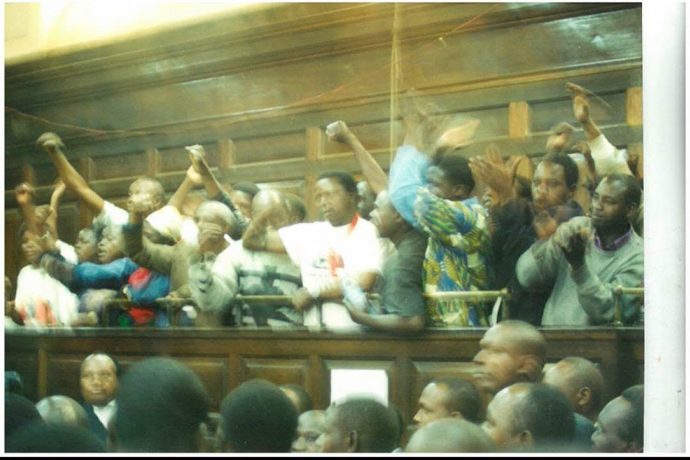
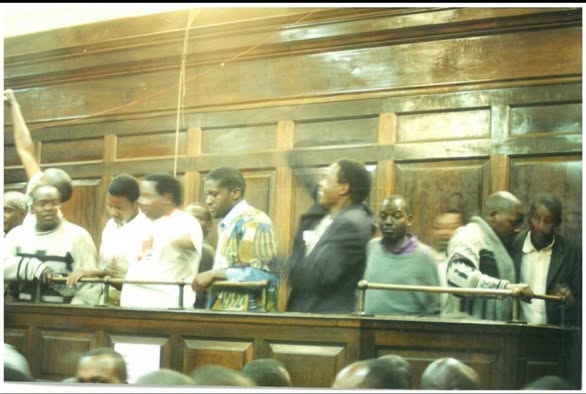
On emerging from the stinking basement cells into the courthouse, we could hear the powerful rendition of Wimbo wa Mapambano, the Anthem of the Struggle. The comrades had overwhelmed the court orderlies and the police resources deployed to the courts. The authorities could not stop them from arriving in large numbers and singing at the top of their voices.
The magistrate and the duty judge were thoroughly intimidated. Our cases were processed very quickly, after which each of us was slapped with a cash bail of KSh50,000. In 2001, KSh50,000 was equivalent to nearly KSh600,000 today, for each one of us. The expected cash bail at the time for participating in an illegal assembly was KSh5,000.
We soon discovered that the plan was to ensure that we were all taken to Kamiti to receive a proper beating for holding a parallel Kenyatta Day, which we had renamed Mashujaa Day on all our banners.
Moi knew he had no case against us and that his time had come to an end anyway.
Do you know who the Minister for Internal Security was? It was William Samoei Ruto, who had recently taken over from Julius Sunkuli after we made it impossible for Sunkuli to continue serving in that position.
In August 2000, Sunkuli had used his position as Minister for Internal Security to plot the assassination of one of Kenya’s most loved Catholic priests at the time, Father John Kaiser, the parish priest at Golgolian Parish in Transmara.
It is important to understand why Father Kaiser was killed and how the issues over which we were arrested were connected to his work.
Father Kaiser had gathered a huge amount of evidence, testimonies and information on how the KANU-Moi regime had planned and executed the 1992 and 1997 ethnic clashes in the Rift Valley, Nyanza, Western, Central and Coast provinces.
He had handed this material to Senior Counsel Paul Muite, who had worked with the Kenya Human Rights Commission (KHRC) to file a case at the International Court of Justice in The Hague.
Four years before Father Kaiser was assassinated, the Moi regime had assassinated our Release Political Prisoners (RPP) Secretary-General, Karimi Nduthu, at his residence in Riruta Satellite at night. Karimi Nduthu had been working with Father Kaiser to collect data and evidence.
RPP, KHRC and the National Convention Executive Council (NCEC) were the platforms from which the reform movements were organised.
Why We Defied Moi and Declared Mashujaa Day
The same Release Political Prisoners pressure group was working with the Rev Timothy Njoya, Davinder Lamba, Dr Willy Mutunga and the NCEC, led by Prof Kivutha Kibwana, to demand people-driven constitutional reform.
We also demanded the settlement of all squatters, from Majaoni to Nyanza. This explains why, on October 20, we were commissioning a people’s land commission. Thirdly, we wanted justice for all victims of historical injustices committed by the colonial and Kenyan governments, including reparations.
On October 20, 1999, Moi complained that RPP and NCEC, led by a “Kalasinga mwenye siasa Kali” — referring to NCEC co-convener Davinder Lamba — were plotting to overthrow the government.
That was the same year Jeshi La Mzee brutally attacked Rev Njoya outside Parliament Buildings on Budget Day.
Now, the same Rev Njoya was at Mimosa Court, off Ngong Road, on Kenyatta Day, which we had long called Mashujaa Day since 1993. He was acting as the Commissioner of Oaths to commission a parallel Enee Land Commission.
Moi was livid at Nyayo Stadium that afternoon. He challenged us to produce even a single political prisoner if there was one.
Please refer to the newspapers published on October 21, 2001, for the full details.
So, why were we taken to Kamiti Maximum Prison?
The land issue was boiling over in Zimbabwe. Zimbabwe was burning. War veterans in that country had invaded white-owned farms, and the fever had spread to Kenya.
Stephen Ndichu had threatened to lead invasions of wazungu-owned farms from Laikipia to Nakuru and across the country, including the Coast.
Moi had established the Njonjo Land Commission, which we believed was intended to cover up the land issues affecting the country.
On Mashujaa Day, officially called Kenyatta Day at the time, we had planned to commission our Enee, or people’s, Land Commission. We gave it a Kamba name and called it the Enee Land Commission, meaning the owners’ land commission.
We had asked Rev Njoya to swear in our Enee Land Commissioners because he was, and still is, a Commissioner of Oaths and a minister of the Gospel.
We invited Davinder Lamba and Prof Kivutha Kibwana, our NCEC spokesperson, as the guests of honour. Advocate Kibe Mungai was to assist Rev Njoya in swearing in the commissioners.
As RPP Secretary-General and a programmes coordinator at NCEC, I was deeply involved in organising the day’s activities.
Muthoni Kamau was our RPP chairlady, with Dr Wambua Kituku as vice-chairman. Tirop Kitur, the man who had spent more than six years in jail, was then RPP’s coordinator and executive director.
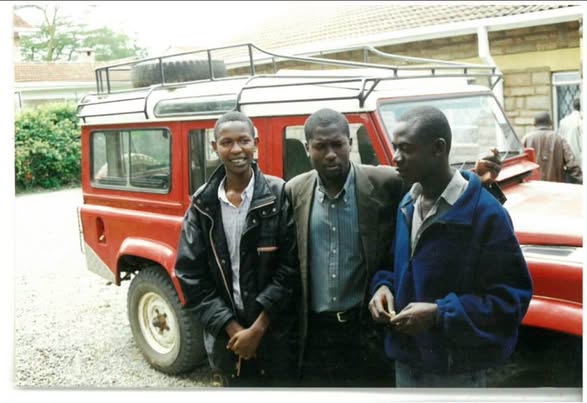
We were all arrested and taken to Kamiti Maximum Prison and Lang’ata Women’s Prison alongside our comrades. A total of 71 of us were arraigned in court on Monday, October 22, 2001.
Tear Gas, Arrests and Seven Hours of Suffocation
President Moi had been informed that NCEC and RPP were meeting off Ngong Road at our RPP compound, alongside squatters from six provinces: Rift Valley, Eastern, Coast, Nairobi, Central and Nyanza.
The compound had about 1,200 adults, including several mothers carrying their children.
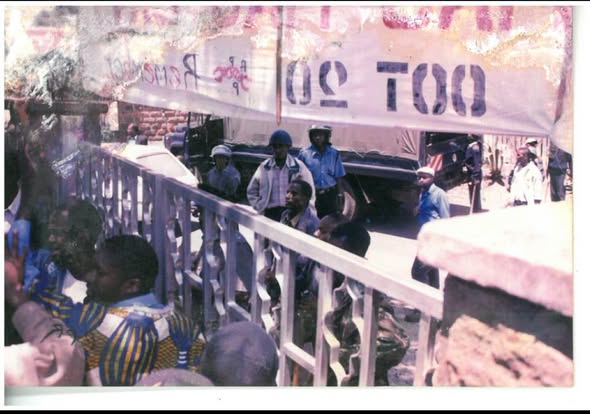
At about 3pm, nearly 80 heavily armed police officers arrived at our compound and began breaking down our gate.
As the argument continued, they lobbed numerous tear-gas canisters and started shooting into the air. Mothers carrying children and senior citizens fainted. Others suffered broken limbs, while several people needed treatment for suffocation caused by the tear gas.
As I led the RPP leadership team towards the gate, choking in the billowing smoke, there were wailing mothers and old men crawling on the grass and concrete pathways.
When I reached the gate, I saw Nemwel Mochache, the Kilimani Division Officer Commanding Police Division (OCPD) at the time, directing what I regarded as a terrorist operation.
I realised that I needed to act quickly. I pleaded with him in Ekegusii, repeatedly saying: “Abana ngoku bare” — “The children are going to die.”
I could see that he was shocked. He had not known there were children in the compound because the officers could not see them from outside.
He told me that the President had spoken very angrily at Nyayo Stadium and that his superiors had asked him how he had allowed the meeting to proceed.
I immediately understood his predicament. I told him we were ready to surrender peacefully, provided he allowed our invited guests from across the country to return home safely.
He instructed the police to bring the Mariam lorries to the gate. Officers bundled dozens of us into the vehicles and sped off to Kilimani.
Fast-forward to Monday, after our court appearance. We were packed into prison vehicles and taken to the General Service Unit (GSU) headquarters on Thika Road.
The prison Mariam lorry, which was completely sealed apart from ventilation holes at the top, stood in the sun from 11am until 5.30pm — seven hours.
Sixty-eight men were crammed into that sealed prison lorry, fighting for air inside the enclosed vehicle. I had never suffered so much from the burning heat inside such a contraption. The conditions were unbearable.
It was clear to us that they wanted us to suffocate.
We removed our shirts and everything we wore above the waist. Remember, we had not showered for three days. We were sweating, famished, stinking and gasping for breath.
We had to take turns, with half of us standing to allow the others to breathe down below, before switching positions.
For seven hours.
All this time, Kamiti Maximum Prison was being prepared to receive us with brutality unlike anything I had experienced before.
Beatings at Kamiti and the Unfinished Struggle
When we arrived at about 6.15pm, singing at the top of our voices, the gates were flung open. We saw more than 100 prison warders and GSU officers waiting for us.
I regretted being the first to come out alongside Tirop Kitur. My idea had been to emerge with the Mandela fist raised in the air.
The beating and kicking we received on the red-soil opening inside the prison were severe. We were tossed into Block E, the section holding murder suspects.
The conditions in Block E were beyond deplorable.
The prison authorities then decided to starve us. Boaz Waruku, the Field Marshal from Karachuonyo, led us into a hunger strike.
By the time we emerged from the Kamiti dungeons, we had resolved that Moi and KANU had to go. We were also determined to demand the exhumation of the remains of Dedan Kimathi Waciuri from Kamiti Prison and their transfer to Uhuru Park for a heroic burial.
Wafula Buke, who was working at KHRC at the time, was already working on this demand.
Twenty-five years later, and 24 years after Moi left power, the British colonial powers have not allowed the Kenyan state to excavate the remains of Mau Mau General Field Marshal Dedan Kimathi from Kamiti Maximum Prison.
It is not yet Uhuru!
For me, the greatest frustration, 25 years later, is that after 19 different arrests across the country between 1996 and 2009, we finally delivered the Constitution in 2010, only to hand it over to Uhuru Kenyatta and William Ruto — the very people who were against the Constitution and democracy in Kenya.
It is like giving birth to a very healthy baby and then handing it over to child traffickers who have gone on to exploit and dehumanise the baby for 16 years.
Next year, 2027, is the year to end this cruel mistake that the rigging machinery has perpetrated against the people since 1992.
By the way, one of the remandees in Block E was the man who had gunned down the USIU basketball player, a student who was the son of a professor. The murderer was always at a corner, far away from us, during the brief breaks when we were allowed out into the sun.
How Our Mashujaa Day Protest Ended in Kamiti Prison
Oct 20, 2026 at 09:28 PM
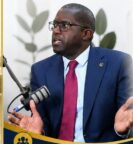
A decision had to be made to move us to Gigiri Police Station, away from the Central Business District, to prevent easy access by the media and members of the human rights community by the evening of Mashujaa Day.
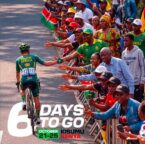
Uganda, Rwanda target cycling glory as teams arrive in Kisumu
Oct 20, 2026 at 10:50 AM
The Confederation of Africa Cycling (CAC) Africa Road Cycling Championships will run from Wednesday, October 21, to Sunday, October 25, bringing together junior, under-23 and elite riders from across the continent.
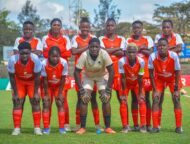
Kayole Starlets striker Nasambu lands Turkish deal
Oct 20, 2026 at 10:44 AM
Her contract runs until the end of the season in May 2027, with an option for an extension.

KMA calls for protection of healthcare workers amid Ebola infections
Oct 20, 2026 at 10:36 AM
The association said confirmed infections among frontline healthcare workers were a source of concern, raising fears among medical staff and their families.

Anyoka elected Kisii Sports Club chairman
Oct 20, 2026 at 10:29 AM
Liz Buyeke was elected vice-chairperson after beating golf captain Adrian Monari with 44 votes against 33.
On, Rolling Stones Africa launch summit to promote African creativity
Oct 20, 2026 at 10:25 AM
The summit aims to foster collaboration among creatives and industry experts while examining ways to strengthen the visibility of African talent and connect local stories with global audiences.

Professor Godfrey Muriuki: The Scholar Who Stayed Home
Oct 19, 2026 at 10:49 PM
For 54 years, he remained at the University of Nairobi, building an institution while nurturing generations of scholars.

KNCHR warns Government over El Niño preparedness as rains loom
Oct 19, 2026 at 10:33 PM
The commission said that inadequate planning could expose vulnerable Kenyans to preventable deaths and rights violations.

Christiane Amanpour announces she will leave CNN next June
Oct 19, 2026 at 10:23 PM
CNN legend Christiane Amanpour, the network’s chief international anchor, said Monday that she will sign off from CNN next June.
From pulpit to prison: Mackenzie convicted of murder
Oct 19, 2026 at 10:04 PM
Mwiti said he was slightly relieved after a court found preacher Paul Mackenzie and 28 co-accused guilty over 191 deaths, including those of 190 children.