By Nyang’au Araka
Stephen Mwiti, a man who lost all his six children in the Shakahola starvation tragedy has not known peace since the tragedy struck.
However, on Monday, Mwiti said he was slightly relieved after a court found preacher Paul Mackenzie and 28 co-accused guilty over 191 deaths, including those of 190 children.
Also Read
Mwiti has only one son’s remains to bury after losing all six of his children in the tragedy that hit the headlines across the globe.
On Monday, the 48-year-old father finally heard a court deliver a verdict he had waited years for: Mackenzie and 28 co-accused were guilty of murder.
“I’m a happy man, that all persons have been convicted,” Mwiti was quoted by BBC as saying outside the Mombasa High Court, where the judgment brought a major development in one of Kenya’s most disturbing criminal cases.
His relief came against a background of devastating loss.
All six of his children died in Shakahola Forest, Kilifi County, where followers of Mackenzie’s Good News International Ministries were persuaded to undertake extreme fasting in the belief that they would meet Jesus.
“I only found and buried the remains of my son Samuel,” Mwiti said before the verdict, holding a photograph of his family as he spoke about the children he had lost.
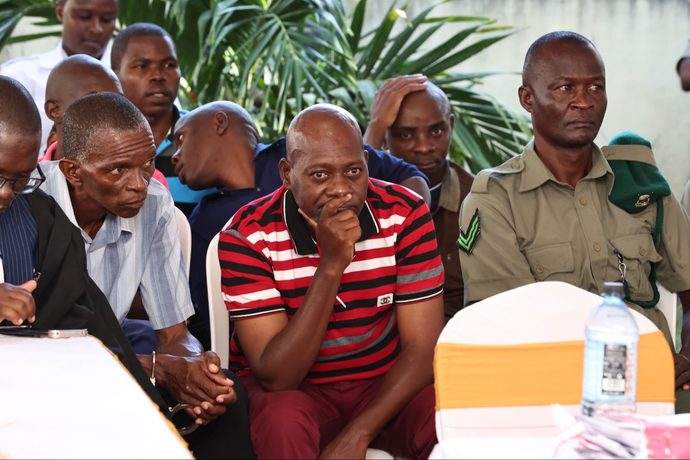
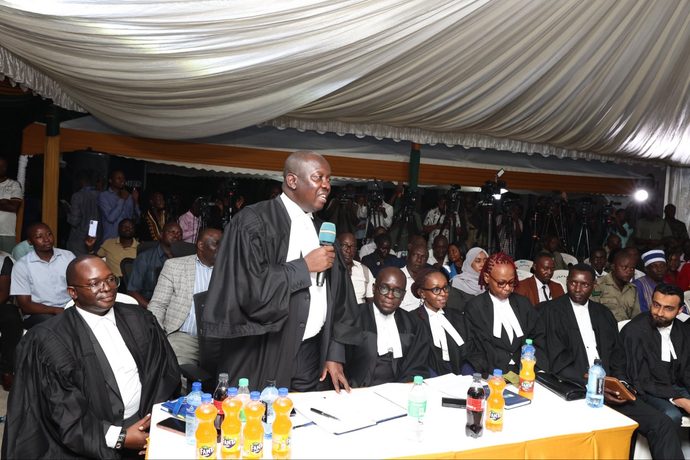
The judgment delivered on Monday found Mackenzie and 28 others guilty on 191 counts of murder.
The accused had denied the charges, with the defence maintaining that the victims had voluntarily fasted to death.
The court rejected that argument, finding that the accused had acted together to implement and sustain a fasting regime that resulted in the deaths. Sentencing is scheduled for November 6.
A doctrine that turned deadly
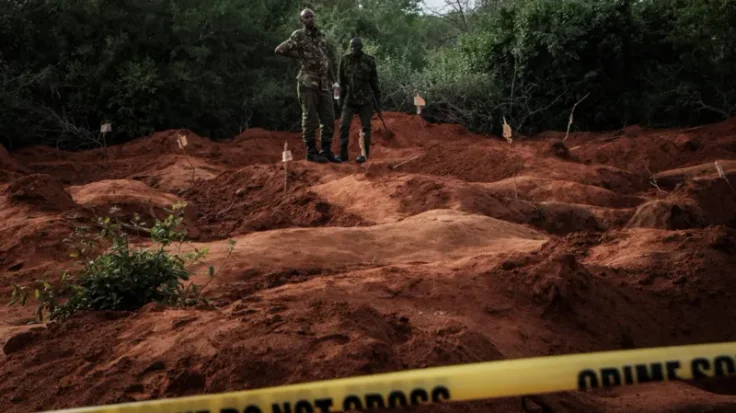
The Shakahola tragedy shocked Kenya in 2023, when police began uncovering bodies buried in shallow graves in a forest near Malindi.
More than 400 bodies have since been recovered, although Monday’s murder judgment concerned 191 deaths. Many remains are yet to be identified because of advanced decomposition.
Mackenzie, who established Good News International Ministries in 2003, preached an apocalyptic doctrine that portrayed education as evil and modern medicine as contrary to God’s will.
His sermons also warned against digital identity cards, which he described as the mark of the devil.
The church attracted followers from different parts of Kenya through its branches and a television station, Times TV, which broadcast his sermons from Malindi.
After the church closed in 2019, Mackenzie moved his operations to Shakahola Forest and encouraged followers to join him there.
Investigators and witnesses described a community in which fasting became increasingly severe, with children targeted first.
The prosecution presented evidence of people being denied food, physical force being used against those who resisted and followers being prevented from escaping the regime.
In her judgment, Justice Diana Kavedza emphasised that religious explanations could not excuse conduct that met the legal requirements for murder.
“The religious explanations or theological justifications advanced by the accused regarding the fast are legally immaterial to the determination of mens rea,” she ruled, referring to the mental element required to establish criminal responsibility.
Survivor still calls Mackenzie his pastor
The tragedy’s impact is complicated by the devotion some followers continue to express towards Mackenzie, even after surviving the conditions in Shakahola.
Peter Shukrani, 23, was among those rescued from the forest. He had become seriously ill, but his mother, who believed in Mackenzie’s teachings, discarded the medication he needed.
“My mother believed Pastor Mackenzie’s doctrine that medicine was evil,” Shukrani told the BBC.
“I would have died if I wasn’t rescued from Shakahola forest,” he said.
Despite his suffering, Shukrani continued to describe Mackenzie as a good man and maintained that followers had made their own choices to fast. His account illustrates the grip the preacher’s teachings had on some members of the group, even when those beliefs placed their lives at risk.
Mackenzie’s own son, Dan Paul Mackenzie, took a different position. Having worked as a camera operator at the church, he said his father should be held responsible for the deaths.
“He was the leader, he was someone who they were looking [up to]. So he is a murderer of mass killing,” he said before the verdict.
More cases still ahead
Monday’s judgment is the first murder verdict against Mackenzie in the Shakahola case, but it does not conclude all the legal proceedings connected to him.
He and other accused persons face separate cases involving terrorism-related offences, radicalisation and allegations of denying children access to education.
Investigations have also linked the wider inquiry to additional deaths beyond those covered by the 191 murder counts.
Mwiti’s, the convictions represent an important step towards accountability, though no judgment can restore the children they lost.
The recovery of more than 400 bodies from Shakahola has left many families still searching for answers and, in some cases, the remains of their loved ones.
His sentencing will happen on November 6.
Past incidents
The Shakahola tragedy recalls the 2000 massacre involving Uganda’s Movement for the Restoration of the Ten Commandments of God.
More than 900 people were eventually believed to have died after hundreds of bodies were discovered in a burnt church and mass graves in Kanungu and surrounding areas.
The sect had reportedly told followers to sell their possessions and prepare to go to heaven. Investigators suspected that some members, including children, had been murdered rather than willingly participating in a mass suicide.
Another notorious case occurred in November 1978 at Jonestown, Guyana, where 918 people died in an event involving the Peoples Temple, led by American preacher Jim Jones.
Children were among those given poison, while accounts from survivors and investigators indicate that some adults were coerced or forced to take it.
The tragedy remains one of the deadliest episodes associated with a religious movement and a leader who exercised extraordinary control over his followers.
Like Shakahola, Jonestown raised enduring questions about manipulation, coercion and the failure to protect vulnerable people from dangerous leaders.