By Nyang’au Araka
As Kenya marks 57 years since the Kisumu Massacre, a community initiative is racing to preserve accounts of the killings.
The Nyanza Heritage Hub is appealing to survivors, eyewitnesses and victims’ families to share their recollections of one of the country’s darkest political episodes before the memories are lost.
Also Read
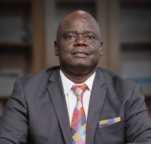
Journalist and historian Oloo Janak, who has been at the centre of the documentation efforts through the Hub, says time is running out to collect first-hand accounts from people who witnessed the October 25, 1969 violence or heard stories from those who were there.
Through the initiative, organisers want to piece together what really happened when founding President Jomo Kenyatta visited Kisumu to officially open the Soviet Union-funded Nyanza Provincial General Hospital, now Jaramogi Oginga Odinga Teaching and Referral Hospital.
“It’s important to get as much information as possible for those who witnessed it or heard from eyewitnesses at the time,” Janak said in an appeal for public participation.
“It’s possible some of you have the information or know those who have the information. Let us know so that we document the stories before they disappear completely.”
The appeal comes as the number of people who experienced the events continues to dwindle, raising concerns that valuable memories could be lost without being recorded for future generations.
The Nyanza Dialogue Initiative, through its Heritage Hub, is a grassroots effort bringing together elders, historians, families of victims and civic groups to reconstruct the region’s history. It is not a government museum, but a community platform seeking to preserve accounts of historical events and encourage public dialogue.
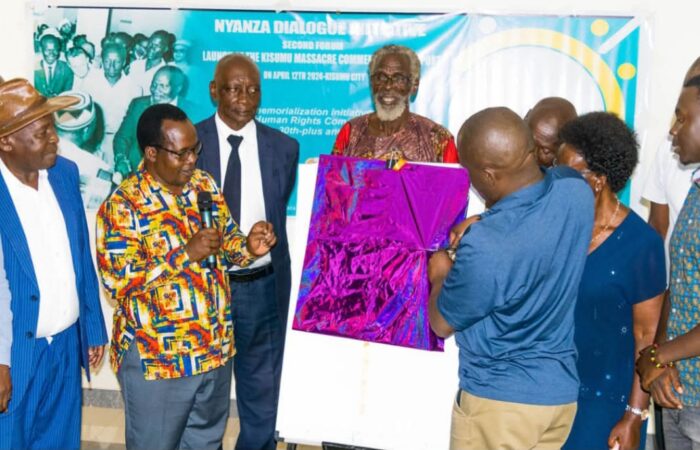
On October 27, 2023, the initiative convened elders and other stakeholders at Mama Grace Onyango Social Hall in Kisumu to mark the 54th anniversary of the massacre.
The meeting brought together people with first-hand knowledge of the events, including former aides of the late Jaramogi Oginga Odinga.
The discussions were subsequently documented in a report launched in 2024, but Janak says the work is far from complete.
“We hosted a forum of elders and other stakeholders at the Grace Onyango Social Hall in Kisumu and commemorated the 54th Anniversary of the Kisumu Massacre, and produced a report which we launched in 2024,” he said.
“These efforts continue and we need every support we can get.”
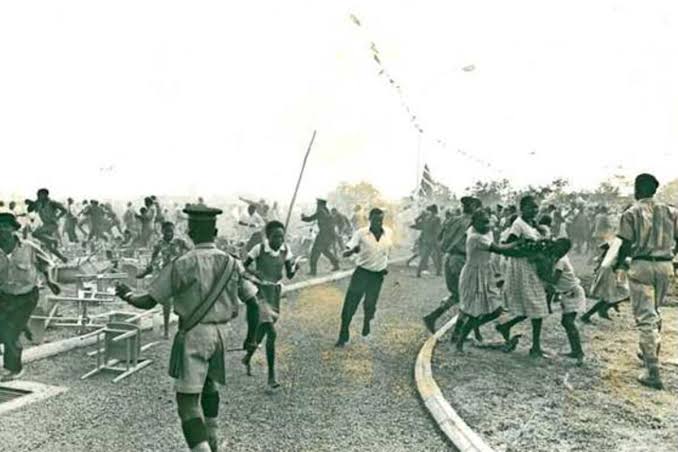
GPC is aware that the events of October 25, 1969 unfolded against the backdrop of an increasingly bitter political rivalry between Kenyatta and his former vice-president Jaramogi, who had broken away from the ruling Kenya African National Union to form the opposition Kenya People’s Union.
Tensions escalated during the hospital’s official opening, where the two leaders reportedly exchanged angry words after sections of the crowd heckled the President.
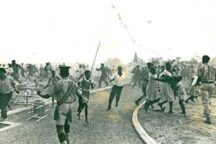
Gunfire followed as presidential security personnel and police moved to disperse the crowd and evacuate Kenyatta.
The violence left civilians dead and others injured, with accounts indicating that shooting continued beyond the town as the presidential convoy left Kisumu.
The official death toll has commonly been put at 11, but other accounts have suggested that more than 100 people were killed. The precise number remains disputed, one of the reasons the Heritage Hub wants to collect more testimonies and examine existing records.
A 2023 report by the Lake Region Bulletin captured the recollections of two men who were part of Jaramogi’s circle at the time.
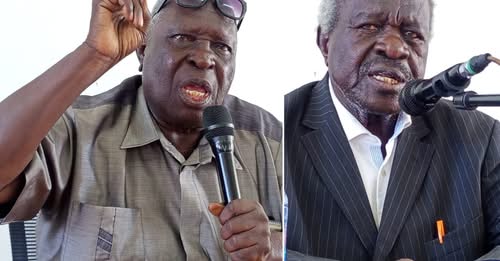
Onyango Radier, then a close aide to Jaramogi and a Kisumu municipal councillor, said the former vice-president had attended the event because he had played a key role in negotiations for funding the hospital.
“Remember, Jaramogi was key in the negotiations for the Russia funding of the hospital, so he felt this was his baby and he would not miss its inauguration because he had political differences with Kenyatta,” Radier told the publication.
Radier, who was at the hospital during the chaos, rejected suggestions that Jaramogi had organised the heckling of the President.
“I was at the centre of Jaramogi’s political strategies, and had there been plans for heckling the president, I could have been privy to such plans,” he said.
Another former aide, Adhiambo Lomo, recalled hearing gunshots while at Kisumu’s main bus stage and later encountering bodies and injured people on his journey home.
“To dismiss any claims that Jaramogi planned the chaos, ask yourself why none of those who had KPU-branded shirts and heckled the president was shot,” Lomo said. “That tells you these were system’s people.”
Their accounts illustrate why organisers believe oral history is essential in reconstructing events that have remained politically sensitive for decades.
The Truth, Justice and Reconciliation Commission (TJRC) also documented the killings in its final report.
The commission recorded that presidential security personnel and the General Service Unit shot their way through the crowd and continued firing beyond Kisumu.
TJRCfurther noted that virtually all films of the incident had been seized and destroyed.
So far, the absence of a comprehensive public archive makes the collection of testimonies particularly urgent.
Janak says they want to record accounts from surviving members of the KPU, families of people who died, hospital workers and others who witnessed the aftermath.
They are also pushing for the establishment of a State Brutality Memorial Museum in Kisumu, to preserve evidence and accounts of the 1969 massacre alongside other episodes of state violence, including the Hola massacre, torture during the Nyayo era and the 2007/08 post-election violence.
The group has also proposed a memorial space at the hospital and a memorial park at Jomo Kenyatta Sports Ground, with smaller memorial sites in neighbourhoods that have experienced police violence.
Another proposal is to restore the indigenous name Nam Lolwe to Lake Victoria, an idea first raised during the 2019 Kisumu Massacre commemoration as part of efforts to preserve local history and identity.
The organisers also argue that recommendations arising from the TJRC have not been fully implemented.