By Nyang’au Araka
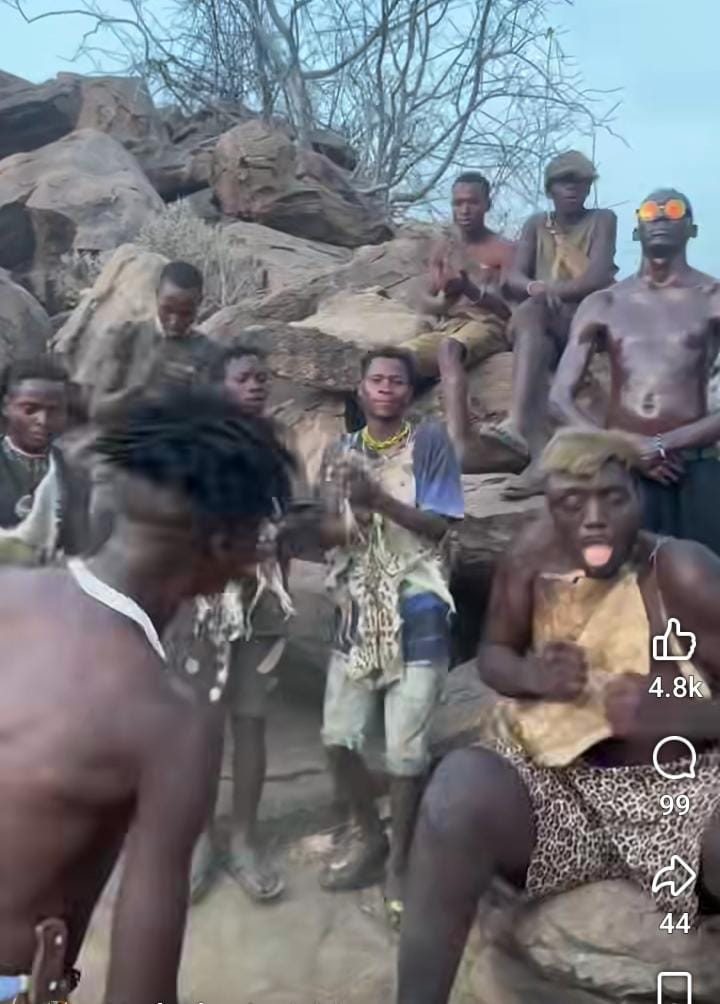
There is something infectious about the dancing of Tanzania’s Hadzabe community, whose videos are spreading across social media.
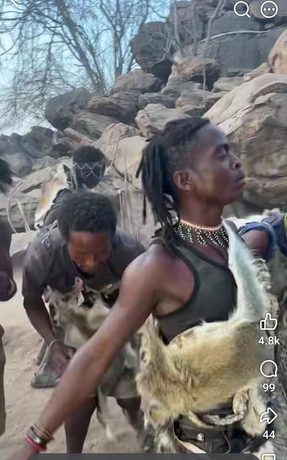
Children, men and women move to lively rhythms, stamping their feet, swinging their bodies, singing and chanting with a sheer joy and spontaneity that have left many viewers watching, smiling and sharing.
Also Read
The performances are striking for their energy and collective spirit, and this is what moved this writer into researching about them.
There are no elaborate stages, dazzling costumes or sophisticated sound systems.
Instead, the dancers appear to draw their energy from one another, with rhythmic movements, voices and clapping combining to create an exuberant celebration.
Some clips also feature visitors joining the dancers, apparently swept up by the infectious rhythm.
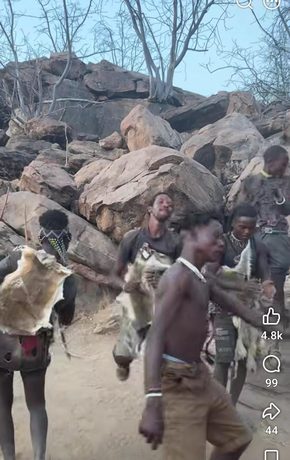
One widely circulated Instagram reel by travel content creator Steve Explorer carries the caption: “From stranger to part of the tribe”, adding that “Hadzabe dance brings everyone together”.
The video has attracted more than 10 million views, according to figures displayed by a social media reels aggregator.
The online fascination is more than a passing curiosity as the dancing offers a glimpse into the expressive culture of one of Tanzania’s indigenous communities, whose traditional homeland lies around Lake Eyasi in northern Tanzania.
Researchers say music and dance have an established place in Hadzabe social life.
A University of Sheffield research fieldsite profile, drawing on anthropological work with the community, describes evening gatherings in which men and women sing and dance together.
“Other evening dances may include members of both sexes dancing together as a large group while chanting and singing songs,” the profile explains.
It also documents the epeme dance, a distinct ritual performed during the new moon. In this ceremony, men take turns dressing up and dancing as embodiments of their ancestors, while women and children watch.
The distinction matters because not every dance circulating online represents the same cultural practice. Some performances are social gatherings, while others are presented to visitors as part of cultural tourism.
A 2026 study published in Analytical Approaches to World Musics, titled Hadza ublic Vocal Music: A Preliminary Analysis of Rhythm and Meter, provides a closer examination of the community’s singing and dancing.
The research brought together scholars and Hadzabe community members to document musical traditions and help preserve them for future generations.
The researchers explain that rhythm is expressed through singing, clapping and dancing, with footsteps helping mark the beat.
Their analysis also identifies Hukwashi’e, a celebratory dance song whose lyrics include the invitation: “Let’s all dance like an impala.”
The study notes that the song has different versions, performed by adults and children, illustrating how musical traditions are passed on and adapted across generations.
With cultural tourism growing, some Hadzabe performances are increasingly presented to visitors, and the community has had to navigate how to share its music while maintaining its own expressive traditions.
The study observes that performers sometimes emphasise particular musical elements to encourage tourists to participate. It warns that the demands of entertaining visitors can influence which songs are performed and how they are presented.
That does not make the dancing any less fascinating. Rather, it offers a reminder that the people in the videos are not simply performers in an exotic spectacle.
They are members of a living community whose music, language and cultural practices continue to evolve.
The Hadzabe are also not a people entirely untouched by modern life. Research estimates that between 1,000 and 1,300 people identify as Hadzabe, although only a smaller proportion still depend substantially on hunting and gathering for their food.
Their language, Hadzane, is particularly distinctive for its click consonants, while their knowledge of the surrounding environment remains an important part of their cultural identity.
For social media audiences, however, it is the dancing that has provided the most immediate connection. The laughter, coordinated movements, infectious rhythm and willingness to draw others into the circle offer a refreshing reminder of the universal appeal of music.
The language may be unfamiliar, and the cultural setting may be far removed from their own, but the sheer joy of the dance needs little translation.
Watch this: https://www.facebook.com/share/r/18wnypAzgj/