By Josiah Kariuki
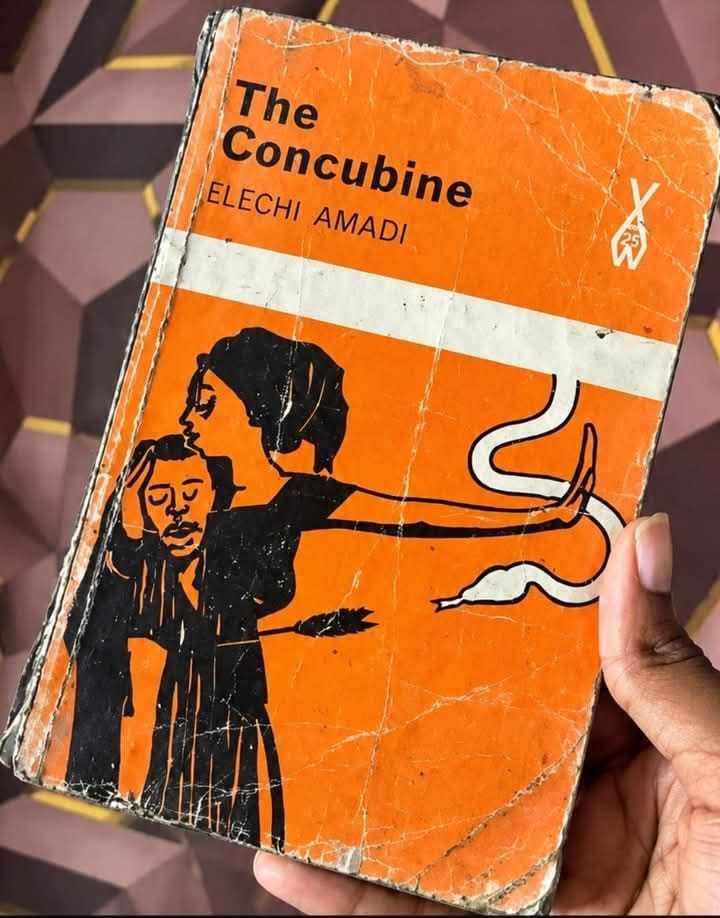
Some books gather dust on our shelves, but their stories remain fresh in our minds. Elechi Amadi’s The Concubine is one such book.
Who remembers reading it, perhaps as a student, when African literature opened our eyes to worlds beyond the classroom?
Also Read
Looking at this worn-out copy takes me back to a time when reading was not just about passing examinations. It was about discovering our cultures, questioning our beliefs and following characters whose joys and sorrows felt strangely close to home.
Published in 1966, The Concubine remains a memorable work of African literature. At its centre is Ihuoma, a beautiful, gentle and dignified widow whose search for happiness is repeatedly interrupted by tragedy.
Ekwueme, a young man who falls deeply in love with her, is determined to pursue his feelings despite warnings about forces beyond his understanding.
Amadi builds a compelling story around a question that remains relevant: can love conquer fate, or are some things beyond human control?
What I find particularly striking is how the drama emerges from ordinary village life. In the excerpt, the approaching rainy season brings attention to Ihuoma’s leaking roof.
Nnadi, her late husband’s brother, promises to repair it, reflecting the bonds of family and communal responsibility. Meanwhile, Ekwueme’s growing interest in Ihuoma hints at a love story whose consequences neither character can fully anticipate.
A leaking roof may seem an unlikely starting point for a story of love, fate and tragedy, but that is part of Amadi’s craft. He allows ordinary conversations and familiar village routines to lead us into a much deeper human drama.
The novel also offers a glimpse into traditional Igbo society, where marriage, family obligations, divination and spiritual beliefs shape people’s choices.
In this world, the unseen is as real to the characters as the people and places around them. Their struggles arise partly from the tension between what they desire and what their beliefs tell them is possible.
Today, this battered copy reminds me that books are more than printed pages. They carry memories of who we were when we first encountered them.
A novel we read for an examination can return years later with questions we were too young to appreciate at the time.
Perhaps you remember Ihuoma, Ekwueme or the suspense that made you eager to turn the next page. Perhaps you remember your teacher’s questions, classroom discussions or the pressure of preparing for an examination.
Whatever your memories, The Concubine is worth revisiting.
Who remembers reading this classic? What character, scene or lesson has stayed with you over the years?
Let us share our memories. Sometimes, an old book is all it takes to bring back an entire chapter of our lives.