By GPC News Desk
Former Meru governor Kiraitu Murungi has questioned the state of democracy in Kenya, arguing that money has increasingly replaced leadership qualities in determining electoral outcomes.
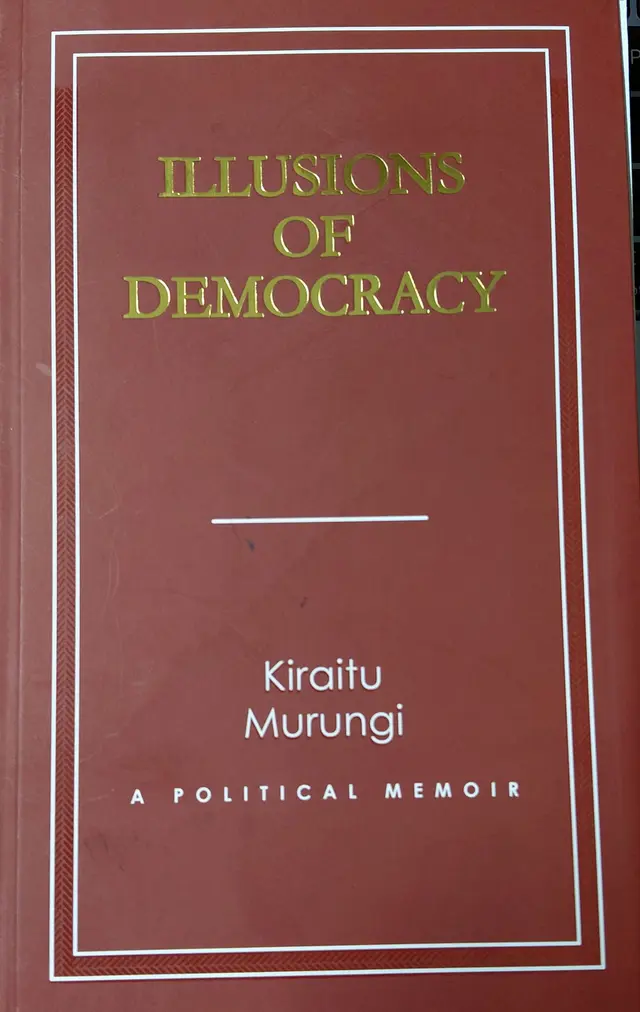
In his newly launched book, Illusions of Democracy, Kiraitu traces Kenya’s democratic journey from the struggle against one-party rule to what he describes as an increasingly transactional political system in which candidates’ financial muscle influences voters’ choices.
Also Read
He argues that the shift has undermined the principles that inspired the fight for multiparty democracy, raising questions about the meaning of democracy in contemporary Kenya.
The book launch in Nairobi brought together politicians, activists, government officials and other participants in the country’s democratic struggles, including former National Assembly Speaker Francis Ole Kaparo, the Rev Timothy Njoya and Centre for Multiparty Democracy executive director Frank Mukwanja.
Speakers warned that cash-driven politics risked weakening accountability, with some elected leaders accused of prioritising personal interests over development and becoming inaccessible to constituents after elections.
Kiraitu draws parallels between current political practices and the handout culture associated with the administration of former President Daniel arap Moi, arguing that it has returned in a form that threatens democratic progress.
The discussions also turned to the role of Generation Z in shaping Kenya’s political future. While speakers commended young people for their courage and willingness to challenge the status quo, they questioned the sustainability of their insistence on leaderless movements.
Political scientist Prof Peter Kagwanja called for renewed efforts to promote intergenerational dialogue, drawing on the late former Prime Minister Raila Odinga’s push for conversations that bring together different generations to discuss the country’s future.

The speakers said such engagement should incorporate the ideas and experiences of young people, established political leaders and other sections of society, including religious institutions.
They also called for a renewed commitment to democratic principles, arguing that leadership should be judged by integrity, accountability and service rather than the ability to distribute money during campaigns.
In Illusions of Democracy, Kiraitu examines the struggle for multiparty democracy through the experiences of grassroots political practice, exploring how Kenya’s social and political realities have shaped and constrained democratic ideals.
The book invites readers to reconsider whether the country’s electoral processes continue to serve the broader purpose of democratic representation or have increasingly become transactional contests driven by wealth.