By Josiah Kariuki
There is something unsettling about watching a building collapse in a city where thousands of families struggle to find decent housing. Beyond the concrete, steel and rubble are questions about professional responsibility, regulatory oversight and how much value we place on human life.
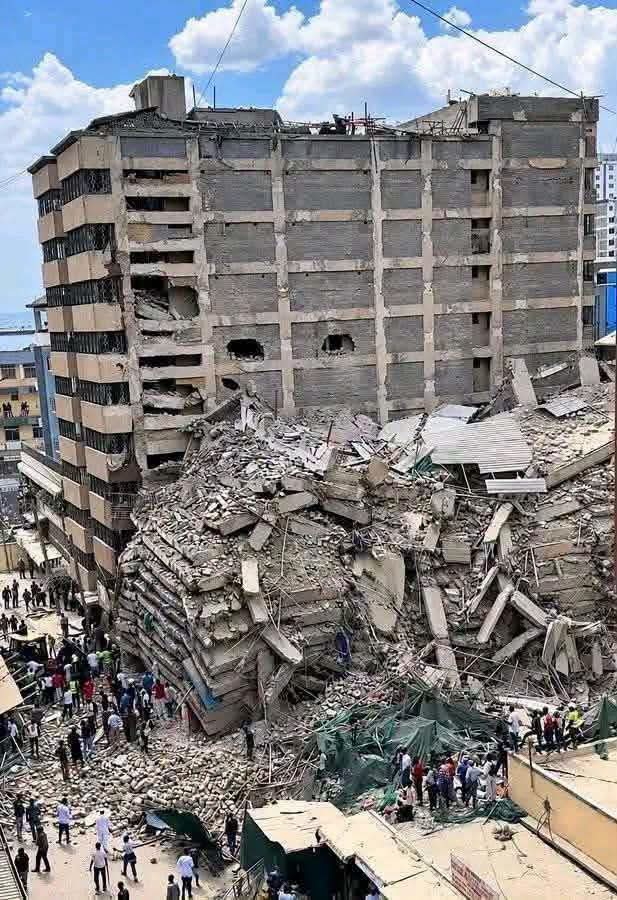
The collapse of a building under construction along 9th Street in Eastleigh, Nairobi, on Friday, 23 October 2026, should make us reflect on the kind of development we are pursuing as a country. As rescue operations continue and investigations seek to establish what happened, one question stands out: At what point did the desire to build more become greater than the responsibility to build safely?
Also Read
Kenya is growing. Our cities are expanding, urban land is becoming increasingly expensive, and investors are looking upwards to maximise returns from limited space. There is nothing wrong with this ambition. High-rise development is a practical response to urbanisation, and Kenya should embrace modern architecture. But building upwards must never mean building beyond what engineering standards, professional competence and construction regulations can safely support.
Every additional floor places more demands on a building’s structural system. Foundations, columns, beams, slabs and their connections must be designed to carry the additional loads safely, taking into account ground conditions, wind forces and the intended use of the structure. A building does not become structurally sound simply because its owner can afford to make it taller.
The danger arises when the desire to maximise rental income, increase property values or complete projects quickly takes precedence over engineering requirements. Adding floors without proper structural assessments, using substandard materials or proceeding without adequate professional supervision can have devastating consequences. Whether any of these factors contributed to the Eastleigh collapse must, however, be established through a credible technical investigation rather than speculation.
We must also stop confusing the appearance of development with its substance. Towering buildings and impressive skylines may signal economic growth, but they mean little if the structures are unsafe.
Part of this conversation concerns the construction materials and technologies we use. Whenever buildings collapse, there is often a tendency to blame traditional materials such as bricks, masonry and concrete. That argument is simplistic. Reinforced concrete remains a major structural material in high-rise construction across the world. When properly designed and constructed, it can support safe and durable buildings. Structural steel and composite steel-and-concrete systems also offer advantages depending on the project.
Aluminium, meanwhile, is widely used in façades, windows, curtain walls and cladding. Its relatively light weight makes it useful in modern architectural designs, but it should not be confused with the principal structural elements that carry a building’s weight. Columns, beams and foundations still require proper engineering.
Countries such as Japan, South Korea and Malaysia did not achieve their impressive skylines simply by changing construction materials. Their progress reflects investment in engineering education, specialised construction techniques, material testing, quality control and effective regulation. Kenya needs a similar commitment to technical expertise and modern construction practices.
There is no universal engineering rule that makes a building above 30 storeys inherently unsafe in Kenya. Neither should we assume that the country lacks the capacity to construct high-rise buildings. What matters is whether every project has an appropriate design, qualified professionals, suitable materials, adequate supervision and effective scrutiny.
Even a three-storey building can collapse because of defective foundations, inadequate reinforcement or poor workmanship. Conversely, a properly engineered high-rise can remain safe for decades. Height alone does not determine safety; the quality of design and construction does.
This brings us to regulation, an area where Kenya must confront some uncomfortable realities. Institutions such as the National Construction Authority (NCA), the Engineers Board of Kenya and county governments have important responsibilities in safeguarding the built environment. However, having laws and regulatory bodies is not enough. What matters is whether the rules are consistently enforced.
A building permit should not become irrelevant once construction begins. Approved architectural and structural drawings must be followed, and any proposed changes affecting structural safety should undergo proper assessment and approval. Inspections must also be meaningful rather than bureaucratic exercises intended to complete paperwork.
The NCA’s investigation into the South C building collapse of January 2026 offers an important example. The Authority reported that a project approved for 12 storeys had four additional floors constructed beyond the approved design. This demonstrates why monitoring construction throughout the building process is just as important as granting initial approval.
The Eastleigh collapse deserves equally thorough scrutiny. Investigators should establish the approved design, the actual state of construction, the materials used, the quality of workmanship and whether inspections were properly conducted. If violations are established, those responsible must face the consequences, whether they are developers, contractors, architects, engineers or public officials.
Technology could help improve accountability. Digital building records, electronic inspection reports, photographic documentation and traceable approval systems would make it easier to compare approved plans with actual construction. However, technology cannot replace professional integrity or effective enforcement. A digital system is only useful when people act on the information it provides.
We must remember that the cost of unsafe construction goes far beyond financial losses. A building could represent someone’s lifetime investment, a family’s home, a worker’s livelihood or a business owner’s entire enterprise. Its collapse can leave families grieving, workers with life-changing injuries and entire neighbourhoods traumatised.
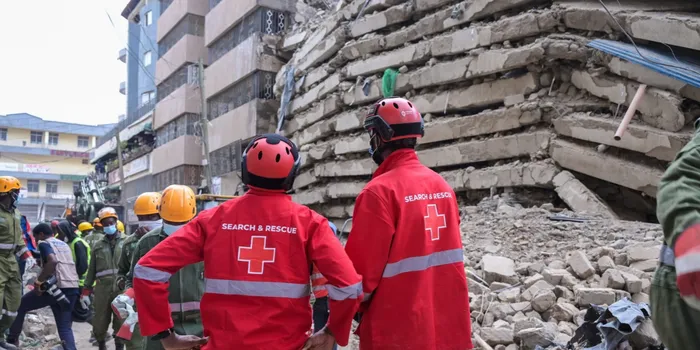
Behind every rescue operation is the possibility that someone who left home that morning expecting to return safely may never do so. That alone should remind us that construction safety is not an unnecessary expense or an inconvenience imposed on developers. It is a fundamental responsibility.
Kenya must move beyond the familiar cycle of shock, public outrage, official statements and eventual silence that follows disasters. Every major collapse should result in a credible investigation, public accountability where appropriate and corrective action. Construction must be inspected at critical stages, materials tested against specifications and structural alterations properly assessed.
Responsible regulation also protects developers who do things correctly. Those who invest in qualified professionals, quality materials and proper supervision should not be disadvantaged by competitors who cut corners to reduce costs. Property owners, tenants and investors all deserve confidence that buildings are safe.
The Eastleigh tragedy should not make us suspicious of every tall building or dismiss the construction materials we have relied on for decades. Rather, it should force us to examine our standards, strengthen our institutions and take professional accountability seriously.
Kenya has every reason to aspire to modern cities, ambitious infrastructure and world-class buildings. But development should not be measured by how quickly a skyline rises or how many floors an investor can add. It should be measured by the safety, durability and usefulness of the structures we build.
Let investors pursue profits, but within the boundaries of safety. Let our cities grow upwards, but on sound foundations. Let us embrace modern construction technologies without neglecting the competence, integrity and regulation needed to use them properly.
A skyline may impress the world, but the safety of the people living and working beneath it tells a more important story.
No additional floor is worth a human life. The rubble in Eastleigh should not become another forgotten reminder of what happens when ambition outpaces accountability.
The real measure of development is not how high we build, but how safely our buildings stand and how securely our people live within them.
-Mr Kariuki is a volunteer contributor to Gusii Press Club. The views expressed in this article are his own.