By GPC News Desk
Nyamira County Government will install 30 additional machines at three public hospitals by January 2027.
Governor Amos Nyaribo said the machines would be distributed to Nyamira County Referral Hospital, Masaba Level 4 Hospital in Keroka and Ekerenyo Level 4 Hospital.4
Also Read
“This will ease pressure on Nyamira County Referral Hospital and reduce the distance patients travel for treatment,” Nyaribo said.
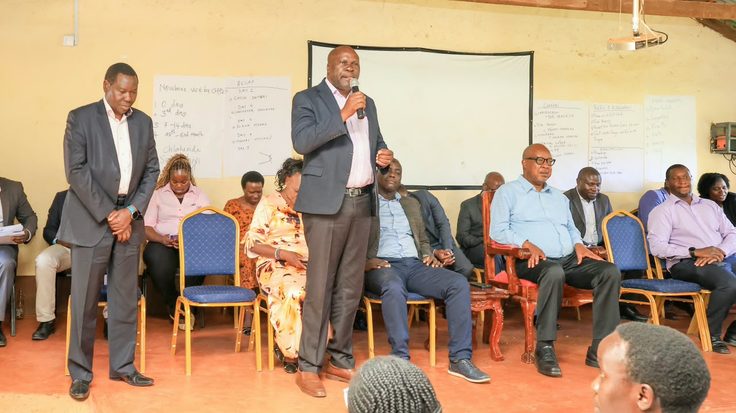
Speaking during a meeting with Health Facilities Management Committee members in Nyansiongo, Nyaribo said rising cases of kidney disease had made it necessary to expand access to specialised renal services across the county.
“By January, we will have 30 new dialysis machines, 10 for Keroka (Masaba Level 4 Hospital), Nyamira County Referral Hospital and Ekerenyo Level 4 Hospital. Cases of kidney diseases have risen, and dialysis must be available near home,” he said.
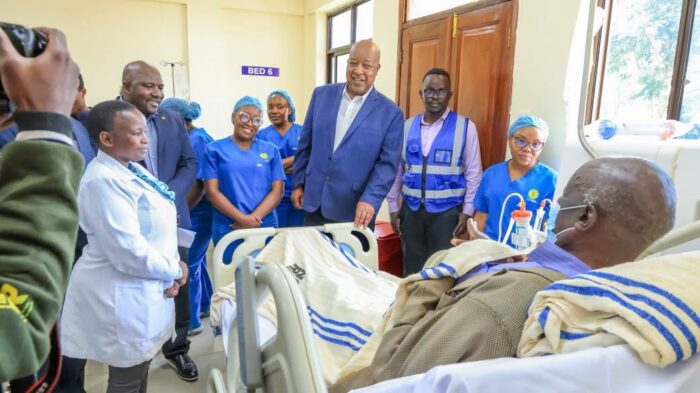
The planned expansion builds on the commissioning of 10 dialysis machines at Nyamira County Referral Hospital in July, which increased the number of operational machines from three to 13 and raised the facility’s capacity to 26 dialysis sessions daily.
The new machines were installed at a relocated renal unit at Doctors Plaza, which offers more space, a nursing station and other essential amenities compared with the previous arrangement in the hospital’s general wards.
Previously, limited equipment forced patients to arrive at the referral hospital as early as 4am to secure their place in the treatment queue.
Joseph Omwando, one of the patients, welcomed the additional machines, saying the long waiting hours had made accessing treatment difficult.
“We’ve been struggling to get to the hospital by 4:00 AM latest so that you manage to be registered and be scheduled on the queue because of fewer machines,” he said during the July commissioning.
Another patient, Julius Bosire, said the availability of dialysis services in the county had saved him the expense and inconvenience of travelling to Nairobi for treatment.
“I used to travel all the way to Nairobi, but now I can get the services closer home which is cost effective,” he said.
Further, Nyaribo said plans were underway to establish a dialysis unit at Nyansiongo Hospital, which is being upgraded to a Level Four facility at a cost of Sh179 million.
The proposed unit is expected to serve residents in the Borabu settlement and further decentralise renal services.
The county’s wider health infrastructure expansion also includes a Sh1.7 billion upgrade of Nyamira County Referral Hospital through a partnership with the national government.
Announced in October, the project is expected to double the hospital’s operational capacity and bring it closer to Level Six standards, with additional specialised clinics aimed at reducing referrals to facilities outside the county.
The county government has also been working with development partners, including Safaricom Foundation, to improve health infrastructure and maternal and child healthcare services in rural facilities.
Nyaribo said several newly constructed health facilities would be operationalised during the current financial year, as his administration seeks to expand access to services beyond the county headquarters.
Beyond healthcare
While defending his development record, the Governor also outlined interventions in vocational training, early childhood education, agriculture and road infrastructure.
He said county vocational training centres (VTCs) were increasingly offering practical skills aligned with labour market demands, adding that the administration would introduce a one-year internship programme for between 400 and 500 trainees from January 2027.
“Practical training is very important. From January next year, we will support 400-500 trainees for an internship of one year. My Government will pay them Sh10,000 for subsistence,” Nyaribo said.
On early childhood education, he attributed increased enrolment in public ECDE centres to the Uji Afya Masomo Bora Programme, which he said had raised the number of learners from 28,000 to 35,000.
In agriculture, the county has acquired soil-testing machines to help farmers establish the nutrient requirements of their farms and make informed decisions on crop production.
The administration has also introduced bull castration services and subsidised the cost of semen under its artificial insemination programme as part of efforts to improve livestock productivity.
On roads, Nyaribo said the county had improved access routes in several wards following the acquisition of earthmoving equipment.
He dismissed criticism that his administration had made little progress in implementing its development agenda, insisting that his focus had been on delivering projects rather than engaging in political exchanges.
“We have prioritised working, not shouting,” he said.
The Governor maintained that his administration was on course to fulfil the promises contained in its 2022 election manifesto.