By GPC Reporter
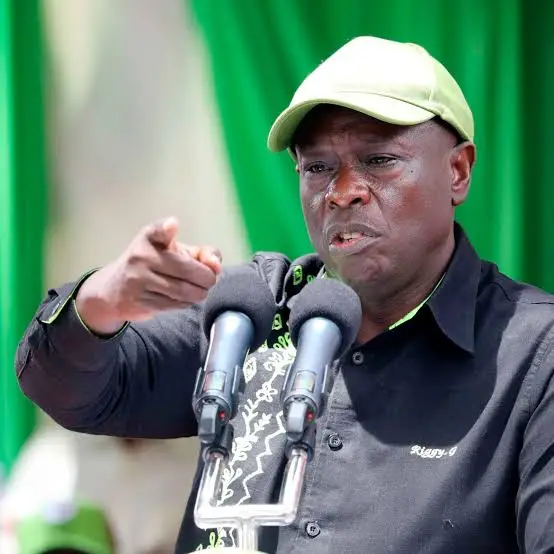
Former Deputy President Rigathi Gachagua has emerged as the leading figure blamed for divisions within Kenya’s opposition.
Even so, his personal support in the 2027 presidential race remains at just four per cent, according to a new national opinion poll whose results were released on Thursday.
Also Read
The TIFA Research survey was conducted between October 26 and November 5, 2026, among 2,036 adults across all 47 counties.
It found that 43 per cent of respondents who identify with the opposition consider Gachagua the individual most responsible for disagreements among opposition leaders.
The figure places him well ahead of other individuals and institutions, with President William Ruto and the United Democratic Alliance (UDA) government cited by 15 per cent.
The findings present a political paradox for Gachagua, whose influence in opposition politics appears to remain significant despite his limited support in the presidential contest.
Gachagua’s position in the survey is particularly striking because his low presidential rating contrasts sharply with the extent to which opposition supporters associate him with internal disagreements.
One political analyst familiar with successive TIFA surveys observed that the figures point to a redistribution of support within the opposition rather than a recovery in Gachagua’s personal popularity.
“The numbers show a clear transfer within the opposition,” the analyst said.
“Gachagua’s personal rating has not recovered, yet he remains the person many opposition supporters hold responsible for the public friction. That combination is politically costly.”
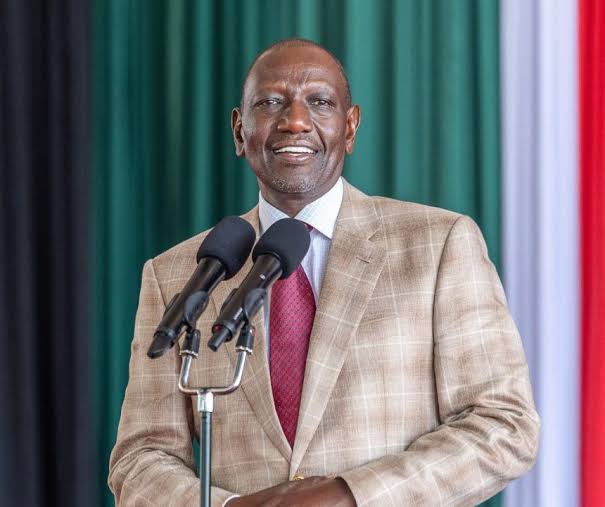
In the presidential preference rankings, Ruto and Nairobi Senator Edwin Sifuna are tied at 31 per cent, while Wiper leader Kalonzo Musyoka commands nine per cent.
Former Interior Cabinet Secretary Fred Matiang’i follows with five per cent, ahead of Gachagua at four per cent.
Another 15 per cent of respondents remain undecided.
The survey also points to significant shifts in political party identification, with the Orange Democratic Movement (ODM) recording 10 per cent support, compared with 17 per cent for the newly registered Linda Mwananchi Movement.
UDA leads the party identification rankings at 25 per cent, although nearly three in 10 respondents either do not identify with any political party or remain undecided.
The changing political landscape suggests that opposition support is being redistributed among emerging political formations and established parties.
Among Ruto’s supporters, current Deputy President Kithure Kindiki emerges as the preferred running mate, commanding 55 per cent support.
Homa Bay Governor Gladys Wanga follows at 12 per cent, while former Mombasa Governor Hassan Joho attracts nine per cent.
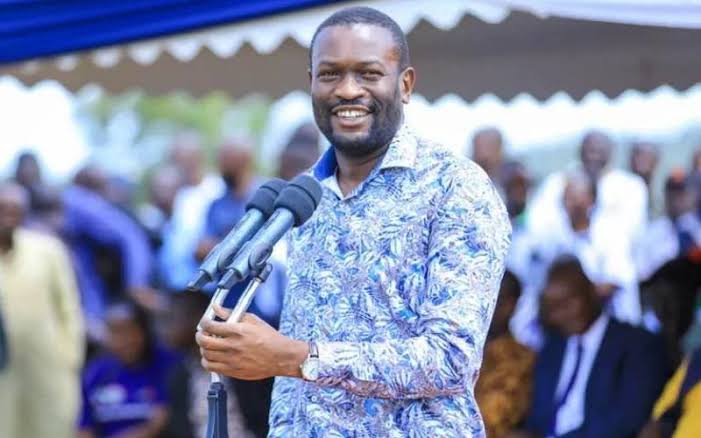
Other potential running mates, including Oburu Odinga, Musalia Mudavadi and Moses Wetang’ula, each register approximately four per cent or less.
The poll also examined public attitudes towards the Broad-Based Government arrangement between Ruto and the late former Prime Minister Raila Odinga.
The findings show that 32 per cent of respondents support the arrangement, while 43 per cent oppose it.
A further 25 per cent either have no opinion or are unaware of the arrangement.
Support is strongest in the Northern and Central Rift regions, while Nairobi and Mount Kenya record the lowest levels.
Despite the divisions, opposition supporters remain optimistic that competing political formations could eventually find common ground before the 2027 General Election.
Fifty-seven per cent of respondents identifying with the opposition consider it very likely that leaders associated with the Linda Mwananchi Movement and the broader Ukombozi grouping will agree on a common political position.
Another 22 per cent consider such an agreement somewhat likely.
However, opinions remain divided over when the anticipated political consolidation should be announced.
A plurality favour an announcement early in 2027, while a substantial minority want an agreement reached before the end of 2026.
The survey also examined the question of ethnic community leadership, finding that only about half of Kenyans believe their respective communities have recognised leaders they look to for political guidance.
The findings vary considerably across ethnic groups, with respondents also expressing differing levels of agreement over who their community leaders are.
Regionally, UDA retains a strong base in the Northern and Central Rift, while Linda Mwananchi attracts significant support in Western Kenya and Nairobi. Wiper maintains a concentrated support base in Lower Eastern.
The substantial proportion of Kenyans who do not identify with any political party, however, points to an electorate whose political loyalties remain fluid ahead of the 2027 elections.
The Ruto-Sifuna tie in presidential preference presents competing opportunities and challenges for the government and opposition.
For the government, Prof Kindiki’s commanding lead among Ruto supporters as the preferred running mate suggests a strong preference for continuity within the current leadership arrangement.
For the opposition, the challenge will be translating optimism about political unity into an actual agreement on leadership and a joint presidential ticket, amid persistent disagreements.
The survey has a margin of error of ±2.16 percentage points for the full sample, with subgroup findings, including those restricted to opposition supporters, carrying wider margins.