By GPC Reporter
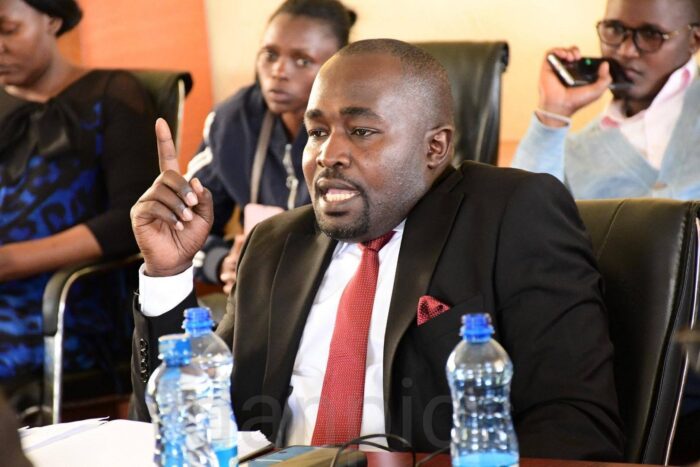
For Dr Timothy Mokua Ombati, medicine has never been confined to diagnosing illnesses and treating patients. His professional journey has also taken him into labour activism, hospital administration, Nyamira County politics and, more recently, digital civic engagement from the United States.
A medical doctor by training, Dr Ombati became a familiar figure in Nyamira’s health sector through his work in public hospitals and his outspoken involvement in debates about the welfare of healthcare workers and the management of public health facilities.
Also Read
His career reflects the complicated relationship between professional expertise and public administration, where decisions about staffing, medicine supplies and hospital resources often extend beyond the medical ward into the realm of politics and accountability.
Dr Ombati trained at Kampala International University (KIU), Uganda, where he studied medicine. Nyamira County’s official also list him as having pursued a Master’s degree in Health Systems Management at Kenya Methodist University, with further studies in public health at Kisii University.
His early professional years coincided with growing agitation among doctors over working conditions, staffing shortages and the management of public hospitals. He became involved in the Kenya Medical Practitioners, Pharmacists and Dentists Union (KMPDU), serving as a county representative and liaison officer, according to his professional biography.
The period included the nationwide doctors’ strike of 2016 and 2017, as well as labour disputes in Nyamira. He teamed up with KMPDU National officials including Ouma Oluga who was then Secretary General (now Principal Secretary for the State Department for Medical Services).4
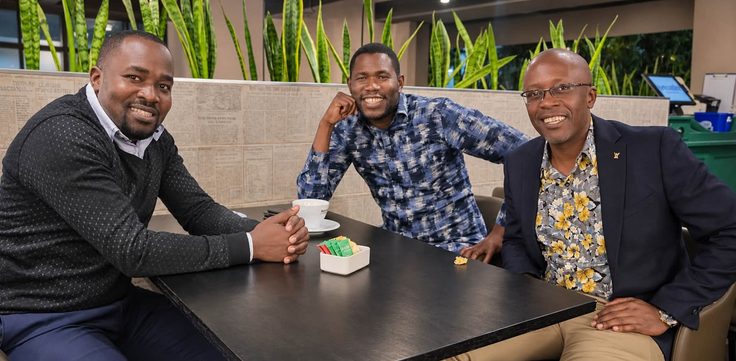
The role placed Dr Ombati within a generation of doctors who increasingly viewed advocacy for better working conditions as part of the wider struggle to improve healthcare delivery.
“Alongside union work, I collaborated with civil society and human rights organizations such as Transparency International Kenya and HAKI Africa to campaign against the mismanagement of hospital resources,” Dr Ombati recalls.
His outspoken stance often put him at odds with local political establishment figures, leading to punitive administrative transfers and a salary stoppage that he successfully overturned in court in November 2018.
In November 2020, Dr Ombati moved into hospital management when he became Medical Superintendent of Nyamira County Referral Hospital. He served in the position for about two years before being elevated to the county cabinet.
Interestingly, his time at the hospital coincided with public concerns over the availability of essential medicines and the capacity of county facilities to provide adequate care. In March 2022, responding to reports that patients were being forced to buy medicines outside the hospital, he defended the facility’s preparedness.
“Our hospital is in good condition, the facility has enough medicine and we have given our best in ensuring we give the required medical services,” he told The Star.
In October 2022, Governor Amos Nyaribo nominated Dr Ombati to head the county’s health docket. Following approval by the County Assembly, he was appointed County Executive Committee Member for Health Services.
The appointment placed him at the centre of decisions affecting hospitals, health workers, pharmaceutical supplies and the delivery of medical services across Nyamira. He also served as national secretary of the caucus of county health executives.
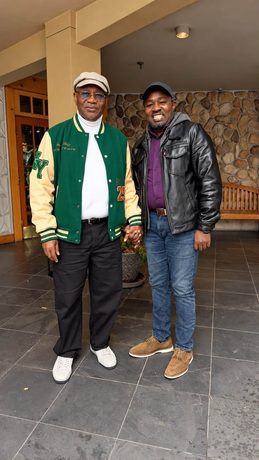
During his tenure, he pursued partnerships aimed at expanding specialised services and strengthening programmes in areas including cancer care, malaria control, emergency response and non-communicable diseases.
These efforts formed part of the broader challenge facing county health departments: extending access to specialised treatment while dealing with limited resources and competing public demands.
His tenure, however, ended abruptly in September 2023 following a dispute over the distribution of medical supplies worth approximately Sh22.49 million.
Governor Nyaribo accused him of misleading the county administration about the delivery of the consignment, allegations Dr Ombati denied. The former health executive maintained that the supplier had failed to deliver the full consignment on schedule and that the outstanding supplies were subsequently delivered.
“It was good serving the great county! For records’ sake, I never stole money meant for drugs. Drugs were delivered as ordered,” he said following his dismissal, as reported by The Standard.
Dr Ombati challenged his removal in court, arguing that his dismissal was unlawful. The dispute produced several court proceedings, but the final outcome did not go in his favour. In June 2025, the Employment and Labour Relations Court dismissed his substantive claim, finding that there was justification for the termination and that the process had been fair.
The court’s decision was a significant chapter in a career that had already moved through the demanding worlds of medicine, trade union advocacy and county administration.

Since leaving county government, Dr Ombati has continued to participate in public debate from the United States. He has increasingly turned to digital platforms to discuss governance, constitutional rights and the state of Kenya’s healthcare system.
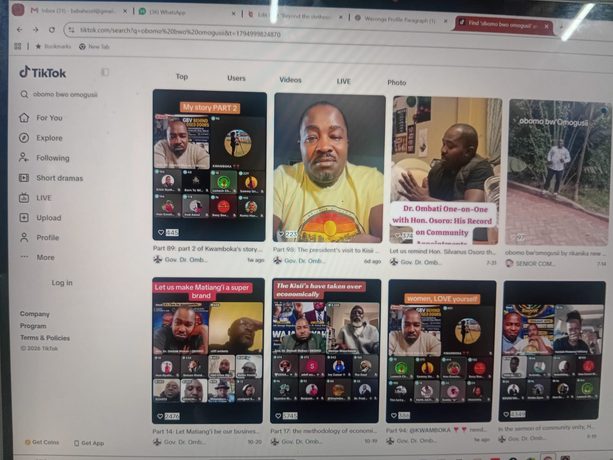
In December 2025, he launched Obomo Bw’Omogusii, a weekly Sunday live broadcast on TikTok that provides a forum for discussions affecting Kisii and Nyamira counties and the wider country. The platform has become part of his effort to engage audiences beyond conventional political and professional spaces.
Dr Ombati’s public commentary has also retained a strong health-sector focus. In a recent contribution on healthcare staffing, he argued that health workers should be viewed as an investment in public service delivery rather than merely a burden on county budgets.
“Health workers are not classified as mere ‘development expenditure’,” he wrote, making the case for employment models that address staffing shortages while respecting workers’ rights.