By Mandere Onyinkwa and Ongaga Ongaga
Kenyan and Tanzanian lawmakers have called for coordinated tax reforms, faster border clearance and stronger parliamentary oversight to address trade barriers and financing constraints undermining regional development.
The legislators want the Kenya Revenue Authority (KRA) and Tanzania Revenue Authority (TRA) to harmonise their border operations and speed up the implementation of One-Stop Border Posts (OSBPs) to reduce delays in the movement of goods, services and people.
Also Read
They said lengthy clearance procedures, despite regional integration agreements, continue to undermine trade efficiency, increase the cost of doing business and frustrate the free movement of goods within the East African Community (EAC).
The MPs also raised concerns over accountability surrounding dividends and immunities involving the East African Development Bank (EADB), warning that unresolved institutional and legislative bottlenecks could require amendments to existing laws.
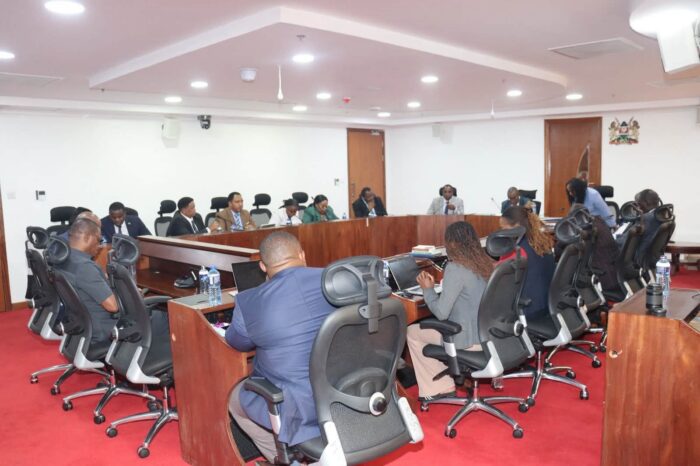
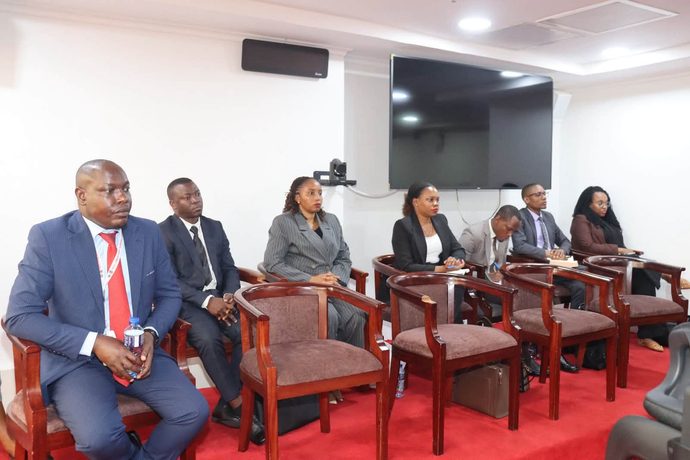
The resolutions were reached during a bilateral parliamentary benchmarking meeting hosted by Kenya’s Departmental Committee on Finance and National Planning for a visiting Tanzanian delegation.
The discussions came against the backdrop of persistent challenges facing regional trade, including non-tariff barriers, administrative delays at border points and the need to mobilise more domestic revenue to finance infrastructure and other development priorities.
The urgency of the resolutions is underscored by recent findings from the EAC Secretariat, which have exposed the gap between regional integration commitments and actual border operations.
During a July 2026 assessment of the Namanga and Horohoro-Lungalunga border posts, EAC officials identified overlapping procedures by government agencies, inadequate staffing, congestion, insufficient truck parking and delays in regulatory approvals as obstacles to efficient cargo clearance. The officials also cited poor integration of digital systems among border agencies.
At Namanga alone, the border handled approximately 66,500 cargo trucks over the preceding 12 months, illustrating the pressure on facilities and systems serving one of the region’s important trade corridors.
The EAC has set a target of increasing intra-regional trade to 50 per cent by 2030, making the removal of such bottlenecks critical to expanding markets, supporting businesses and strengthening regional competitiveness.
The latest concerns also reflect a wider problem with non-tariff barriers (NTBs), including restrictive regulations, additional levies and administrative procedures that make cross-border trade more expensive and unpredictable.
A report published by The East African in August 2026, citing the EAC’s Regional Monitoring Committee, reported that intra-regional trade had stagnated at about 15 per cent of total trade, with persistent barriers and uneven implementation of regional commitments undermining integration.
The issue of non-tariff barriers has been particularly contentious between Kenya and Tanzania, with disagreements over taxes, levies, permits and restrictions on goods traded across their common border.
In August 2026, the EAC’s Regional Monitoring Committee reported that 28 non-tariff barriers remained outstanding across the bloc, with Tanzania accounting for 11 and Kenya five. Tax-related measures, including excise duties and levies, were identified as the dominant source of trade disputes.
Against this background, the MPs argued that closer cooperation between the two countries’ revenue authorities was necessary to prevent unilateral administrative measures from frustrating regional trade agreements.
Tanzania seeks lessons from Kenya’s budget oversight
The Tanzanian delegation was led by its Budget Committee Chairperson, Mashimba Mashauri, who said the visit was intended to provide insights into Kenya’s approach to revenue collection, public expenditure, citizen participation in budgeting and private-sector involvement in infrastructure development.
“We came to learn how Kenya oversees government operations, monitors implementation of Parliamentary resolutions and engages citizens in the budget process. We are equally interested on how to supervise revenue mobilization alongside expenditure, how to bring the private sector into infrastructure delivery and how to manage limited resources against huge development demands,” said Mashauri.
He noted that Tanzania operates a single, unified Budget Committee, unlike Kenya, which has separate Budget and Appropriations and Finance and National Planning committees with distinct responsibilities.
Presiding over the meeting, Kitui Rural MP David Mboni explained the constitutional and legislative framework guiding Kenya’s Finance and National Planning Committee.
He cited Standing Order No. 216 and Articles 95, 118 and 124 of the Constitution, which provide the basis for parliamentary oversight and public participation in legislative processes.
The committee oversees the National Treasury, State Department for Economic Planning and key financial institutions, including KRA, the Central Bank of Kenya and the Capital Markets Authority.
“All tax-related Bills, including the annual Finance Bill, are committed to this Committee. Before we report any tax legislation to the House, public participation is mandatory. We take memoranda, hold hearings in Parliament and go to Counties to gather the views of Kenyans,” noted Hon. Mboni.
He also highlighted Kenya’s adoption of technology and legislative reforms to widen the tax base, improve compliance and strengthen revenue collection.
Among the initiatives cited was the electronic Tax Invoice Management System (eTIMS), which enables electronic invoicing and improves the tracking of business transactions.
He further pointed to efforts to bring virtual asset service providers under regulatory oversight as part of measures to keep pace with emerging economic activities and evolving sources of taxable income.

EADB accountability concerns
The legislators also discussed accountability issues surrounding the East African Development Bank, particularly its dividends, privileges and immunities.
The concerns come amid ongoing efforts in Kenya to strengthen parliamentary scrutiny of public financial commitments to the regional lender.
On October 16, 2026, the National Assembly passed the East African Development Bank (Amendment) Bill, 2026, which seeks to require parliamentary approval before public funds are released from the Consolidated Fund for payments to the institution.
The proposed amendments also provide for greater scrutiny of financial arrangements involving the bank, annual reporting by the National Treasury and changes to provisions governing its privileges and immunities.
The issue is significant because public contributions to regional financial institutions involve taxpayers’ money and should be subject to appropriate accountability mechanisms without undermining the institutions’ ability to fulfil their mandates.
The Kenyan and Tanzanian lawmakers agreed to continue engaging on the outstanding concerns, with a commitment to recommend legislative amendments if existing legal and institutional arrangements fail to resolve the challenges.
The meeting concluded with an agreement to sustain bilateral parliamentary engagements and organise a policy workshop focusing on infrastructure financing, tax harmonisation and broader regional economic issues.
The proposed engagements are expected to provide a platform for the two legislatures to share experiences, address policy differences and develop common approaches to challenges affecting trade and development.