By Nyang’au Araka
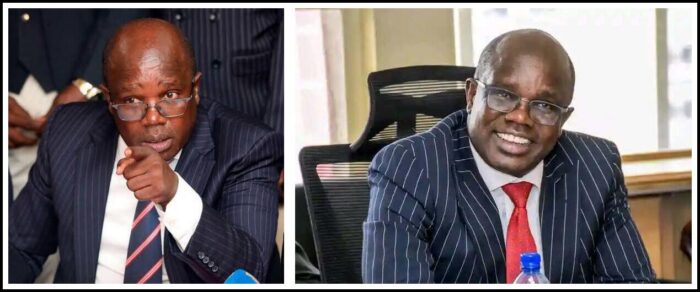
To television audiences, Dr Constantine Wasonga is rarely a man given to smiles.
The Universities Academic Staff Union (UASU) secretary-general cuts the image of a tough, no-nonsense trade unionist who chooses his words carefully but delivers them with unmistakable firmness.
One can clearly tell that fighting for lecturers in Kenya is no laughing matter, and Dr Wasonga seems perfectly suited to the task.
Also Read
Whether confronting Government officials over lecturers’ salaries, challenging university administrators or defending academic staff against threats of dismissal, Wasonga often appears stern, combative and unwilling to entertain excuses.
His television appearances during the recent university lecturers’ strike reinforced that image, with a series of memorable statements that turned him into one of the most recognisable voices in the industrial dispute.
When the Government reportedly threatened striking lecturers with dismissal, Wasonga responded with characteristic defiance.
“You cannot joke with people who have gone to school. Ati, you are scaring us with sacking. Dons can teach anywhere in the world, don’t scare us, and we are very few. Unacheza na sisi,” he declared.
It was not merely a rejection of the threats but a demonstration of his willingness to confront authority without appearing intimidated.
On another occasion, he warned that the country was heading for what he described as the “mother of all strikes”, accusing the Government of mismanaging the university sector.
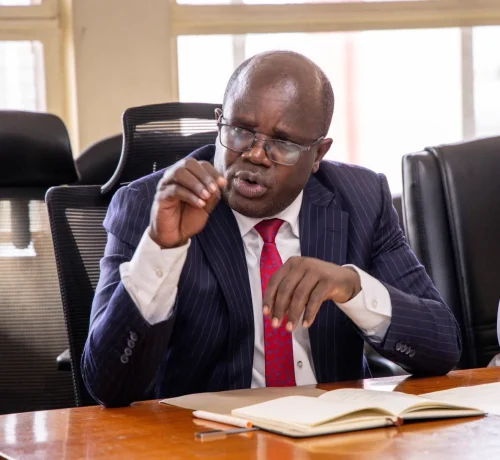
His punchline was equally sharp when discussing the country’s university administrators.
“A professor who cannot speak truth to power should not be called a professor,” he said, challenging vice-chancellors whom he accused of failing to communicate the realities facing public universities to the Government.
Yet, perhaps his most entertaining contribution to the strike debate came when he invoked philosophy to explain why he could not commit to a deadline for ending the industrial action.
The remark captured his ability to inject humour into an otherwise tense dispute while maintaining the union’s hard-line position.
In another intervention, he challenged the idea that lecturers’ salaries should depend on money collected from students.
“We are not going to allow that our salaries be paid from student fees,” he insisted, arguing that public university employees should be paid through the Consolidated Fund or money appropriated by Parliament.
His position reflected the union’s wider argument that the Government must provide predictable funding for public universities and honour negotiated agreements.

But away from the negotiating table, television studios and press conferences, another side of the union leader emerges.
People familiar with him in academic settings describe a jovial personality, suggesting that the stern figure Kenyans encounter during labour disputes does not tell the whole story of the man.
The contrast raises an interesting question: Is the combative Dr Wasonga seen on television the same person his students and colleagues encounter away from the glare of cameras?
His students and those who have encountered him in academic settings offer a different perspective, describing a more relaxed and humorous individual than the stern trade unionist who dominates television interviews.
For them, the man who appears ready for a confrontation during salary negotiations can also be jovial and approachable.
Some videos showing him in a jovial mood while mingling with students have been doing the rounds online in recent weeks, portraying the different dimensions of the same individual.
His appearances on television, including interviews with TV47, have made him a familiar face to audiences following the university funding debate.
“In fact, when I’m at home, one can tell that my wife is tougher than me,” Dr Wasonga said in one of the interviews, distinguishing his tough composure when tackling strike issues from his day-to-day life.
The remark offers a glimpse into the personality behind the public image and suggests that the stern demeanour associated with his union leadership does not necessarily extend into his private life.
Even so, the personality behind the public statements remains an equally interesting subject.
The contrast is particularly striking because union leadership demands a degree of firmness.
Negotiations involving salaries, allowances, pensions and working conditions rarely offer room for sentiment, especially when parties remain far apart.
Dr Wasonga has repeatedly maintained that lecturers cannot be expected to abandon their demands simply because the Government cites financial constraints.
His uncompromising position has also attracted criticism, particularly over the disruption of university learning and the consequences of prolonged industrial action for students.
The strike, which began on October 2, was eventually suspended following negotiations and a return-to-work agreement.
However, the underlying questions about university financing and the implementation of collective bargaining agreements remain central to the union’s demands.
Dr Wasonga’s approach to negotiations was perhaps best captured by his warning that the Government could not impose an agreement on lecturers.
“You cannot impose terms on us. We are the ones who are supposed to sit at the negotiating table, and any agreement must be negotiated, not imposed on us,” he said.
Perhaps the man behind the frown is not as tough as the cameras suggest; the jovial figure his students encounter and the man who admits that his wife is tougher than him may be closer to the Constantine Wasonga few Kenyans get to see.
-babahezel@gmail.com