By GPC Reporter
The East African Community (EAC) has adopted regional artificial intelligence and digital transformation strategies aimed at strengthening technology use in education, healthcare, agriculture, industry and public services.
The ministers responsible for education, science and technology, culture and sports also approved an artificial intelligence (AI) foundational module for undergraduate students in universities across the region.
Also Read
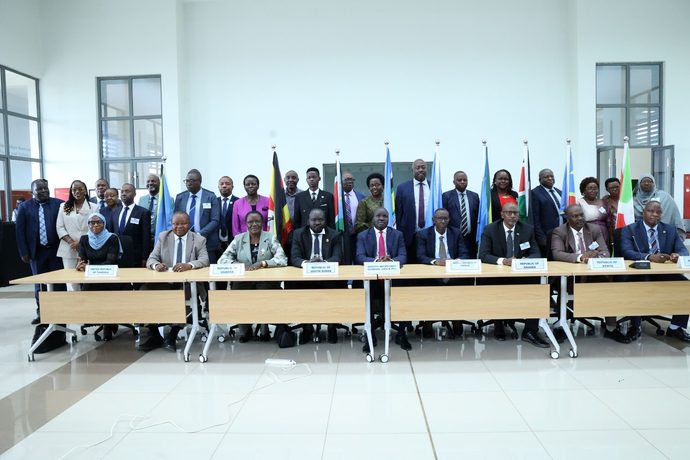
The decisions were reached during the 21st Sectoral Council on Education, Science and Technology, Culture and Sports, held from October 27 to 31, 2026, at the Inter-University Council for East Africa (IUCEA) headquarters in Kampala, Uganda.
The ministers further approved the regional Biotechnology Strategy and agreed to develop AI certification benchmarks for Kiswahili, in a move aimed at strengthening the language’s application in emerging technologies.
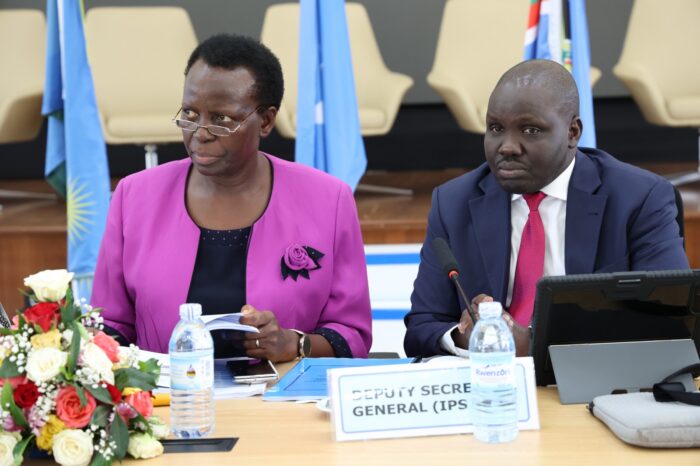
Addressing the ministerial session, EAC Deputy Secretary General Andrea Arik Malueth called for education systems that equip young people with relevant skills for employment and the changing demands of the labour market.
“As we consider outstanding decisions and new proposals, I urge that our directives identify responsible institutions, achievable timelines and the resources required,” Malueth said.
The AI and Digital Transformation Strategies were developed by the EAC Secretariat in collaboration with the East African Science and Technology Commission (EASTECO).
They provide a common regional framework for the development and application of emerging technologies while addressing challenges relating to infrastructure, skills development and governance.
Universities to introduce AI training
Under the approved framework, universities in EAC Partner States will be encouraged to incorporate foundational AI training into undergraduate degree programmes across different disciplines.
The module covers basic AI knowledge, practical applications and responsible use of the technology.
The ministers directed Partner States to consider adopting the module across their degree programmes, while IUCEA was tasked with developing a regional implementation framework.
They also approved the establishment and operationalisation of a Regional Artificial Intelligence Network of Universities to promote collaboration in AI education, research and innovation.
Three additional AI instruments targeting teacher education were approved, covering curriculum and competencies, institutional policies and a code of conduct.
The Council also adopted the EAC Kiswahili Language Policy for submission to the Council of Ministers for approval, alongside measures to strengthen national coordination, training and youth-led digital resources.
On higher education access, the ministers raised concerns over universities that continue to charge students from other Partner States different tuition fees from those paid by local students.
Despite an earlier regional decision requiring equal treatment and payment in the host country’s local currency, the practice persists in some public and private universities.
IUCEA and national higher education regulators will assess the implementation of the decision, with findings expected to be presented to the 23rd Sectoral Council.
Cross-border professional practice
The ministers also approved the EAC Technical and Vocational Education and Training (TVET) Qualifications Framework, which seeks to make technical and vocational qualifications comparable across Partner States.
The framework is expected to improve recognition of skills and qualifications, making it easier for trained professionals to pursue employment opportunities across the region.
Partner States were directed to align their national policies and frameworks with the regional framework, while the EAC Secretariat will develop implementation guidelines.
The Council further called for faster alignment of Mutual Recognition Agreements for engineers, architects, accountants and veterinarians with Annex VII of the Common Market Protocol.
Uganda’s Minister of State for Education and Sports (Primary Education), Phyllis Chemutai, who chaired the meeting, said regional cooperation was necessary to remove barriers affecting professional mobility without compromising standards.
“We must work collectively to remove unnecessary barriers to the recognition of qualifications while safeguarding professional standards and the quality of services delivered across our Partner States,” Chemutai said.
She pledged that Uganda would review its laws, regulations and policies to facilitate the implementation of the Mutual Recognition Agreements.
On culture and sports, Kenya confirmed that it would host the sixth edition of the East African Community Arts and Culture Festival (JAMAFEST) in Nairobi in February 2027.
The proposed theme will explore how artificial intelligence and digital technology can support the preservation of cultural heritage and promote tourism.
The ministers approved the festival’s theme and implementation roadmap and directed the Secretariat to prepare a three-year calendar of flagship regional events.
The meeting also considered a proposed EAC framework for participation in Pamoja AFCON 2027, which Kenya, Uganda and Tanzania will jointly host.
The framework identifies opportunities for communities and creative enterprises through cultural showcases, joint tourism promotion, business exhibitions, youth exchanges and volunteering.
Chemutai urged Partner States to expedite arrangements for the Pamoja Visa to facilitate movement across the three host countries during the continental football tournament.
The Council directed the Secretariat to convene technical experts from Partner States to review the draft concept note on EAC participation by November 2026.
Malueth acknowledged that financial and institutional capacity constraints could affect implementation of the regional programmes, calling for increased national funding and stronger private-sector partnerships.
“Sustained national financing, stronger private-sector partnerships and adequate institutional capacity are essential to carry these programmes forward,” she said.
The ministers also recognised support from development partners, including Germany, the European Union and the World Bank, through initiatives such as the EAC AI Alliance.
The meeting was the first EAC organ session hosted at IUCEA’s newly completed headquarters in Kampala, which was officially inaugurated following the ministerial session.
IUCEA Acting Executive Secretary Prof. Idris Rai described the facility as a regional platform for dialogue and cooperation in higher education, research and innovation.