By Nyang’au Araka
It was a busy day for me in Nairobi when Raila Amolo Odinga’s body was brought home from India. Across the country, grief was palpable. Tears flowed, emotions ran high, and Kenyans struggled to come to terms with the loss of a man whose political journey had shaped the nation for a long time.
In the city, the grief was accompanied by an extraordinary logistical challenge. Thousands of people were moving to pay their last respects, while others were trying to get home.
Also Read
Traffic on major roads was barely moving, turning what should have been an ordinary evening commute into a long, uncertain journey.
I initially thought the congestion would not affect my route along Kiambu Road. I found a matatu at the stage without difficulty and boarded, expecting to reach my destination without much trouble.
That optimism did not last long.
A few metres towards Kiambu, I realised that traffic was hardly moving. Vehicles were literally packed together, and the journey had become an exercise in patience.
As we approached Thindigua, vehicles began turning back. Our matatu also turned, and we had to alight.
Darkness was setting in, and I still had several kilometres to cover.
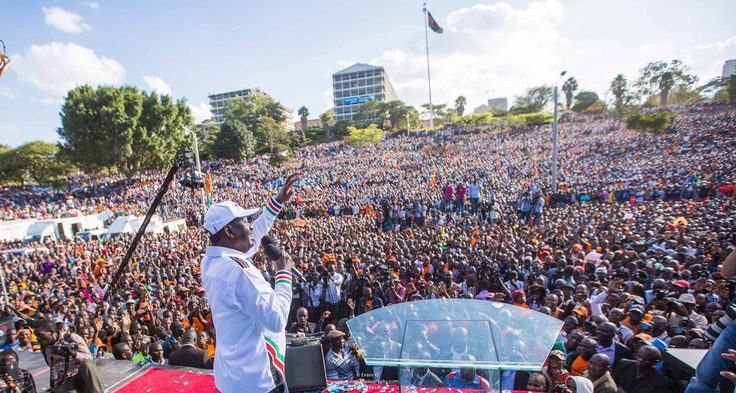
Ordinarily, walking from Thindigua to Kiambu town is not something one readily considers, particularly after dark. But this was no ordinary evening. The arrival of Raila’s body had drawn crowds onto the roads, and the city had been disrupted by an outpouring of public grief.
Motorcycle riders were charging as much as Sh700 for a trip. Yet the fare was not my biggest concern. The riders were also struggling to squeeze through the traffic, leaving me wondering whether taking a motorcycle would make any meaningful difference.
I began thinking about the risks. What would happen if there were an accident in the congestion? What if someone snatched my bag while we were trapped among the vehicles? Even paying the high fare offered no guarantee of a quicker journey.
Then I noticed people walking towards Kiambu and other destinations. They were making their way home on foot, often in small groups.
I decided to join them, taking care not to find myself walking alone.
At first, I was simply trying to get home. But somewhere along the way, the journey acquired a different meaning. I began to feel that walking was my own modest way of joining fellow Kenyans in mourning a great man.
His names were ringing in my head: Enigma Raila Amolo Odinga, Baba, Agwambo, Tinga, Jakom, name them! How could death be so stupid to snatch him from our midst?
At Kiambu National Polytechnic, I came across a vehicle whose occupants were willing to give me a lift. By then, however, I had made up my mind. I would walk all the way home.
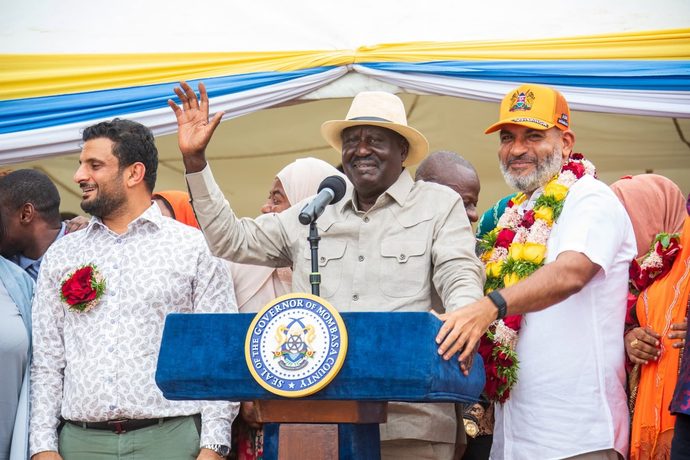
I was not alone in that experience. I later learnt that thousands of other Kenyans had also walked considerable distances that evening, with some making the journey from Jomo Kenyatta International Airport (JKIA) to Kasarani, where the body was received by mourners.
That realisation put my own experience into perspective. My walk from Thindigua was hardly extraordinary when compared with the distances covered by other Kenyans who had turned out to honour Raila.
Yet it remained deeply personal.
Raila was more than a political leader to many of his supporters. His life and public service had become part of Kenya’s wider story, touching on the country’s democratic struggles, political realignments and aspirations for a better future.
People mourned him for different reasons, but the crowds on the roads that evening offered a powerful reminder of the place he occupied in the national consciousness.
I kept walking until I reached my destination at about 9pm. By then, I was tired, but I was also happy that I had completed the journey on foot.
I had not planned to walk that evening. Traffic had made the decision for me, but I had chosen to continue even when an opportunity for a lift presented itself.
As Kenya marks the first anniversary of Raila’s death, I look back on that evening as one of my most memorable experiences of the public mourning that followed his return home.
I arrived exhausted, yet satisfied. In the end, I felt that I had mourned Raila in a way that was meaningful to me, one step at a time.
– Nyang’au Araka is a member of the Gusii Press Club.