By Nyang’au Araka
Breast cancer is increasingly affecting younger women in Kenya, raising concerns among medical experts.
Dr Anthony Muchiri, a medical oncologist at Victoria Cancer Care and Research is now calling for more research into the disease’s changing patterns, biological characteristics and treatment responses among African populations.
Also Read
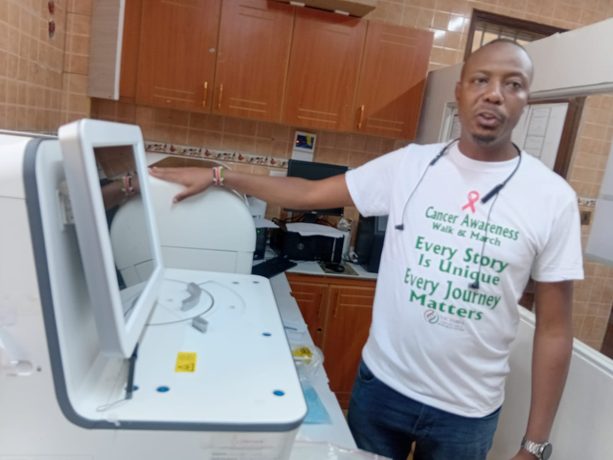
During a one on one interview with this writer in Nyamira, Dr Muchiri said women in their mid-30s and early 40s were increasingly featuring among patients seeking treatment at their facility.
“Here, the average age of the women I see with breast cancer is about 40, 35 thereabouts,” he said, challenging the conventional perception that the disease predominantly affects older women.
Dr Muchiri said the pattern raised important questions about why African women appeared to be developing the disease at younger ages and whether differences in tumour subtypes and genetic characteristics could influence treatment outcomes.
“Why are African women or Kenyan women getting breast cancer at a younger age compared to other areas?” he asked, arguing that the questions required closer scientific investigation.
He said treatment approaches developed elsewhere may not always produce the expected results in every African patient, highlighting the need for evidence that reflects local populations.
“Our genome is very different from the whites and the Europeans,” he said, calling attention to possible differences in disease characteristics and responses to treatment.
However, researchers caution against assuming that every observed difference is genetic.
Age at diagnosis, delays in seeking care, access to screening, tumour biology and socioeconomic circumstances can all influence the clinical picture.
A 2025 study of breast cancer patients at Kijabe Hospital found that younger patients were more likely to present with larger tumours and greater lymph-node involvement than older patients.
The researchers called for further studies to understand these differences.
Understanding the disease patterns
Kenya’s National Cancer Screening and Early Diagnosis Guidelines, published in 2024, recognise that breast cancer epidemiology in the country peaks around the age of 40, supporting earlier attention to detection.
The guidelines recommend a risk-based early-detection programme.
The country’s cancer burden reinforces the need for stronger research and surveillance.
According to the National Cancer Institute of Kenya’s August 2026 update of GLOBOCAN 2024 estimates, breast cancer accounts for 5,822 new cases annually, making it the country’s most commonly diagnosed cancer.
The estimates attribute 2,882 deaths each year to the disease.
Dr Muchiri said the diversity of breast cancer meant that treatment could not follow a uniform approach for every patient.
He emphasised that the stage and subtype of the disease should guide clinical decisions, including whether chemotherapy should precede surgery.
The oncologist said early detection remained crucial because advanced disease could involve the chest wall and lymph nodes, making complete surgical removal more difficult.
The oncologist also sought to dispel fears surrounding biopsies, explaining that the procedure involves taking a small tissue sample to determine whether a suspicious mass is cancerous.
He urged women not to avoid diagnostic procedures because of misinformation, noting that a biopsy was different from surgery to remove a tumour.
Access to care remains a challenge
Dr Muchiri said cancer awareness and treatment uptake remained low in the Nyamira region, with some patients travelling to Eldoret and other towns despite the availability of specialist services locally.
He estimated that travelling to Eldoret could cost a patient about Sh5,000, excluding other expenses associated with treatment.
“It is our patient, as Nyamira people,” he said, urging healthcare providers to work together rather than allow institutional barriers to complicate access to specialist care.
Further, called for closer collaboration between county and national governments, public hospitals and private cancer facilities, arguing that better coordination could reduce unnecessary transfers and costs.
Dr Muchiri said the absence of a comprehensive local cancer registry had also made it difficult to establish the scale and distribution of cancer cases in Nyamira.
He noted that the National Cancer Institute of Kenya was developing regional registries to improve the tracking of cases and identify local trends.
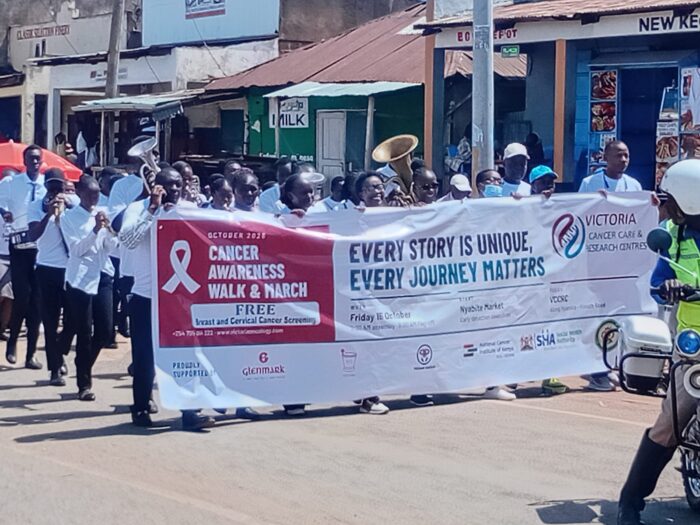
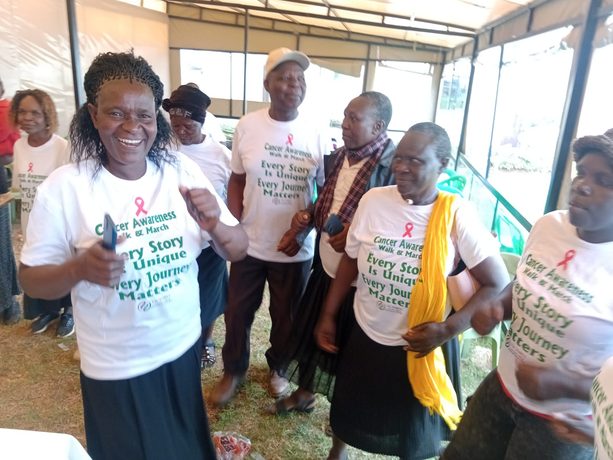
He gave the interview after a breast cancer awareness event that included screening for breast, cervical and prostate cancers and activities celebrating cancer patients.
Earlier, there was a walk from Nyabite Market to the hospital.
This year’s global cancer awareness is: “Every story is unique, every journey matters.”
The wider challenge, Dr Muchiri said, is to encourage early screening while strengthening locally relevant research, reliable cancer data and affordable treatment.
Although breast cancer mainly affects women, men can also develop the disease, albeit rarely.