By Shem Onderi
It was reserved and thrived,
survived and enlarged, with plenty of water beneath it.
Also Read
Aquatic life blossomed.
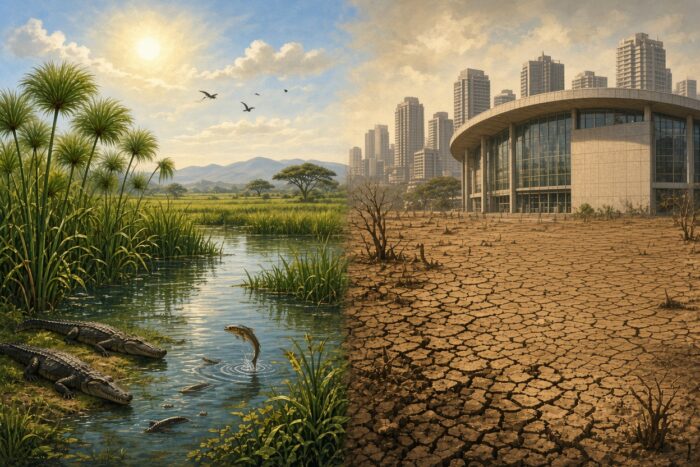
The crocodiles, fish and all unseen creatures
enjoyed the ambience.
None was extinct; they multiplied.
The wetland served the city with water and fresh air,
water reserves kept for ages to come.
Grass grew, ever green, across the wetland.
Grass harvesters would cut it,
but never penetrate the wetland.
To the wetland, heavy rains meant
more water from above.
Under the vegetation grew a water bed.
The wetland covered more land, as expected.
It spoke through its looks:
the greener, the merrier.
Then humanity saw a vacant land, unutilised,
and invaded it.
It dried all the grass,
emptied the water
and chased the living things
from beneath the water bed.
Concrete was filled on the former wetland.
Storey buildings were erected.
We mistook it to mean development.
Then drought hit the land,
and humanity suffered.
A conference hall was built
on a former wetland,
where they all congregated
to discuss how to restore wetlands.
Speeches were made.
Plans of action were created.
But it was long destroyed and gone.
The oddity.