By Nyang’au Araka
What happens to a lifetime spent fighting for democracy when the political battles are over?
For former Prime Minister Raila Odinga, the answer could soon be found in university classrooms, public debates and the minds of young Kenyans who may never experience the struggles that shaped his political journey.
Also Read
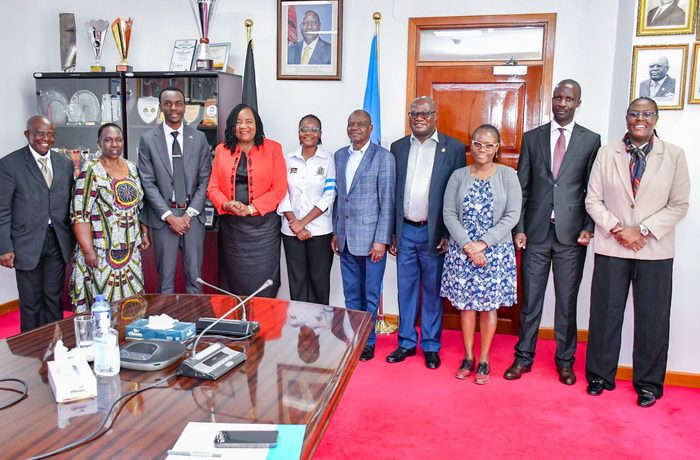
The University of Nairobi (UoN) is set to establish the Rt. Hon. Raila Odinga Centre for Democracy (ROCD), an institution intended to preserve and advance the democratic ideals associated with the veteran politician’s lifelong struggle for political and constitutional reform.
The university wants it to become a place where students, researchers, policymakers and members of the public can confront difficult questions about democracy, elections, leadership and Kenya’s political development.
Vice-Chancellor Prof Ayub N. Gitau said the institution should not merely look backwards at Raila’s life, but turn his legacy into a platform for continued scholarship and public engagement.
“We will not merely commemorate a life; we will launch an enduring University institution dedicated to advancing the democratic values, scholarship and public dialogue associated with his contribution,” Prof Gitau said.
The proposed centre will be anchored in the Faculty of Arts and Social Sciences, through the Department of Political Science and Public Administration.
For Raila’s family, however, its success will ultimately be measured by what it produces—not the name displayed on its entrance.
His widow, Dr Ida Betty Odinga, challenged the university to make the centre a living institution capable of shaping independent thinkers.
“It is the people inside that give the Centre meaning, not just the name on the outside. Let the Centre belong to you, the people,” she said.
His daughter, Winnie Odinga, said her father had devoted much of his life to the pursuit of democracy and envisioned a future in which generations of Kenyans would not be afraid to ask uncomfortable questions.
Among those questions, she reflected, should be whether elections alone are enough to define a democracy.
That question is particularly relevant to a country where elections have repeatedly shaped political relationships, triggered intense public debate and influenced the direction of national governance.
The centre therefore arrives with an ambitious task—to turn the lessons of Kenya’s democratic struggles into knowledge that can be interrogated by future generations.
The university is now preparing for its inauguration, which is expected to coincide with the inaugural Memorial Lecture on Democracy.
If successful, the ROCD could give Raila’s long political journey an institution where Kenyans can continue arguing, questioning and imagining what democracy should mean.