By Nyang’au Araka
Kenya has intensified surveillance, contact tracing and preparedness measures after confirming its first imported case of Bundibugyo Ebola Virus Disease, with dozens of people placed under quarantine following the death of the patient.
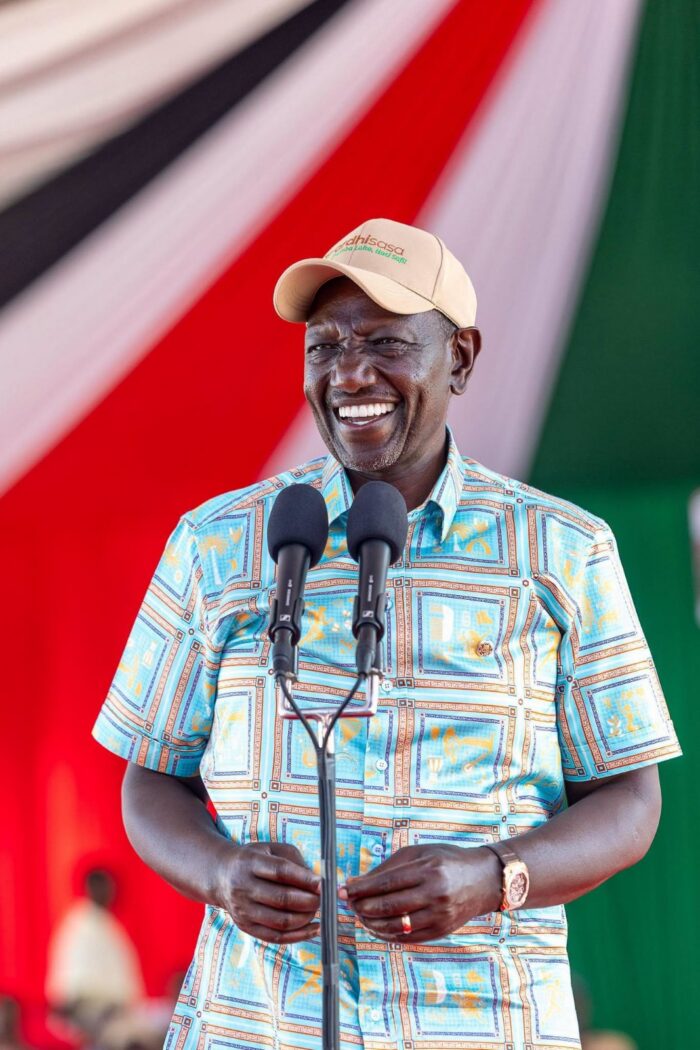
President William Ruto ordered the National Security Council Committee to assess the situation and recommend measures to prevent further transmission after the patient, who had travelled into Kenya, died.
Also Read
According to a statement from State House, eight family members of the deceased have been placed under quarantine and are undergoing daily monitoring for symptoms.
Twenty-one healthcare workers who attended to the patient have also been quarantined and are being closely monitored.
Authorities have further traced passengers who travelled on the same flight as the deceased. So far, 27 passengers who may have had contact with the patient have been identified and contacted, with public health measures being undertaken.
The patient was safely buried in accordance with established public health protocols.
The Government said there was no evidence of additional positive cases as of October 6, despite extensive screening and testing.
“Of the 267 samples tested, only one has returned a positive result: that of the deceased patient,” State House spokesperson Hussein Mohamed said in a statement.
He said the Government had intensified surveillance and rapid response operations following the confirmation of the case.
“No additional positive cases have been detected,” the statement said.
The Government said 652,584 travellers had been screened by October 6 as part of measures to detect possible imported cases.
A total of 267 samples had also been tested across five laboratories, including the National Virology Reference Laboratory, KEMRI facilities in Nairobi and Kisumu, and mobile laboratories deployed at the Busia and Lwakhakha border points.
Kenya has also increased the number of health workers trained to respond to the disease.
According to State House, 4,971 healthcare workers have been trained at national and sub-national levels in Ebola prevention, detection and management.
Several facilities have been designated to manage suspected and confirmed Ebola cases.
They include Kenyatta National Hospital, with eight beds; Moi Teaching and Referral Hospital, with 50 beds; National Police Hospital, with 49 beds; and The Nairobi Hospital, with 143 beds.
The Government said additional isolation and treatment facilities would be designated as the situation develops.
Be vigilant
The Kenya Medical Association urged Kenyans to remain vigilant but cautioned against panic following confirmation of the case.
“One confirmed case is serious, but it is not cause for panic,” KMA said in a statement issued on October 6.
The doctors’ association called for early reporting of symptoms and strict adherence to quarantine requirements.
It said people who have recently travelled from the Democratic Republic of Congo, Uganda or South Sudan, travelled on Jambo Jet flight 8523 that arrived in Nairobi on October 3, or had contact with a suspected case should promptly disclose their travel and contact history.
Such individuals have been advised to call the Ministry of Health toll-free line 719 or *719# so that healthcare workers can prepare for their arrival.
The KMA said quarantine was an important part of containing the disease because contacts are monitored for 21 days, allowing those who develop symptoms to receive care quickly while reducing the risk of transmission to family members and other members of the public.
The association also urged healthcare workers to screen patients for travel history, isolate suspected cases immediately and use appropriate personal protective equipment when managing suspected Ebola cases.
“Early care saves lives,” the KMA said, noting that the Bundibugyo strain has historically been less deadly than the Zaire strain.
The association said there was currently no approved vaccine or specific drug for the Bundibugyo strain, making early recognition and supportive care important in the management of suspected cases.
It also sought assurances that adequate personal protective equipment would reach health facilities and that isolation units and surveillance systems at points of entry remain ready.
Expand response
Meanwhile, the Pharmaceutical Society of Kenya has asked pharmacists and pharmacy teams to heighten vigilance as the disease response expands.
The society noted that pharmacies are often among the first points of contact for people experiencing early symptoms, meaning pharmacists and pharmaceutical technologists could play an important role in identifying suspected cases.
It urged pharmacy teams to follow a simple approach: “Recognise. Protect. Refer. Report.”
Pharmacists have been advised to look out for symptoms including fever, marked weakness or fatigue, chills, muscle pain and sore throat, while establishing recent travel and exposure history where appropriate.
The society cautioned pharmacies against attempting to routinely manage suspected Ebola cases.
“A pharmacy should not attempt to routinely manage a suspected Ebola case,” it said, advising staff to separate suspected patients from others as safely as possible and activate the appropriate referral and public health pathways.
The society also warned against unnecessary physical contact, invasive procedures and exposure to bodily fluids, while stressing hand hygiene, appropriate protective equipment, environmental cleaning and safe waste handling.
It further urged healthcare workers and members of the public to protect patient confidentiality and avoid circulating names, photographs, travel details or unverified information on social media.
Kenyan authorities have urged the public to remain calm while observing strict hygiene measures and avoiding contact with people showing symptoms associated with Ebola, including fever, severe headache, muscle pain, weakness, vomiting, diarrhoea and unexplained bleeding.
Anyone experiencing such symptoms, particularly after possible exposure to a suspected or confirmed case, has been advised to avoid close contact with others and seek guidance from a recognised health facility immediately.
The Government said it would continue monitoring the situation and strengthen surveillance, contact tracing, testing and treatment capacity as necessary.
The Ministry of Health is expected to issue further guidelines on safeguards and preventive measures as Kenya responds to the imported case.