By GPC News Desk
The proposed definition of a journalist has emerged as a major point of contention in the planned review of Kenya’s media laws.
Lawmakers are questioning whether new professional requirements could exclude digital content creators and people practising journalism without formal qualifications.
Also Read
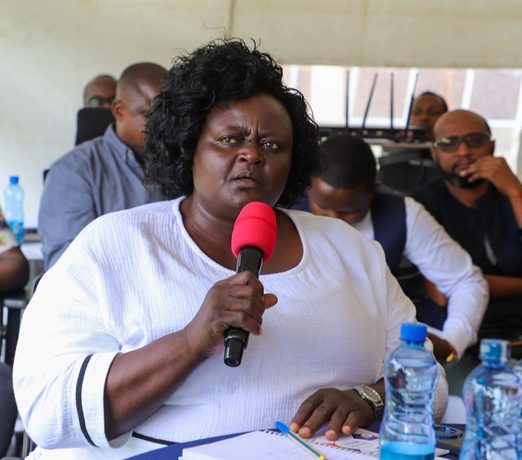
Members of the National Assembly Departmental Committee on Communication, Information and Innovation raised the concerns during an engagement with the Media Council of Kenya (MCK) in Nakuru on Friday, as the Council presented proposals to amend the Media Council Act, 2013.
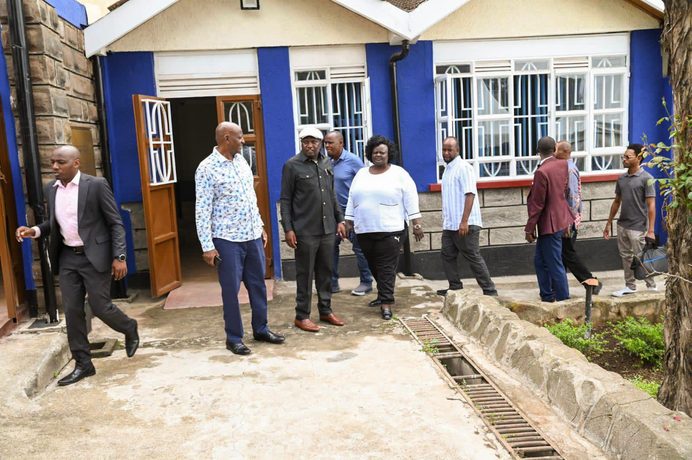
The meeting, held at the Council’s regional office, followed an inspection tour of media hubs in Nakuru County and brought together representatives of the Ministry of Information, Communication and the Digital Economy, the Kenya Law Reform Commission and MCK officials.
At the centre of the discussions was the need to establish clearer professional standards while ensuring that changes to the law do not unnecessarily restrict freedom of expression or exclude emerging players in the rapidly evolving media industry.
The proposed amendments seek to distinguish professional journalists from bloggers, social media content creators and other individuals involved in gathering and disseminating information.
However, lawmakers questioned how the distinction would be applied, particularly where individuals practise journalism without formal academic training or accreditation.
Nandi MP Bernard Kitur warned that leaving the definition unclear could “create further confusion”, arguing that even self-employed individuals could claim to be journalists without necessarily meeting recognised professional standards.
MCK Chief Executive Officer David Omwoyo told the committee that the existing law gives the Council considerable discretion in determining who qualifies as a journalist but does not provide sufficiently clear statutory criteria.
He said the proposed changes were intended to establish minimum educational and professional requirements while strengthening journalism as a recognised profession.
“We are trying to professionalise, and to do that we have to subscribe to the profession through a process of administration,” Omwoyo said.
He explained that the Council’s transition from a civil society organisation to a statutory body had exposed inconsistencies in its legal foundation, contributing to recurring challenges in implementing its mandate.
He cited legal disputes surrounding key governance processes, particularly the recruitment and constitution of the Council’s Board, as evidence of the need to eliminate ambiguities in the legislation.
MCK Manager for Regulatory Affairs Terence Bavon Minishi outlined other gaps the proposed amendments seek to address, including overlapping responsibilities between the Council and the Communications Authority of Kenya (CA), as well as duplication of functions involving the Media Complaints Commission.
“We need a clear legal framework that defines regulatory responsibilities, addresses existing gaps and prevents duplication of mandates,” Minishi said.
The Council also wants the law to accommodate developments in digital journalism, artificial intelligence (AI) and changing models of content production and distribution.
The proposals include reviewing the categorisation of foreign journalists, clarifying the Council’s statutory functions and renaming the Complaints Commission as the Media Complaints Commission.
MCK officials told the committee that recent court decisions had helped clarify the respective responsibilities of the Council and CA, particularly regarding media content regulation and broadcasting licences.
The expansion of Kenya’s broadcasting industry since the enactment of the current law in 2013 has also increased regulatory demands.
MCK Training Director Victor Bwire said the growing number of television and radio stations, particularly vernacular broadcasters, required stronger monitoring capacity.
He cautioned against relying exclusively on artificial intelligence to monitor broadcasting content, noting that local language programming requires human personnel who understand the languages and their cultural contexts.
Beyond legislative reforms, the engagement examined journalists’ welfare, professional independence and the challenges facing regional media operations.
Committee Vice-Chairperson Alfah Miruka (Bomachoge Chache) urged journalists to strengthen their professional associations and trade unions to negotiate better working conditions and advocate for improved remuneration.
He said the committee could raise concerns about journalists’ pay with relevant government agencies, including the Salaries and Remuneration Commission, but had no authority to dictate salaries in privately owned media organisations.
Miruka also called for responsible journalism, particularly as the country approaches another election cycle.
“As we review the law, we must consider the role of the media during elections and the standards required to ensure responsible journalism,” he said.
Homa Bay MP Joyce Atieno Bensouda cautioned that media organisations wield considerable influence over national stability and should exercise responsibility in their coverage.
“Media houses can burn the country or build it,” she said, urging journalists to avoid propaganda and uphold professional standards.
Mbooni MP Erastus Kivasu challenged journalists to prioritise accuracy and authenticity when reporting public affairs.
“Try to be realistic. This is your country, and whatever you disseminate to the public is internalised and digested. Give the public information that is true and authentic,” he said.
Committee members also raised concerns about access to professional training, particularly for journalists who are not accredited, highlighting the need to balance professional standards with opportunities for career development.
The Council, meanwhile, urged media practitioners to collaborate with digital content creators in promoting responsible communication, uphold ethical standards and ensure timely dissemination of information, particularly at the grassroots.
The committee also assessed the role of MCK’s regional media hubs in supporting journalists outside Nairobi. The facilities provide working spaces and access to resources for journalists and independent content producers.
MCK said it was pursuing partnerships with institutions such as the Kenya News Agency (KNA) and Kenya Broadcasting Corporation (KBC) to help address operational expenses, including rent.
Bensouda proposed public media open days to improve awareness of the Council’s mandate and create opportunities for citizens to interact with media practitioners and regulators.
The proposed amendments come as Kenya’s media industry grapples with the growing influence of social media, artificial intelligence and alternative content distribution platforms, developments that have increasingly blurred the boundaries between professional journalism and digital publishing.
The Council said its proposals had been informed by consultations with industry players and international regulatory experiences, including models in Sweden, Finland and South Africa.
The amendments are still under consideration and are not final. Further public participation is expected before the proposals are concluded, with the parliamentary committee’s input likely to influence the balance between professional regulation, media accountability and constitutional freedoms.