By Ongaga Ongaga
The principal of Bishop Gatimu Ngandu Girls High School has been ordered to explain a Sh1 million Nairobi Stock Exchange (NSE) investment questioned by MPs over its low returns.
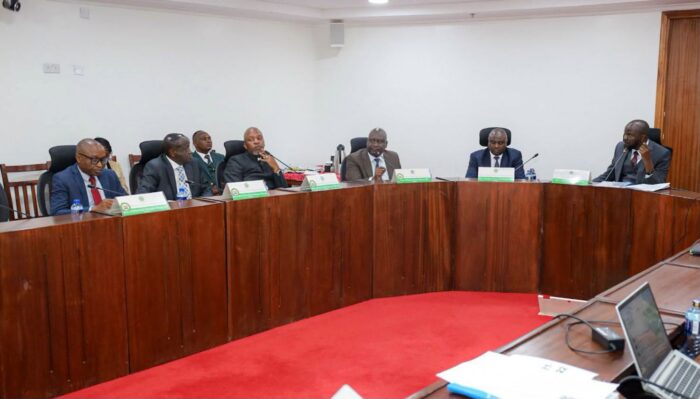
The National Assembly Public Investments Committee on Governance and Education also demanded documents to verify the investment and establish whether it had the required approvals.
Also Read
The National Assembly Public Investments Committee on Governance and Education (PIC-G&E) raised concerns after the Auditor-General flagged Sh1.58 million recorded as short-term investments in the school’s financial statements for the year ended June 2021.
The audit found that the school had not provided investment certificates or other supporting documents, making it impossible for auditors to verify the existence and completeness of the Sh1.58 million balance.
School Chief Principal Jane Njuguna told the committee that the amount comprised various balances, including Sh1 million invested in stock exchange shares, while the remainder was held in different accounts.
She said the investment generated finance income for the school.
However, MPs raised concerns after Njuguna disclosed that the Sh1 million investment had earned only Sh5,381 in dividends over one year.
“Can you imagine we have Sh1 million and this year you got Sh5,000?” committee chairman Dick Maungu, the Luanda MP, asked, questioning whether the investment was providing value for money.
The committee also sought to establish whether the investment had received approval from the National Treasury, as required when public funds are invested.
Auditor-General’s representative Patricia Esipeya told MPs that Section 119(2) of the Public Finance Management Act requires accounting officers to responsibly manage banking arrangements and ensure public cash balances are kept at a minimum.
She said public funds should not be left idle and that investments by public institutions require Treasury approval through the parent ministry.
When asked whether the school had obtained the required approval, Njuguna asked for more time to establish the details.
Her response did not satisfy the committee, with Maungu directing that the matter be deferred until the school produces the relevant documentation.
“We need to provide that indeed there is value for money,” Maungu said.
The chairman questioned why a public school would invest money while continuing to face financial challenges and seek contributions from parents.
“Girls will continue asking parents for money, yet they have money sitting in a platform, and that money is not adding value to the school,” he said.
Embakasi MP Mark Mwenje was more critical, arguing that public schools should not be run as investment centres.
“Schools are there to educate children. They are not investment centres,” Mwenje said.
Learners’ needs
He argued that earning about Sh5,000 a year from a Sh1 million investment amounted to misuse of public funds and said the money could instead have been used to address the needs of learners.
Sotik MP Francis Sigei sought to establish whether parents had been involved in approving the investment and whether minutes existed showing that the matter had been discussed at a parents’ meeting.
Kilome MP Thaddeus Nzambia also questioned the economic rationale of investing Sh1 million for such a low return.
“How can you invest Sh1 million and just get a return of Sh5,000?” Nzambia asked, describing the situation as unacceptable and demanding details of the investment’s rate of return.
The committee further sought details of the companies whose shares the school had purchased.
School bursar Racheal Wambui said the investment was still active and that the school received dividend payments through Absa and Centum. However, she could not immediately identify the specific equities in which the school had invested.
Wambui said the investment dated back to before 2010 and that she joined the school in 2022.
She acknowledged that, based on the returns, the investment did not provide value for money.
“Economically, I would say that it could not maybe give the value for money,” she told the committee.
Maungu also questioned how auditors had cleared the matter when school officials appeared unable to provide basic information about the investment.
Esipeya explained that auditors had initially raised the query because the school did not have investment certificates. They later verified through bank statements that the money had been invested in the stock market.
She said the investment had subsequently been moved back to the school’s operational account by the time auditors were evaluating the school’s response.
The explanation did not resolve the committee’s concerns.
Maungu directed the principal to return before the committee with investment records, including evidence of Treasury approval, details of the shares purchased, board and parents’ meeting minutes and information on the investment’s performance.
Kiminini MP Maurice Kakai Bissau also called for former school officials who initiated the investment to appear before the committee and explain the rationale behind the decision.
“We need to understand what exactly was in their mind when they decided to do an investment where there is no value for money,” Bissau said.
The committee will revisit the matter after the school submits the requested documentation.