By GPC Reporter
Media organisations and civil society groups have raised concerns over growing threats to journalists, political violence and the spread of disinformation ahead of Kenya’s 2027 General Election.
They warned that the challenges could undermine public confidence in the electoral process.
Also Read
The stakeholders want stronger collaboration between media practitioners, civil society organisations (CSOs), government agencies and electoral institutions to safeguard press freedom, protect human rights defenders and promote peaceful political competition.
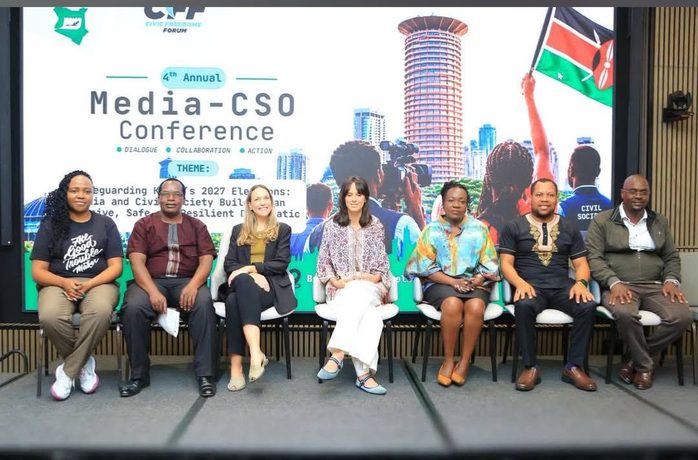
The concerns emerged during the fourth Annual Media-CSO Conference held in Nairobi recently, organised by the Kenya Correspondents Association (KCA) in partnership with the Civic Freedoms Forum and other media and civil society organisations.
Held under the theme Safeguarding Kenya’s 2027 Elections, and Building an Inclusive, Safe and Resilient Democratic Space for Media and Civil Society, the meeting brought together journalists, civil society representatives, government officials, diplomatic missions, electoral stakeholders, political leaders and grassroots organisations.
With the country scheduled to hold its next General Election on August 10, 2027, participants warned that the safety of journalists and the freedom of civic organisations to operate would be critical to ensuring credible elections.
One of the major concerns raised was the growing trend of attacks by suspected goons during political rallies, with stakeholders calling for stronger measures to protect journalists and other individuals documenting political activities.
They warned that intimidation and violence against media practitioners could restrict independent reporting, deny citizens access to reliable information and weaken accountability during the election period.
Beyond political rallies
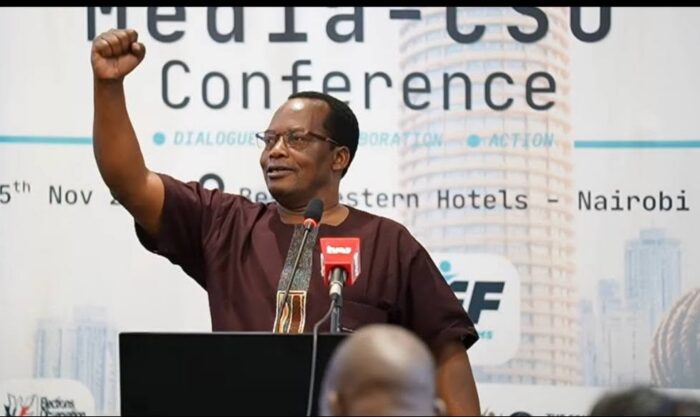
KCA Director of Programmes William Oloo Janak said the annual conference, first held in 2023, was established to strengthen cooperation between the media and civil society in promoting accountability, democratic governance and respect for constitutional freedoms.
He challenged journalists to “move beyond routine political coverage dominated by rallies, campaign activities, political alliances and election results, urging them to focus more on issues affecting citizens.”
Janak said the media had a responsibility to shape national conversations by interrogating policies, examining candidates’ records and ensuring that public debate addressed the country’s development challenges.
He also emphasised the need for more inclusive reporting, particularly on communities and groups whose voices are often overlooked in mainstream political discourse.
The KCA official said stronger partnerships between journalists and civil society organisations would help amplify the concerns of marginalised communities and strengthen the protection of human rights ahead of the elections.
Election threats
The conference also identified information manipulation as a major threat to the credibility of the 2027 elections.
Participants expressed concern that false information, misleading political content and the misuse of digital technologies could influence voter decisions, inflame political tensions and trigger violence before, during and after the elections.
The growing use of artificial intelligence in generating and distributing content was highlighted as an additional challenge, particularly where manipulated images, videos and audio recordings could be used to mislead voters or discredit political opponents.
Stakeholders called on media organisations, technology users and other players in the digital ecosystem to promote responsible use of artificial intelligence, strengthen fact-checking and ensure that citizens can distinguish verified information from fabricated content.
They also emphasised the importance of rapid information-sharing mechanisms to counter misinformation before it escalates into political or communal tensions.
IEBC urged to improve transparency
Electoral preparedness and the role of the Independent Electoral and Boundaries Commission (IEBC) featured prominently in the discussions.
Participants called on the electoral agency to strengthen transparency and provide journalists, civil society organisations and members of the public with timely access to information on electoral preparations.
They also discussed the need for electoral reforms, accountability in campaign financing, integrity of political leaders and safeguards against malpractice throughout the electoral process.
The stakeholders said public confidence in the elections would depend not only on the credibility of voting and tallying but also on the transparency of the institutions managing the process.
They further called for closer engagement between the IEBC, media and civil society groups to address emerging concerns and improve public understanding of electoral procedures.
Proposals to protect civic space
A key recommendation from the conference was the establishment of stronger joint election monitoring arrangements involving media organisations and civil society groups.
The proposed collaboration would help document incidents of violence, intimidation and violations of civic freedoms, while providing information for rapid intervention and response.
Participants also called for stronger protection mechanisms for journalists and human rights defenders working across the country, particularly those covering politically sensitive areas and activities.
They argued that protecting civic space was essential to ensuring that citizens, community organisations and independent institutions could freely participate in democratic processes without fear of intimidation.
The conference brought together representatives of independent commissions, government agencies, diplomatic missions and civil society leadership to deliberate on electoral reforms, press freedom, inclusion and the broader democratic environment.