By Nyang’au Araka
Global lawmakers have been urged to translate commitments against hunger into practical policies, funded programmes and measurable results.
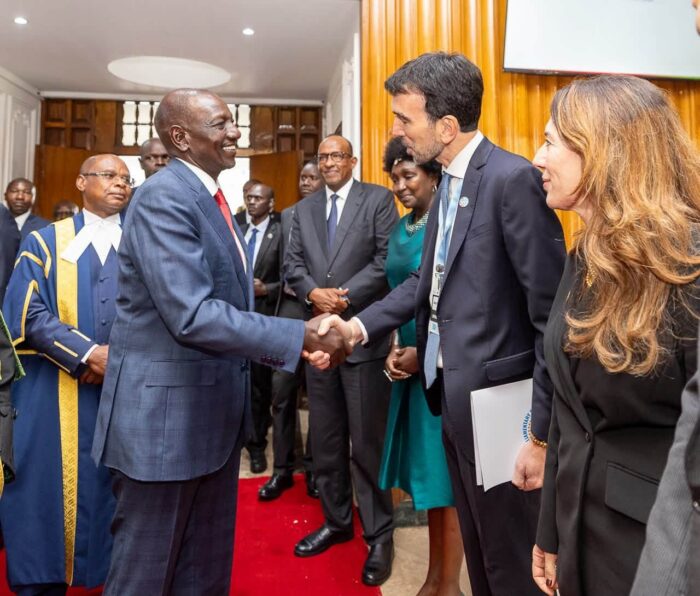
Food and Agriculture Organisation of the United Nations (FAO) Deputy Director-General Maurizio Martina said the success of the Third Global Parliamentary Summit Against Hunger and Malnutrition in Nairobi would depend on what legislators do after the meeting.
Also Read
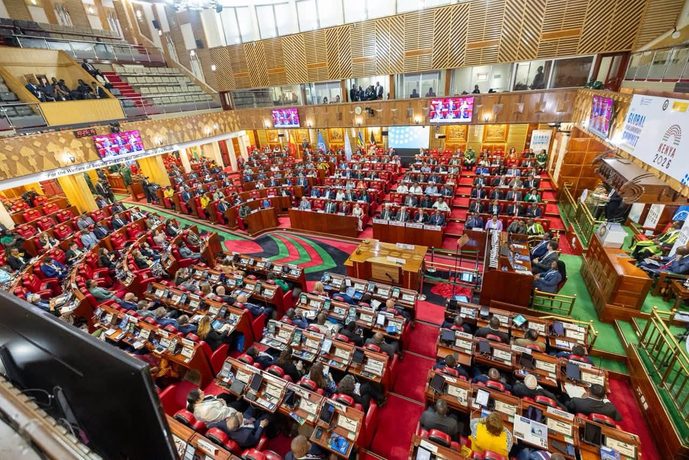
Addressing delegates at Parliament Buildings, Martina challenged lawmakers to use their legislative, budgeting and oversight powers to improve food security and nutrition in their respective countries.
“Our success will not be determined only by what we say here in Nairobi. It will be determined by what happens after Nairobi,” he said.
He identified legislation, budget allocation, oversight and representation as key tools parliamentarians could use to ensure governments prioritise the fight against hunger and malnutrition.
Martina urged legislators to enact laws protecting the right to food, promoting healthy diets, supporting sustainable agriculture and addressing climate change.
He also warned that political commitments would remain empty promises without adequate financial support.
“Political commitment without resources remains an aspiration. Through public budgets, you determine national priorities,” he told the delegates.
On accountability, he said lawmakers should not stop at approving government programmes but should also monitor their implementation and ensure public resources deliver results.
He challenged parliamentarians to ensure that the concerns of farmers, women, young people, indigenous communities and rural populations were reflected in government policies.
“These are not abstract parliamentary functions. They have consequences in people’s everyday lives,” he said.

Martina cited access to nutritious meals for children, water and financing for farmers, and protection against climate and economic shocks as some of the issues that depend on effective parliamentary action.
He also called for greater investment in opportunities for young people to acquire skills, establish businesses and secure decent jobs across agricultural value chains.
The FAO official said Africa’s hosting of the global parliamentary summit for the first time was significant, given the continent’s agricultural potential and the scale of its food security challenges.
“Africa is the continent where the challenges before this summit are most pronounced, but it is also a continent of extraordinary agricultural potential, a young and dynamic population, expanding markets, vast natural resources and capacity for innovation. In other words, it represents hope,” he said.
His remarks came against a backdrop of food insecurity driven by conflicts, extreme weather events, economic instability, biodiversity loss and pressure on natural resources.
However, Martina said progress was possible, citing FAO estimates showing that about 645 million people faced hunger in 2025, approximately 43 million fewer than in 2022.
He said the decline marked the third consecutive year of improvement but warned against mistaking progress for victory.
“The message I want to bring to you today is not one of resignation; it is a message of possibility and hope. Hunger is not inevitable. But we cannot confuse progress with success,” he said.
Martina said the global response must go beyond increasing food production to ensuring people could afford and access healthy diets.
He called for agri-food systems that are more efficient, inclusive, resilient and sustainable.
He commended Kenya for hosting the summit and acknowledged the Parliament of Kenya and the Spanish Agency for International Development Cooperation for their role in organising the meeting.