By KPC Reporter
A confrontation is unfolding pitting advocates against a fast-rising cadre of non-advocate mediators in a battle that touches on livelihoods, legal integrity, and access to justice.
KPC has learnt that what began as a policy innovation—court-annexed mediation—has evolved into one of the most contested spaces in the legal profession.
Also Read
Court-annexed mediation (CAM) was introduced by the Judiciary to provide a faster, less adversarial way of resolving disputes.
Investigations show that scenario has drawn in retirees, consultants, and unemployed graduates seeking opportunity in a system designed to ease court backlogs.
Sources indicate that by diverting cases from formal trials, the system has significantly reduced court congestion.
But its rapid expansion has created unintended consequences, as it appears that the mediators are in competition with the lawyers.
Already, the Law Society of Kenya (LSK) has warned that advocates are being edged out of a process that directly affects their role—and income.
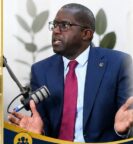
“What is being questioned is not just process, it is the place of you and I as an Advocate in the administration of justice, and ultimately, our bread and butter” LSK president Charles Kanjama said in a message to fellow lawyers.
Lawyers now say mediation sessions are increasingly being conducted without them—even in cases where parties are legally represented.
Worse still, they argue that some mediators are straying far beyond their mandate.

Among the concerns raised by the LSK are “mediators stepping into spaces of legal advice, legal drafting and even… issuing legal direction,” as well as “irregular and sometimes unlawful settlements finding their way into the adjudication system.”
“These are neither trivial things nor theoretical concerns,” Kanjama warned.
“These are practical breaches that go to the core and integrity of justice itself.”
KPC has learnt that mediation is now an attractive alternative career path, especially for Kenyans outside the legal profession.
Training programs—some lasting just a few days—are producing certified mediators at a rapid pace.
For many, especially retirees and job seekers, the field offers a rare entry into a quasi-judicial role without the long and expensive path of legal training.
Advocate Ashioya Biko, in a sharply worded critique, argues that the accreditation process is dangerously thin.
“A basic degree or diploma coupled with a mere 40-hour mediation training session qualifies an individual… Overnight, they are granted powers akin to judicial officers,” he said.
Biko recounted a land dispute in Busia where, he claims, a mediator lacked even basic understanding of Kenyan land law, forcing the matter back to court after just one session.
“To continue would have been a disservice to justice,” he said.
Lawyers also point to the emergence of private mediation centers operating outside the formal court system.
These centers, they argue, are increasingly marketing directly to the public, effectively positioning themselves as alternatives to courts—and, in some cases, to law firms.
Biko describes them as “private ‘shadow courts’,” warning that they are “introducing unqualified practitioners into the systemic resolution of disputes before a legal professional even reviews the merits of a case.”
Mediation agreements, once adopted by courts, become binding orders—often with limited avenues for appeal.
That, lawyers say, raises the stakes significantly.
Apart from professional standards, there are suspicions about the forces driving mediation’s growth.
Some within the Bar allege that CAM has become financially attractive to institutions, pointing to accreditation fees and international funding tied to judicial reform programs.
“There is a palpable concern that the Judiciary’s leadership remains deaf… because CAM has become a revenue stream,” Biko claimed.

The World Bank has, in recent years, funded justice sector reforms in Kenya, including programs linked to mediation.
While such funding has helped modernize the courts, critics fear it may also be incentivizing rapid expansion without adequate safeguards.
Some advocates are calling for outright resistance, including refusing to participate in mediation processes handled by non-advocates.
“We must refuse to appear before those who treat the law as a business of convenience rather than a pursuit of justice,” Biko declared, backing calls for a boycott.
Former LSK president Nelson Havi has gone even further, saying that “the battle against non-advocate mediators has been won,” and urging the Judiciary to revoke their accreditation altogether.
He has called on Chief Justice Martha Koome to act, suggesting that advocates should actively reject non-lawyer mediators in court-referred disputes.
Meanwhile, for all the criticism, mediation continues to deliver results.
Thousands of cases have been resolved faster and more amicably through CAM, saving litigants time and money.
For many Kenyans, especially those intimidated by formal court processes, mediation offers a more accessible path to justice.
Non-advocate mediators argue that the practice is not about legal technicalities but about negotiation, communication, and consensus-building—skills that extend beyond the legal profession.
They warn that restricting mediation to lawyers risks turning it into another expensive, exclusionary process, undermining its very purpose.
The LSK has signaled plans to push for tighter regulation, greater involvement of advocate-mediators, and stricter enforcement of professional boundaries.
“The space of Advocates shall not be surrendered,” Kanjama declared.
“Not in mediation. Not anywhere.”