By Ongaga Ongaga
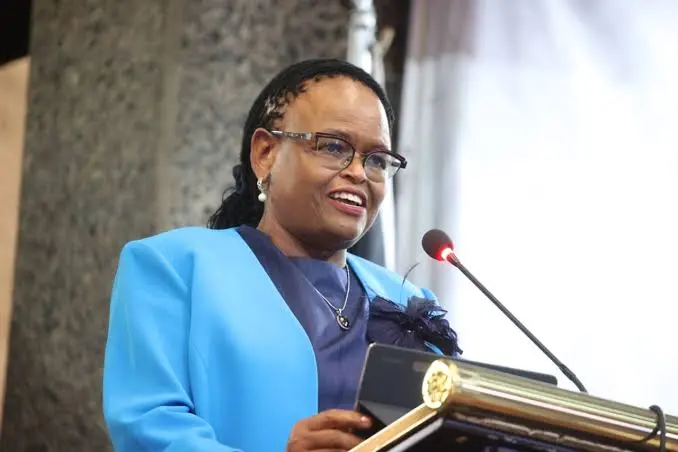
Chief Justice Martha Koome has challenged police to pursue politicians and other financiers of criminal gangs.
She said this on Tuesday even as the Judiciary and law enforcement agencies traded blame over the growing culture of goonism ahead of the 2027 General Election.
Also Read
Koome said arresting young people recruited to cause violence would not solve the problem unless those funding, organising and sustaining the gangs were also held accountable.
Speaking during the launch of key reports by the National Council on the Administration of Justice (NCAJ), the Chief Justice warned that the growing use of goons threatened the safety of citizens and their right to participate freely in elections.
“Listening to the report by the National Police Service, what I know about organised crime is a crime against humanity; we need to map these areas and as police you need to arrest financiers,” she said.
Koome said the Judiciary had established special courts to handle serious and organised crimes, warning against allowing those behind criminal activities to escape accountability.
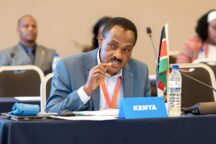
Her remarks came as Director of Criminal Investigations Mohammed Amin, who represented Inspector-General of Police Douglas Kanja, criticised courts for imposing what he described as lenient bond terms on suspects arrested over gang-related offences.
Amin argued that releasing suspects on minimal bond undermined police efforts to contain criminal gangs and allowed repeat offenders to return to the streets.
“We are calling upon the Judiciary to expedite the prosecution and trial of all gang-related offences,” he said.
He added that frequent release of suspects on minimal bond terms undermined deterrence and allowed repeat offenders to resume criminal activities.
Suspects arrested
Amin said police had arrested and presented 1,827 suspects linked to goonism and organised criminal activities before courts between January and August 2026.
Of these, 729 had been convicted, while 716 cases were still pending before the courts.
He said Trans Nzoia had recorded the highest number of arrests, with 491 suspects apprehended, while Western Kenya and the Rift Valley remained among the regions most affected by organised criminal activities.
The DCI also raised concern over the growing number of criminal gangs, saying the number of identified groups had increased from 89 to 109.
Amin said the police service was adopting new measures to address the problem, including holding individual officers accountable for failing to act against criminal gangs and digitising systems to improve service delivery.
He also committed to pursuing individuals suspected of financing goons, saying the crackdown would extend beyond those directly involved in violence.
Crime increase raises alarm
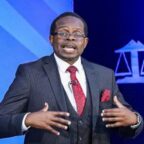
NCAJ Director General Dr Moses Marang’a cited a sharp rise in crime, saying the latest figures showed an increase of 157 per cent.
“Crime has gone up by 157%; initially it was coalescing between 89, 95, 104%; there was also a slight increase in serious crimes,” he said.
The figures featured in discussions around the Administration of Justice in Kenya Annual Report 2025/2026, which highlighted growing concerns over crime and the need for stronger collaboration among justice sector institutions.
Council of Governors chairperson and Tharaka Nithi Governor Muthomi Njuki acknowledged the growing use of goons by politicians but cautioned against treating the problem as exclusively political.
He said businesspeople and other actors were also using criminal groups to advance their interests, further complicating efforts to contain the menace.
Njuki said governors had discussed the issue and committed to calling out colleagues who might be linked to the use of goons.
The Council of Governors also called for the restoration of prosecutorial powers previously exercised by county enforcement officers, arguing that the authority would strengthen enforcement of penalties arising from county legislation.
“We ask as the Council of Governors that we restore prosecutorial powers with assistance from the Judiciary,” Njuki said.
The leaders spoke during the launch of the NCAJ Strategic Plan 2026–2030, the end-term review of the 2021–2026 strategic plan and the Administration of Justice in Kenya Annual Report 2025/2026.
The meeting also considered action plans for the National Child Justice Service Month 2026.