
By Monica Nashon
A total of 332 public junior schools in Kisii County are set to receive interactive smart boards and laptops under the second phase of the government’s Digital Literacy Programme.
The initiative seeks to improve classroom teaching and learning by integrating technology into education and equipping learners with digital skills from an early age.
Also Read
The rollout was launched at Kisii Comprehensive School on Thursday, with Broadcasting and Telecommunications Principal Secretary Stephen Isaboke saying digital literacy was essential in preparing learners for a technology-driven economy.
“Our goal is to ensure that learners acquire digital skills from an early age,” Isaboke said.
He said the new equipment would improve access to information, support research and enhance the learning experience in public junior schools.
Isaboke, however, emphasised the need for reliable internet connectivity to ensure schools fully benefit from the investment.
“Reliable internet connectivity is essential for digital learning,” he said, adding that the government was expanding fibre infrastructure and public Wi-Fi under its Digital Superhighway programme.
Kisii County Director of Education Philip Chirchir and Kisii Central Sub-County Director of Education Cyrus Juma attended the launch alongside other education officials and stakeholders.
During the event, learners at Kisii Comprehensive School participated in a live digital lesson linking them with schools in Nyamira, Siaya, Bungoma, Vihiga and Busia counties, demonstrating how technology can facilitate learning across geographical boundaries.
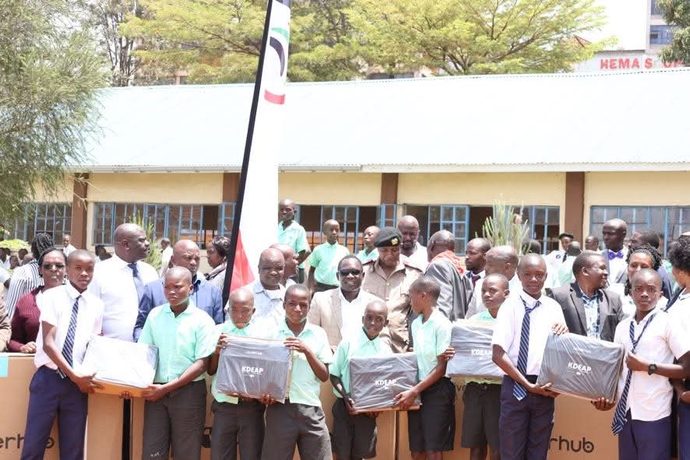
The programme is being implemented by the ICT Authority under the Kenya Digital Economy Acceleration Project, with support from the World Bank.
Nationally, 10,382 public junior schools are being equipped under the first phase of the programme, representing nearly half of all public junior schools in the country.
More than 64,000 teachers have also received training on using digital equipment and learning content to support classroom instruction.
The government plans to expand the initiative further, with Phase Two procurement targeting approximately 21,000 additional schools by April 2027.
The expansion is part of broader efforts to strengthen digital infrastructure and integrate technology into Kenya’s education system.