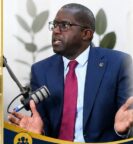
By Isaac Dan Bw’Onyancha
The new found political dalliance between President William Ruto and Kenya’s longtime opposition leader Raila Odinga leaves a lot to be desired.
On Friday, the two used their respective political vessels, the United Democratic Alliance (UDA) and the Orange Democratic Movement (ODM) to formally ink a power-sharing agreement, sending shockwaves across the country.
Also Read
This unexpected alliance, viewed by many as a betrayal, has left millions of Kenyans reeling with disappointment.
For a government that has subjected its citizens to economic turmoil, high taxation, blatant abuse of power, and disregard for the rule of law, the last thing Kenyans expected was for Raila—a man who has long championed good governance and democracy—to join forces with the very administration he once vehemently opposed.
“Raila Odinga’s decision to align with Ruto is being seen as an act of political opportunism rather than principled leadership.”
-Isaac Dan Bw’Onyancha
For decades, he has positioned himself as the moral compass of Kenyan politics, leading the charge against corruption, dictatorship, and state impunity.
However, this latest move paints a different picture—one of a man whose political survival and personal gain now appear to take precedence over the ideals he has long championed. His critics argue that this is not the first time Raila has leveraged his mass appeal to negotiate power-sharing deals, often to his own benefit rather than that of the ordinary Kenyan.
If there was ever any doubt, this latest political somersault confirms that Raila has become more of a transactional politician than a transformational leader.
On the other hand, President Ruto’s desperation is evident. The economic hardships facing Kenyans, coupled with growing discontent from key political constituencies such as the Mt. Kenya region, have put him in a precarious position.
His administration is facing mounting criticism over excessive taxation, a struggling economy, and governance failures. By bringing Raila on board, Ruto hopes to neutralize opposition resistance and project an image of national unity.

However, history has shown that such alliances rarely bring stability. More often than not, they lead to internal strife, conflicting interests, and eventual collapse.
By embracing Raila, Ruto is taking a major political gamble—one that could alienate his own support base, which has been conditioned to view Raila as an adversary.
Raila’s history of political alliances also does not inspire confidence. His coalition with Moi in the 1990s, his partnership with Kibaki in 2002, his handshake with Uhuru in 2018, and his recent unsuccessful bid for the African Union Commission chair all share a common denominator—disappointment.
Many Kenyans now believe that his alliance with Ruto could spell doom for the Kenya Kwanza administration, rather than the political stability that Ruto desperately seeks.
The perception that Raila is a “jinx” in Kenyan politics has gained renewed momentum, with many seeing this move as the beginning of Ruto’s downfall rather than a strategic masterstroke.
Ultimately, this political marriage lacks ideological coherence and long-term sustainability. It betrays the trust of millions who have looked up to Raila as a champion of democracy.
At the same time, it exposes Ruto’s vulnerabilities and his desperation to shore up his dwindling support. In the end, no amount of political scheming will salvage an unpopular government from the wrath of an angry electorate.
If history is any guide, this alliance is not a stroke of political genius—it is a ticking time bomb.
-Mr. Bw’Onyancha is a Governance and Leadership expert and commentator