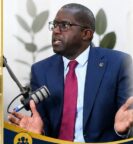
By Isaac Dan Bw’Onyancha
The political realignment between President William Ruto and opposition leader Raila Odinga has left many Kenyans disillusioned, marking what appears to be a significant betrayal of public trust.
Also Read
This unexpected alliance, largely seen as a self-serving pact, comes at a time when the Kenya Kwanza administration is grappling with corruption, economic mismanagement, and growing disregard for the rule of law.
The majority of Kenyans, who had placed their hopes in a government that promised a “hustler” economic revolution, are now watching in disappointment as their expectations are drowned in a sea of failed policies and broken promises.
Under Ruto’s leadership, the government has presided over skyrocketing corruption, nepotistic appointments, extrajudicial abductions, and policies that have burdened citizens with excessive taxation.
From the controversial Social Health Insurance Fund (SHA) to the new higher education funding model, the housing levy, and livestock vaccination programs, policy after policy has been rolled out with little regard for its feasibility or impact on ordinary Kenyans.
“Instead of alleviating the economic hardships faced by millions, these initiatives have only deepened public frustration, leading to a growing sense of disenchantment with the government’s leadership.”
-Isaac Dan Bw’Onyancha
In this context, Raila Odinga’s decision to align himself with the very government he has previously criticized as dictatorial and incompetent has been met with widespread disapproval.
For decades, Raila has been regarded as the face of resistance against oppressive regimes, a champion of democracy, human rights, and the rule of law.
Disappointing shift
His credibility has largely rested on his willingness to challenge governments that violate constitutional principles and abuse power.
However, his sudden shift in tone and apparent willingness to collaborate with Ruto have left many of his supporters questioning whether his ideals were genuine or merely political tools used to secure relevance and personal gain.
The hostile reception he received in Kisii is a clear indication that the public, particularly his traditional support base, does not approve of this newfound alliance.
Many see this as a clear deviation from his long-established path of struggle, a move driven by political convenience rather than principle.
The anticipation that the National Dialogue Committee (NADCO) report will be revisited to create a senior government position—likely a Prime Minister role—to accommodate Raila only reinforces the perception that this is yet another political handshake designed to serve elite interests at the expense of ordinary citizens.
Kenya’s political history is replete with examples of such mergers of convenience, often justified as being in the interest of “national unity,” yet they almost always end up benefiting a few individuals rather than addressing the pressing needs of the populace.
The Ruto-Raila pact, in its current form, seems no different.
It is not about strengthening democracy or ensuring good governance; it is about securing power and privilege.
Kenyans have grown increasingly weary of such betrayals.
The outcry against the Ruto-Raila union is not merely political noise but a reflection of deep-seated frustration with leadership that prioritizes personal gain over public service.
Citizens are demanding accountability, integrity, and genuine commitment to governance that works for the people, not just a reshuffling of political elites seeking to maintain their grip on power.
As this political drama unfolds, it remains to be seen how the two leaders will justify their alliance to a skeptical and increasingly discontented public.
What is clear, however, is that Kenyans are no longer willing to blindly follow leaders who repeatedly betray their trust.
The age of political impunity is fading, and the people are watching closely.
-Mr. Bw’Onyancha is a Governance and Leadership expert and commentator