By Robert Nyasato
“Gusii women have consistently failed to exploit their numerical strenght to occupy political offices.”
–Robert Nyasato
By Robert Nyasato
Also Read
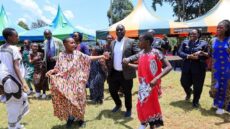
As we mark the International Women’s Day today, its good to take stock of how Gusii women have faired on the political space in post independence Kenya.
Although the Gusii people are fairly liberal in political party affiliations, the same cannot be said in giving women a chance to elective positions.
The community is largely conservative when it comes to electing women into political offices.
Of critical concern is a scenario in post independence Kenya where the Gusii community with 13 constituencies (9 in Kisii and 4 in Nyamira County respectivel) has never elected a woman to parliament.
This scenario excludes the two affirmative seats (County MP positions), which are a reseve for women.
Nominations
It was in 2002 when for the first time, a Gusii woman set foot in parliament via nomination courtesy of Kenya’s Second President, the late Toroitich Ara Moi’s magnanimity.
Catherine Nyamato had vigorously campaigned for the West Mugirango parliamentary seat before Moi lured her to drop out of the race to secure the nomination slot by Kanu.
20 years later, another lady Irene Mayaka secured a nomination slot to the National Assembly courtesy of the Orange Democratic Movement (ODM) party.
Coincidentally, Mayaka popularly known as Renee is Nyamato’s village mate at Marindi in Bogichora Ward, Nyamira County.
Renee had served at the County Assembly of Nyamira as a nominated MCA under the orange party between 2017 and 2022.
Gusii has two more ladies in the Senate, Essy Okenyuri and Gloria Orwoba, who are beneneficiaries of the Constitution of Kenya 2010.
The current constitutional order created the bi-cameral house (the Senate and the National Assembly).
However, Okenyuri and Orwoba were also not elected directly from the county but got nominated by the ruling party, the United Democratic Alliance (UDA) under special-elect category.
Even in the County Assemblies (CAs), a creation of the Constitution, the trend is the same.
It is the “gender top up” by political parties that has seen most ladies get nominated to the CAs because very few are directly elected from the wards.
At ward level
It should be recalled that since devolution was effected in 2013, only four Wards out 65 in Gusiiland have elected women.
In Nyamira County, two ladies were elected in the first assembly- Carren Atuya (Bokeira Ward) and Teresa Nyaanga (Esise).
Atuya was re-elected in 2017 and she holds the record of the only one woman who ever managed to serve her voters for two terms.
In the third Assemblies (at County level), no woman was elected from the 20 wards in Nyamira, whose tagline is “the county of possibilities” during the 2022 General Elections.
This was a big set back for the gender affirmative advocates.
The trend is the same in the sister Kisii County, which currently has one lady, Beatrice Makwae who serves as the elected representative of Bombaba Borabu Ward.
Interestingly, it is Majoge-Basi Ward which has elected two women back to back to serve at the Kisii County Assembly.
The two are Manzi Kitheka and Rose Orondo.
Statistically, women voters outnumber men in Gusii.
Why Gusii women have not exploited their numerical strength to ascend to elective offices in a bigger number remains mysterious.
It is even odd that the Women’s day celebrations are occurring at the neighbouring Homa Bay County where women are politically empowered as exhibited Governor Gladys Wanga and four term MP Millie Odhiambo.
For how long will the Gusii community remain conservative leaving women at the mercy of gender top up slots popularly known as nominations?
Will the Gusii people live to this year’s United Nations (UN) International Women’s Day 2025 theme: “For all women and girls: Rights. Equality. Empowerment. “?
- Mr. Nyasato is a journalist and our member at KPC