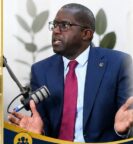
By Isaac Dan Bw’Onyancha
The trial and incarceration of Kizza Besigye in the UPDF martial courts exemplify the growing crisis in Uganda’s judicial system under President Yoweri Museveni’s prolonged rule.
Besigye, a civilian, is being tried in a military court, a clear violation of the 2005 Supreme Court ruling that declared such trials unconstitutional.
Also Read
This decision, which asserts that civilians should not face military tribunals, has been ignored by Museveni and his son, General Muhozi Kainerugaba, despite its clear legal standing.
This blatant disregard for the constitution highlights the erosion of Uganda’s legal safeguards.
In a nation that claims to uphold the rule of law, the judiciary must be independent, and executive decisions must respect court rulings.
Museveni’s refusal to honor the Supreme Court’s decision undermines not only the integrity of the judiciary but the very principle of fairness in governance.
This refusal represents an alarming trend where political motives, personal grievances, and familial power outweigh legal principles, leading to the manipulation of the justice system.
A particularly troubling aspect of this trial is the clear conflict of interest.
Muhozi Kainerugaba, who oversees Uganda’s military and holds significant political power as the president’s son, has a vested interest in undermining Besigye, a longstanding opposition leader.
“The fact that he is directly involved in the military institution presiding over Besigye’s case ensures that the trial will be neither impartial nor just.”
–Isaac Dan Bw’Onyancha
From the very start, it was apparent that Besigye’s chances of receiving a fair trial were virtually nonexistent, as the military court is politically compromised and highly influenced by executive power.
This situation highlights a deeper issue within Uganda: the gradual transformation of the judiciary into a tool for political control rather than an independent body ensuring justice.
The trend of authoritarianism under Museveni’s rule, marked by the suppression of opposition voices and the instrumentalization of state institutions for personal and political gain, is evident here.
By bringing opposition figures like Besigye to trial under military jurisdiction, dissent is criminalized, and the principle of justice is sacrificed to serve the president’s interests.
In essence, Besigye’s trial is a reflection of a larger issue in Uganda’s political and legal landscape—one where the rule of law is increasingly disregarded, judicial independence is undermined, and the law is wielded as a weapon for political advantage.
Despite the Supreme Court’s ruling, the power of Museveni and his inner circle continues to overshadow legal precedents, making a mockery of constitutional principles and eroding trust in Uganda’s judicial system.
–Dan Onyancha is a Leadership and Governance expert and commentator. His email: isonyancha@gmail.com