By GPC News Desk
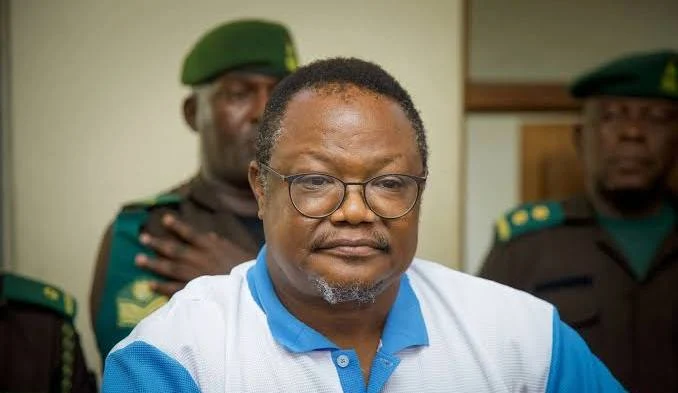
Tanzania is facing mounting international criticism following the conviction and four-year imprisonment of opposition leader Tundu Lissu on an incitement charge.
The United Kingdom, Amnesty International (AI), Human Rights Watch (HRW), the International Federation for Human Rights (FIDH) and several political leaders across East Africa have raised concerns over the trial, with some demanding his immediate release.
Also Read
The High Court in Dar es Salaam recently acquitted Lissu of treason but convicted him of the lesser offence of incitement, ending a 19-month legal battle that had exposed tensions between the opposition and President Samia Suluhu Hassan’s administration.
The treason charge carried the possibility of the death penalty. The three-judge panel, however, ruled that the prosecution had failed to establish the intention required to sustain the charge.
Lissu was instead found guilty of incitement and sentenced to four years in prison.
The CHADEMA chairman had been arrested on April 9, 2025, following his campaign for electoral reforms and remarks urging Tanzanians to prevent the October 2025 General Election from proceeding without changes to the country’s electoral system.
He denied wrongdoing, maintaining that his calls for reforms were legitimate political advocacy.
Britain expressed deep concern over the conviction and urged Tanzania to respect international human rights obligations, including fair trial guarantees, freedom of expression and political participation.
In a statement, UK Minister for Africa and International Development Kirsty McNeill recalled the findings of the United Nations Working Group on Arbitrary Detention, which had previously declared Lissu’s detention arbitrary.
The UN body, in Opinion No. 74/2025, concluded that his detention lacked sufficient legal basis and was accompanied by serious fair-trial concerns.
The British government said the findings pointed to violations of protections under the Universal Declaration of Human Rights and obligations contained in the International Covenant on Civil and Political Rights, to which Tanzania is a signatory.
“We further recall Tanzania’s obligations under international human rights law, including to uphold the rights to a fair trial, freedom of expression, political participation and equal treatment before the law,” McNeill said.
Britain also linked the case to the need for political reconciliation following the violence surrounding Tanzania’s October 2025 elections.
“We support the Presidential Commission of Inquiry’s view that political reconciliation is an important step to healing the wounds caused by the violence surrounding the October 2025 General Elections, and restoring peace, trust and solidarity,” she added.
The minister urged Tanzania to uphold its commitment to reconciliation, pluralist democracy, due process and the rule of law.
The British statement followed the country’s intervention at Tanzania’s Universal Periodic Review at the UN Human Rights Council in Geneva on November 5.
During the review, the UK called for independent investigations into human rights violations during the 2025 electoral period, an end to prolonged pre-trial detention and a review of non-bailable offences used against political opponents, journalists and human rights defenders.
It also recommended changes to restrictive provisions in Tanzania’s Political Parties Act, Media Services Act, Cybercrimes Act and Electronic and Postal Communications Act.

Amnesty International has been among the strongest critics of the prosecution, describing the conviction as the culmination of a deeply flawed process.
The organisation’s Regional Director for East and Southern Africa, Tigere Chagutah, said Lissu should never have been arrested or prosecuted.
“Tundu Lissu should never have been arrested, let alone prosecuted and convicted,” Chagutah said in a statement issued on November 6.
He noted that the opposition leader had spent 577 days in detention, which Amnesty described as arbitrary.
The organisation also raised concerns that Lissu had been denied confidential access to his lawyers, effectively forcing him to represent himself during parts of the proceedings.
It further cited interruptions to live broadcasts of the trial, the alleged mistreatment of international observers and his reported detention in a death-row cell with limited access to religious services.
Amnesty called on Tanzania to quash the conviction, release Lissu immediately and unconditionally, and end what it described as the misuse of security laws to silence government critics.
Human Rights Watch also argued that the acquittal on treason did not erase the human rights concerns surrounding the prosecution.
The organisation’s senior Africa researcher, Oryem Nyeko, placed the case within a wider pattern of arrests and prosecutions involving political opponents in Tanzania.
The verdict has also attracted criticism from political figures in neighbouring countries, particularly Kenya and Uganda.
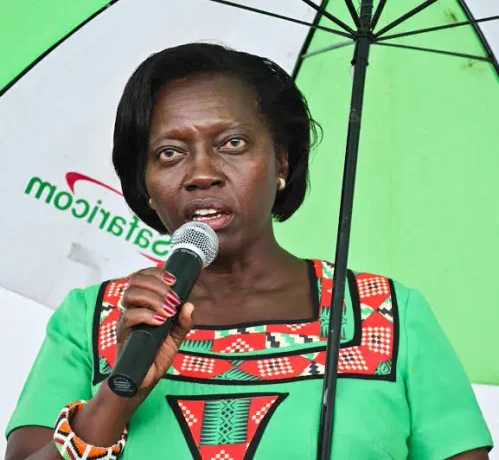
In Kenya, former Justice Minister and People’s Liberation Party leader Martha Karua questioned why Lissu should remain in prison after his acquittal on the principal treason charge.
Karua has followed the proceedings since 2025, when she and other Kenyan lawyers were detained and deported after travelling to Tanzania to observe the trial.
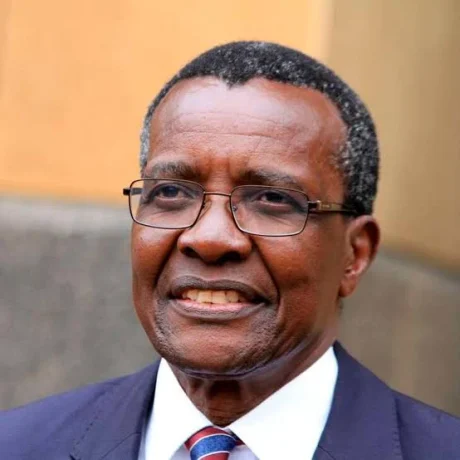
Former Chief Justice David Maraga also criticised the prosecution and called for Lissu’s release, raising concerns about the use of treason and terrorism laws against political opponents.
Nairobi Senator Edwin Sifuna similarly questioned the basis of the prosecution, arguing that Lissu had been seeking reforms to make Tanzania’s electoral system fairer.
Suba North MP Millie Odhiambo has also urged Tanzanian President Samia Suluhu Hassan to uphold human rights, respect democratic principles and embrace political tolerance. In an open letter shared on Facebook recently, Odhiambo called on Suluhu to allow freedom of speech, end intimidation of government critics and extend an olive branch to opposition leaders.
In Uganda, opposition leader and National Unity Platform president Bobi Wine welcomed the treason acquittal but questioned why Lissu was subsequently convicted of incitement.
On November 9, the International Federation for Human Rights and its Tanzanian member organisation, the Legal and Human Rights Centre, issued a joint statement raising further concerns about the proceedings.
The two organisations welcomed the treason acquittal but questioned the circumstances under which Lissu was convicted of incitement.
“This acquittal for treason is a relief, but there remain numerous irregularities marring this trial, which amounts to nothing short of political persecution against a backdrop of repression and shrinking of democratic space in the country,” said Anna Henga, LHRC director and FIDH vice-president.
Despite the international criticism, the Tanzanian government has maintained that the case was determined by the courts and that anyone dissatisfied with the outcome has the right to appeal.
Government Chief Spokesperson Gerson Msigwa said public debate surrounding the verdict was expected but insisted that the judicial process had provided a legal avenue for challenging the decision.
“We have seen the debate, and it was bound to happen. But what has happened is a court decision. If anyone is dissatisfied, the law provides an opportunity to appeal,” he said.
Lissu’s legal team has already filed a notice of intention to appeal against both the conviction and sentence.
His lawyer William Maduhu told Tanzania’s The Citizen on November 10 that the team had completed about half of the preparations and was awaiting copies of the judgment and court proceedings.
The lawyers have identified more than 10 possible grounds of appeal, including questions about the High Court’s jurisdiction to determine the incitement charge and whether Lissu was given sufficient opportunity to defend himself against that offence.
The defence also intends to seek bail pending the determination of the appeal.
A presidential commission of inquiry reported that at least 518 people died during the post-election unrest, while international organisations called for accountability over allegations of excessive force and other human rights violations.