By GPC Correspondent
Director of Public Prosecutions (DPP) Renson Ingonga has called for greater use of alternative mechanisms to resolve criminal cases to ease court backlogs and improve the administration of justice.
Ingonga said plea bargaining and diversion provide important alternatives to conventional prosecution, enabling criminal cases to be resolved more efficiently while reducing pressure on the courts.
Also Read
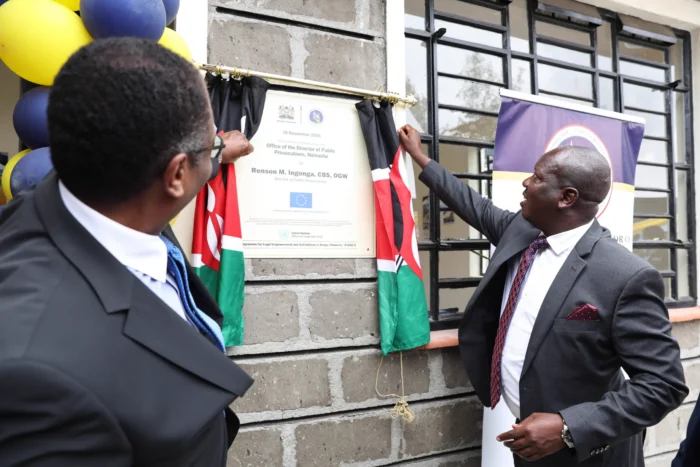
He was speaking during the official commissioning of the newly constructed Office of the Director of Public Prosecutions (ODPP) offices in Naivasha.
The DPP said the two policies developed by his office had made a significant contribution to the administration of justice by providing alternative mechanisms for handling criminal cases.
He called for their wider adoption as part of efforts to address the growing burden of cases in the justice system.
“The Plea Bargaining and Diversion Policies developed by the Office of the Director of Public Prosecutions have significantly contributed to the efficient and effective administration of justice,” the ODPP quoted Ingonga as saying.
The policies are intended to provide avenues for resolving eligible criminal cases without necessarily going through the full trial process.
Plea bargaining involves an agreement between the prosecution and an accused person on a guilty plea, usually in exchange for an agreed outcome, subject to court approval.
Diversion, on the other hand, allows eligible offenders to be dealt with through alternative measures rather than conventional prosecution, depending on the circumstances of the case and applicable legal requirements.
Ingonga said the newly commissioned Naivasha office would strengthen the ODPP’s capacity to deliver prosecution services across a wide geographical area.
He described the establishment of the facility as timely, considering the extensive jurisdiction it serves.
The area includes Naivasha town, Gilgil, Mai Mahiu, Longonot and the greater Nairobi–Nakuru Highway corridor.
The construction of the office was supported by the European Union through the United Nations Office on Drugs and Crime (UNODC), under the Programme for Legal Empowerment and Aid Delivery (PLEAD II).
The programme supports access to justice and improvements in the delivery of legal services.
The new facility is expected to enhance the ODPP’s operational capacity and improve access to prosecution services for communities within its jurisdiction.