By Nyang’au Araka
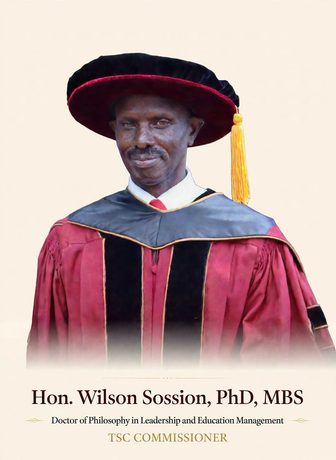
Teachers Service Commission (TSC) Commissioner Wilson Sossion has called for renewed national commitment to quality, inclusive and equitable education.
Dr Sossion urged policymakers, teachers and other stakeholders to refocus Kenya’s education agenda on the targets of Sustainable Development Goal 4 (SDG 4).
Also Read
In a statement shared on his Facebook page following the successful conclusion of his doctoral studies, Commissioner Sossion challenged Kenyans to reflect on the future of education and the country’s responsibility to guarantee learning opportunities for all citizens.
“At this great moment, as I reflect on the successful conclusion of my doctoral studies which marks the beginning of another phase of service to humanity, I urge all of us to think about the future of education in our motherland, Kenya,” he stated.
Dr Sossion identified seven key education priorities that he believes should guide Kenya’s transformation agenda.
They include access to quality early childhood development, universal basic education, technical and vocational education and training (TVET), adult and continuing education, gender parity, literacy and the development of responsible global citizens.
He maintained that these priorities should not remain policy aspirations but must become urgent national commitments.
“These seven SDG 4 targets must be urgent for all of us to fully attain as Kenya,” Dr Sossion, who previously served as Secretary General for the Kenya National Union of Teachers (KNUT) said.
The TSC Commissioner identified three critical interventions necessary to achieve the country’s education ambitions: infrastructure, teachers and scholarships.
His emphasis on teachers comes amid continuing concerns about staffing shortages, classroom congestion and the resources required to implement Kenya’s Competency-Based Education (CBE) system.
According to UNICEF Kenya, some counties continue to experience significant teacher shortages, with Turkana recording a pupil-to-teacher ratio of 77:1.
The organisation has also highlighted overcrowded classrooms and teaching quality as challenges affecting learning outcomes.
The disparities are particularly pronounced in disadvantaged communities, including pastoralist regions and informal settlements, where access to educational resources remains a challenge.
A Ministry of Education report covering the 2022/23 to 2024/25 financial years indicates that the number of TVET institutions increased from 2,401 to 2,969, while enrolment rose by 63.8 per cent to 565,842 trainees.
The report also indicates that 3,300 new trainers were recruited and 11,600 trained in competency-based education and training.
However, the trainer-to-trainee ratio stood at 1:55 against a recommended 1:25, pointing to the need for further investment in staffing and training capacity.
The report further identified a cumulative capitation funding gap of KSh13.5 billion over three years, with funding constraints affecting infrastructure development and the operations of vocational training centres.
Available United Nations data shows that participation in organised learning one year before the official primary school entry age increased from 47.4 per cent in 2001 to 92.1 per cent in 2023.
Only 31.9 per cent of primary schools had internet access for educational purposes in 2023, while access to electricity stood at 69.6 per cent.
These figures highlight the importance of investment in school infrastructure, digital learning facilities and teaching resources if Kenya is to achieve equitable educational opportunities.
The UNESCO Institute for Statistics’ 2025 SDG 4 country profile for Kenya also highlights challenges relating to school completion, learning proficiency, teacher qualifications, connectivity and education financing.
The question of education financing is another important aspect of the agenda raised by Commissioner Sossion.
Kenya’s education sector received an increased allocation of KSh784.5 billion for the 2026/27 financial year, compared with KSh702 billion in 2025/26, according to the Kenya News Agency.
The increased allocation is intended to support teachers, education equity, skills development and other sector priorities.
However, the challenge remains ensuring that increased public spending translates into improved learning conditions, adequately resourced institutions and expanded opportunities for disadvantaged learners.
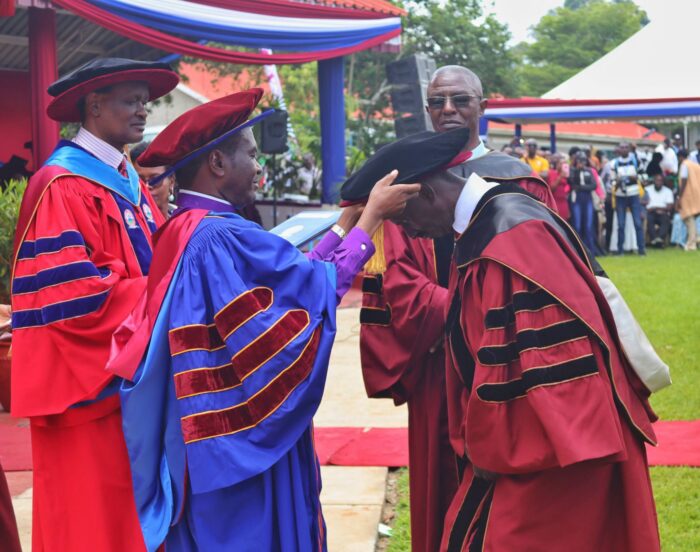
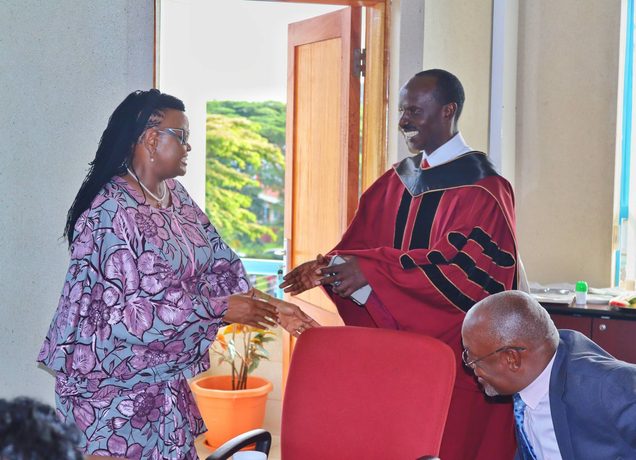
Commissioner Sossion’s remarks follow the successful conclusion of his doctoral studies, marking another milestone in his professional and academic journey.
In his Facebook statement, Dr Sossion linked the academic achievement to his continued commitment to serving humanity, using the occasion to raise questions about the direction and priorities of Kenya’s education system.
Apart from serving as Secretary-General of KNUT, he also served as a nominated Member of Parliament (MP) before his appointment to the Teachers Service Commission.