By Nyang’au Araka
There is something theatrical about Kisii Senator Richard Onyonka’s arrival at a political rally.
He rarely appears in a hurry to deliver a speech, yet his walk – sometimes resembling a half-run – towards the podium suggests a man eager to get down to business.
Also Read
A few dance steps to the music, a wave to the crowd, perhaps a smile or a familiar facial expression, and he is ready to take the microphone.
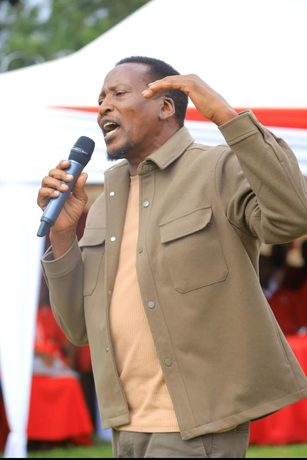
There is no denying that Onyonka is an accomplished orator who understands that commanding a political audience requires knowing how to say something, when to pause, when to raise the voice, when to provoke laughter and when to send supporters into a frenzy.
This son of former Cabinet Minister Zachary Onyonka can frown, smile, gesticulate, throw his hands into the air and dramatically change his tone, all while maintaining the audience’s attention.
Calling himself the son of Teresa, Onyonka has cultivated a nationally recognisable political personality, blending humour, confidence, theatrical gestures and an impressive command of language.
He takes pride in his background, having attended to big schools such as St Mary’s Yala, the University of Nairobi (UoN), before he flew out of the country for further studies.
Onyonka knows how to make a rally feel like a conversation, even when he is the one doing most of the talking.
Yet, reducing Onyonka to his entertainment value would be a serious misreading of his political craft.
Behind the theatrical presentation is a politician who has demonstrated a remarkable ability to navigate shifting alliances, survive electoral setbacks and remain relevant through changing political seasons.
Changing political lanes
Onyonka’s journey through elective politics has been anything but linear.
First elected to Parliament in 2007 to represent Kitutu Chache Constituency in Parliament on the People’s Democratic Party (PDP) ticket, he subsequently gravitated towards former Prime Minister (PM) Raila Odinga’s Orange Democratic Movement (ODM), under which he retained the seat in 2013.
His most instructive political gamble yet came in 2017 when he lost the ODM nomination to Samuel Omwando.
Rather than abandon his ambitions, he moved to FORD-Kenya and contested the seat through the party.
Onyonka won the November 2017 by-election with 10,122 votes, defeating Jubilee’s Antony Kibagendi, who garnered 5,074, while Omwando received 7,324.
That victory was particularly telling as Onyonka had managed to overcome a party nomination setback and defeat candidates associated with two formidable political formations.
He had also won the constituency’s parliamentary seat on three different party tickets.
In 2022, he moved to the Senate on an ODM ticket, extending his parliamentary career beyond the National Assembly.
Perhaps his ability to change political vehicles without necessarily losing his electoral footing is one of the defining features of his career.
The economics of political survival
There is also an intellectual dimension to Onyonka’s political brand.
An economist by training, with a degree in Economics and Finance from the University of Nairobi and a master’s qualification in International Relations and Marketing from the University of North Carolina, he is comfortable engaging economic and governance questions.
Be it in Parliament, Senate, media interviews or conversations of any nature, Onyonka can dissect public expenditure, challenge government policy and offer arguments that appeal to audiences beyond the immediate political excitement of a rally.
His confidence sometimes spills into shooting from the hip as he can be combative when responding to critics, occasionally delivering remarks that provoke as much debate as they generate applause. Yet this willingness to take political risks also contributes to his visibility.
Another intriguing feature is his capacity to make what might appear to be abrupt political U-turns, as positions he defends passionately today can be followed by a seemingly different political calculation tomorrow.
To his critics, this is inconsistency, while to his supporters, it is political intelligence: the ability to recognise when circumstances have changed and adjust before being overtaken by events.
Perhaps both interpretations contain some truth, yet, what is difficult to dispute is that Onyonka has repeatedly demonstrated an instinct for political survival.
The Matiang’i-Sifuna balancing act
The senator’s latest political manoeuvre, however, may be among his most consequential, and it appears to have caught some of his supporters flatfooted.
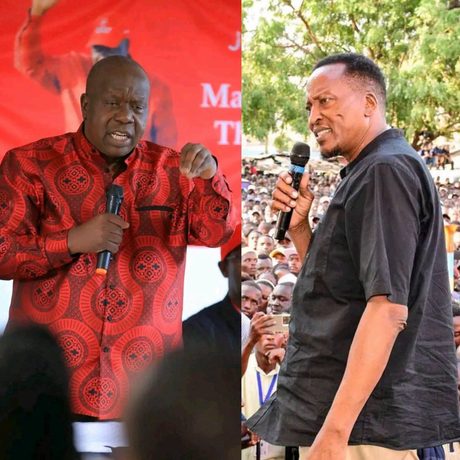
For months, Onyonka was one of the most vocal champions of former Interior Cabinet Secretary Fred Matiang’i’s presidential ambitions.
Onyonka was particularly important because he came from the same Gusii political backyard as Dr Matiang’i and could help mobilise support for the former CS in a region where presidential ambitions are closely tied to local political calculations.
Yet Onyonka was simultaneously warming up to Nairobi Senator Edwin Sifuna and the Linda Mwananchi movement.
He had previously described Sifuna as a “president in waiting” and the “incoming president”, while insisting that his association with the younger politician did not amount to abandoning Dr Matiang’i.
At one rally, he offered a revealing explanation of his balancing act:
“The opposition is one team. I cannot abandon Dr Matiang’i for Sifuna or Sifuna for Matiang’i. They are playing in the same league.”
On another occasion, he praised Dr Matiang’i as “one of the best managers I have ever known”, adding: “If he becomes president, hallelujah. But you see, look at this young guy. How can I lose Sifuna so that I get Fred?”
That wordplay somewhat borders on ambiguity if not playing safe.
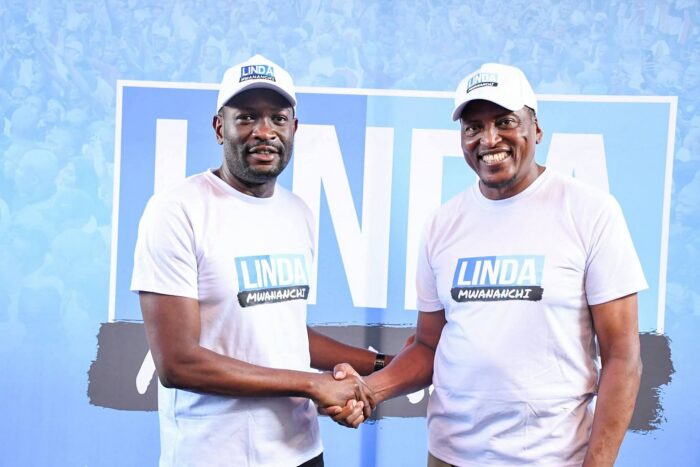
The balancing act became harder to sustain this week, when Sifuna unveiled Linda Mwananchi’s proposed national leadership structure, naming Onyonka as national treasurer.
The appointment followed Onyonka’s confirmation that he had joined the outfit, which had emerged from Sifuna’s Equitable Party.
He also maintained that his move had Dr Matiang’i’s blessings, although that claim should not be confused with an independently confirmed endorsement by the former CS, as the proposed leadership structure is expected to be considered at the party’s November 13 National Delegates Convention.
What the move means for Matiang’i
Onyonka’s decision presents Dr Matiang’i with a political headache that goes beyond losing the support of one influential senator.
In regional politics, having a presidential aspirant from one’s backyard is one thing; having influential local politicians who can sell that ambition to voters is another.
Onyonka has been one of the visible political voices associated with Dr Matiang’i’s presidential project and his movement towards Linda Mwananchi creates an opening for Sifuna’s outfit to establish a stronger foothold in Gusii politics.
It also complicates Dr Matiang’i’s efforts to consolidate the region behind his presidential ambitions.
While Onyonka’s departure does not automatically translate into a loss of his personal support base, it deprives Dr Matiang’i of an important political ally who could have helped coordinate local mobilisation, shape regional conversations and defend his candidacy.
More significantly, Onyonka’s new position gives him a national platform from which to participate in shaping an alternative opposition political formation.
As treasurer, he is being positioned within the proposed national leadership of an outfit seeking to challenge President William Ruto in 2027.
The question is whether Matiang’i can retain his political appeal in Gusii without the active backing of some of the very politicians who had previously helped advance his ambitions.
What best describes Onyonka?
Onyonka’s political journey raises a question that follows many seasoned politicians: where does adaptability end and political inconsistency begin?
His defenders might argue that politics is about recognising opportunities, building relationships and remaining relevant, while his critics might see a politician who is reluctant to commit himself fully to one political camp.
But perhaps his greatest political strength is that he understands the difference between loyalty to a political personality, loyalty to a political party and loyalty to his own political ambitions.
History bears witness that Onyonka survived nomination defeats, party changes, shifting national alliances and the unpredictable currents of Gusii politics.
His continued presence in elective politics since 2007 makes him one of the longest-serving contemporary elected politicians from the region.
His next challenge will be whether he can turn his latest political acrobatics into another electoral advantage without alienating the political constituency he has spent years cultivating.
For now, Onyonka remains a fascinating political character: a man who can dance briefly before taking the microphone, command a crowd with his eloquence, provoke his critics with an unexpected remark, keep his supporters unsure of the next move, and, when the political music changes, change his steps right in time.
-babahezel@gmail.com