
By Josiah Kariuki
The national and county governments have agreed on a raft of measures to accelerate Kenya’s digital transformation, including expanding public Wi-Fi, establishing digital hubs and harmonising charges for ICT infrastructure.
The resolutions were signed during the Second ICT Sector Intergovernmental Consultative Forum in Naivasha, which brought together national government officials, county representatives and other stakeholders to review progress in implementing agreements reached during the inaugural meeting.
Also Read
The measures are aimed at improving connectivity, strengthening digital infrastructure and expanding access to technology-driven opportunities across the country.
Among the resolutions is a plan to assess County Vocational Training Centres for designation as digital hubs, with selected institutions set to receive devices and internet connectivity.
The initiative is expected to expand access to digital skills training, online services and opportunities in the digital economy, particularly among young people and communities with limited access to technology.
The forum also resolved to expand public Wi-Fi coverage to county markets, bus parks and recreational spaces to improve access to internet services in public areas.
The move is expected to benefit traders, entrepreneurs, commuters and other members of the public by enabling them to access online services, digital marketplaces and information.
Another key resolution concerns the harmonisation of wayleave fees and other charges imposed by county governments on the deployment of telecommunications infrastructure.
The governments said greater consistency in the charges and administrative requirements would help reduce the cost and delays associated with installing fibre-optic networks and other connectivity infrastructure across county boundaries.
The issue is considered important in expanding broadband coverage and creating an enabling environment for investment in emerging technologies, including artificial intelligence.
The forum also discussed coordination on artificial intelligence and digital governance, with participants recognising the need for appropriate infrastructure, skills and regulatory frameworks to support the adoption of emerging technologies.
Artificial intelligence is increasingly being applied in public administration, service delivery and business operations, but its benefits depend on reliable connectivity, digital literacy and responsible governance.
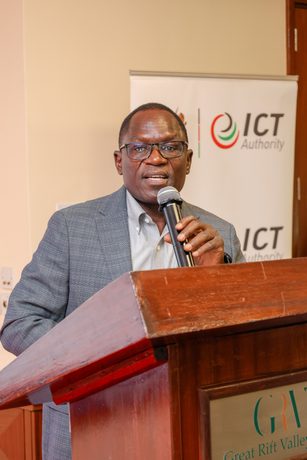
The meeting was attended by Cabinet Secretary for Information, Communications and the Digital Economy William Kabogo Gitau, Elgeyo Marakwet Governor Wisley Rotich, who chairs the Council of Governors’ ICT and Knowledge Management Committee, and Principal Secretaries Stephen Isaboke and John Tanui.
Isaboke, the Principal Secretary for Broadcasting and Telecommunications, also highlighted the role of public media institutions in communicating government programmes and development initiatives.
He pointed to the Kenya News Agency (KNA) and the Kenya Broadcasting Corporation (KBC) as important platforms for disseminating information about government projects, public investments and opportunities across the country.
He emphasised the need for stronger collaboration between national and county governments and public media institutions to ensure citizens receive information about programmes and services available to them.
The forum reaffirmed the need for a coordinated approach to implementing Kenya’s ICT agenda, with national government providing policy direction while counties facilitate the implementation of initiatives within their jurisdictions.
The resolutions now require clear implementation responsibilities, adequate resources and regular monitoring to establish whether the agreed measures translate into improved connectivity and access to digital services. The Naivasha meeting comes as Kenya seeks to strengthen its position as a