
By Monica Nashon
Kisii County is stepping up efforts to turn waste into economic opportunities through recycling, public-space rehabilitation and community clean-up programmes aimed at improving sanitation and supporting sustainable urban development.
The initiatives were highlighted during World Cities Day celebrations held at Kisii Agricultural Training Centre this week, bringing together Education Cabinet Secretary Julius Ogamba, Administration Secretary in the State Department for Housing Hiram Kahiro, UN-Habitat Head of Country Programme Beryl Khanyile and other leaders.
Also Read
The county government is seeking to move away from dependence on conventional dumpsites towards a more sustainable waste-management system that prioritises waste separation, recycling and the recovery of reusable materials.
A key component of the strategy is the Materials Recovery Facility at Kisii Agricultural Training Centre, which has the capacity to process up to 50 tonnes of waste daily.
The facility includes a Black Soldier Fly unit that converts organic waste into animal feed and organic fertiliser, offering an alternative to conventional waste disposal while creating opportunities for agricultural production and employment.
Speaking during the World Cleanup Day celebrations in Kisii on September 20, Governor Simba Arati challenged educational institutions to move beyond classroom instruction and develop practical solutions to the town’s waste-management challenges.
“I ask all our school teachers, our Polytechnic and our University, do not just teach theory. Help us think how the 50 tonnes of garbage we collect daily in Kisii town can be converted into important agricultural fertilizer to create employment for our youth and stabilize food security for our people. That is the research we need,” Arati said.
The governor’s appeal underscored the county’s ambition to link environmental management with research, innovation, food security and job creation, particularly for young people.
The county has also rehabilitated the former Nyambera dumpsite and transformed it into Etaya Governor’s Park, a recreational space intended to provide residents with a cleaner environment and a place for leisure.
The transformation is part of broader efforts to reclaim degraded urban spaces while addressing the health and environmental risks associated with poorly managed waste disposal sites.
UN-Habitat has commended the county’s waste-management initiatives, noting that improved systems are essential to creating cleaner neighbourhoods and enhancing the quality of life in urban settlements.
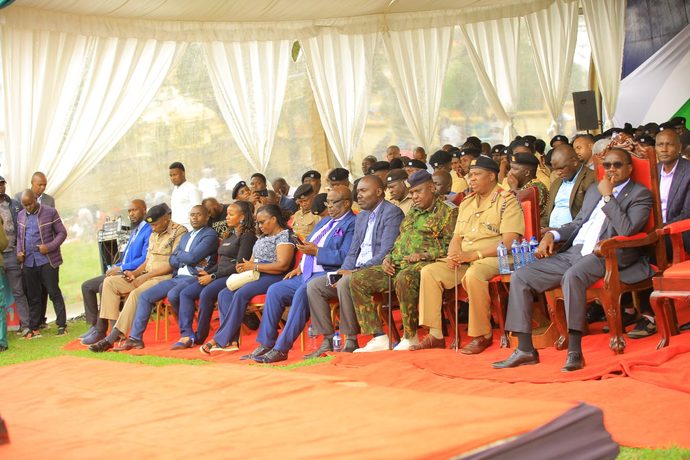
During the September World Cleanup Day celebrations, Ishaku Maitumbi, Head of UN-Habitat for the East and Horn of Africa sub-region, emphasised the importance of effective waste management in building sustainable communities.
“As such, improving the waste management system remains critical to protecting lives, strengthening communities and building cities whose impacts are felt by everyone,” he said.
Beyond infrastructure and recycling, the county has introduced the Kazi Mashinani programme, which engages young people and women in cleaning streets, clearing blocked drainage channels and maintaining public spaces.
According to the county government, the programme engages about 2,000 people every month on a rotational basis, combining environmental conservation with temporary income-generating opportunities for residents.
The initiative is intended to promote community participation in keeping the town clean while providing residents with a source of income through public cleaning activities.
Kisii County has also invested in truck-mounted skip loaders and colour-coded waste bins to improve collection and encourage residents to separate waste at source. The equipment and bins are expected to support more efficient collection and recovery of recyclable materials.