By Josiah Kariuki
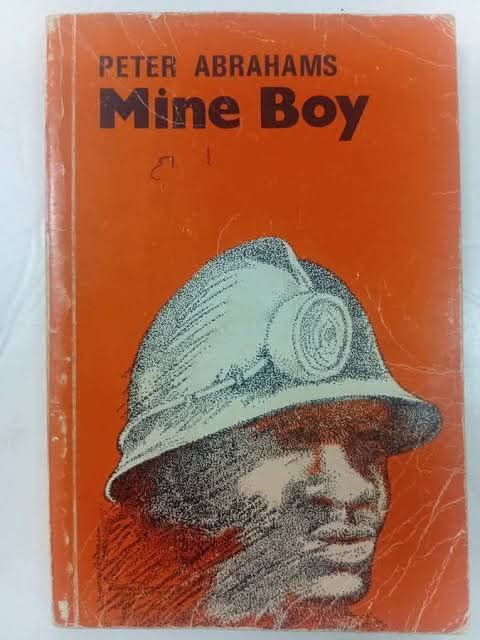
When Xuma arrives in Johannesburg from the countryside, he is looking for work and a better life. Like thousands of other Africans drawn to the city by the promise of employment, he soon discovers that Johannesburg offers opportunity, but on terms dictated by race, class and power. This is the world Peter Abrahams brings to life in Mine Boy, a novel that remains one of the important literary accounts of the African experience under racial segregation in South Africa.
Published in 1946, two years before the formal introduction of apartheid, the novel captures a society in which racial discrimination was already firmly established. Abrahams does not approach this subject through political speeches or lengthy explanations. Instead, he follows ordinary people as they struggle to earn a living, maintain relationships and preserve their dignity in an unequal society.
Also Read
Xuma finds shelter with Leah, a resourceful woman who earns her living selling beer illegally in Malay Camp. She is independent and determined, but her business exposes her to police harassment and the constant possibility of arrest. Through Leah, Xuma begins to understand that survival in Johannesburg requires more than finding employment. It also means negotiating a system in which the law and economic circumstances often work against the poor.
His relationship with Eliza introduces another dimension of racial oppression. Eliza dreams of a life associated with white society, where she believes there is greater comfort, status and opportunity. Her ambitions reveal how deeply racial inequality has influenced people’s perceptions of themselves and others. She is not simply chasing material possessions; she is also responding to a society that repeatedly tells Black people that they are inferior.
Maisy, by contrast, offers Xuma a different experience of affection and belonging. Through these relationships, Abrahams shows how people seek happiness and acceptance while living under conditions that restrict their choices.
The mines and the price of human labour
The gold mines are central to Johannesburg’s prosperity, but they also expose the exploitation behind that wealth. African workers provide the labour on which the industry depends, often working in dangerous conditions while enjoying limited rights and opportunities.
Xuma finds employment in the mines and proves himself a capable worker. His relationship with Paddy, his white supervisor, is particularly significant. Paddy recognises Xuma’s abilities and treats him with respect, demonstrating that friendship and mutual understanding can cross racial boundaries.
However, Abrahams does not suggest that personal goodwill is enough to overcome institutional discrimination. Paddy may respect Xuma, but he remains part of a workplace governed by racial inequalities. Their relationship therefore raises an important question about the difference between treating an individual fairly and challenging a system that treats an entire group unfairly.
The question becomes more urgent following a tunnel collapse that kills fellow miners. The tragedy exposes the dangers workers face and the limited value placed on their lives by those responsible for their safety.
When the workers are expected to return underground despite the danger, Xuma refuses. Paddy supports him, and their stand develops into a confrontation with the authorities. The protest is a turning point in Xuma’s life. He begins to understand that his circumstances are connected to those of other workers, and that their safety cannot depend entirely on the goodwill of supervisors.
For a man who initially came to Johannesburg simply to find work, this is a significant change. He is beginning to see himself as part of a wider struggle for dignity and fair treatment.
A story whose lessons extend beyond apartheid
Abrahams does not give readers an easy victory. The authorities intervene, violence follows and the workers’ protest does not immediately transform their circumstances. This is one of the novel’s strengths. Resistance is presented as necessary, but not without risk or guaranteed success.
The character of Daddy adds to this picture. His history of political awareness and opposition to pass laws suggests the emotional cost of living under prolonged oppression. His experiences offer a reminder that people who appear defeated may have endured struggles that others cannot easily understand.
Xuma, however, emerges from the events with a stronger sense of purpose. Rather than simply disappearing, he decides to face the authorities and speak about what has happened. He cannot be certain that he will receive justice, but he is no longer willing to accept everything as normal.
The novel’s historical setting is particularly important. In August 1946, African mineworkers staged a major strike in South Africa demanding better wages and working conditions. The strike was violently suppressed. Although *Mine Boy* is a work of fiction rather than a direct account of that industrial action, its treatment of mine workers, racial discrimination and collective resistance reflects the tensions of the period.
The book appeared before apartheid became official government policy in 1948, but it exposed many of the injustices that would become more deeply entrenched under the apartheid system. Its international readership helped bring attention to the lives of Black South Africans, whose experiences were often ignored or misrepresented.
For contemporary readers, particularly in Africa, the novel also raises questions about the relationship between economic development and human welfare. The mines generate wealth, but the workers who make that wealth possible remain exposed to dangerous conditions. The contrast is difficult to ignore.
The same questions arise wherever workers are expected to sacrifice their safety for productivity, where institutions value output more than human welfare, or where economic growth fails to improve the lives of ordinary people.
For professionals and those in positions of authority, Xuma’s experience is a reminder that competence must go hand in hand with integrity. Recognising a problem is one thing; having the courage to challenge it is another. Paddy’s support for Xuma also shows that solidarity means more than expressing sympathy. It sometimes requires taking a stand, even when doing so is uncomfortable.
Ultimately, Mine Boy is about a young man whose understanding of the world changes as he encounters its injustices. Xuma arrives in Johannesburg hoping to make a living. His experiences in the city and the mines teach him that individual survival cannot be separated from the welfare of others.
Abrahams leaves him without a guarantee of justice or an easy escape from oppression. What he gains, however, is a clearer understanding of his own dignity and responsibility.
That is what makes Mine Boy worth reading today. It is not merely a historical account of life under racial segregation. It is also a story about work, inequality, human relationships and the difficult choices people face when the conditions around them are unjust.