By GPC Reporter
The Mara River Basin is facing mounting pressure from climate change, deforestation, pollution and rising demand for water, the Lake Victoria Basin Commission (LVBC) has warned.
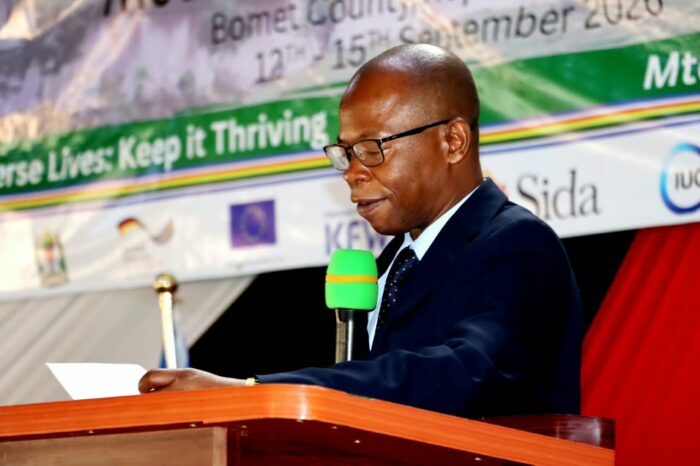
LVBC Executive Secretary Dr Masinde Bwire said the challenges were threatening the ecological health of the transboundary river and the livelihoods of millions of people in Kenya and Tanzania.
Also Read
Speaking during the Mara River Basin Stakeholders Forum in Bomet on Monday, Bwire said the basin covers about 13,750 square kilometres across the two countries and supports more than 1.5 million migratory wildebeest, zebra and gazelle.
It also provides water for millions of people engaged in domestic activities, agriculture, livestock, fisheries and tourism.
“The Mara River contributes about 4.5 per cent of the inflows to Lake Victoria,” Bwire said, citing the 2025 Lake Victoria State of Basin Report.
He said the basin was increasingly affected by erratic rainfall, rising temperatures, land-use changes, agricultural expansion, increased water abstraction and degradation of forests, wetlands and riparian areas.
The report estimates that soil erosion generates about 253,000 tonnes of sediment annually, threatening water quality, aquatic habitats and ecosystem productivity.
Bwire called for stronger cooperation between Kenya and Tanzania to balance water use with the need to maintain the river’s ecological integrity.
He urged stakeholders to tackle pollution, soil erosion and sedimentation while promoting sustainable agricultural and livestock practices and greater community participation in conservation.
“Conservation programmes must not only be designed for communities, but they must also be designed with communities,” he said.
Bwire also called for adequate and predictable financing for conservation initiatives, saying the challenges facing the basin could not be addressed by one institution or country alone.
He said the LVBC would continue supporting cooperation and joint action between Kenya and Tanzania, urging stakeholders to turn discussions into concrete interventions.
This year’s Mara Day theme is “Mara River, Diverse Lives: Keep It Thriving.”