By Prof. Gitile Naituli
President William Ruto may have prepared himself for the wrong political war. For much of Kenya’s post-independence history, presidential contests have followed a remarkably predictable script. Assemble ethnic blocs, negotiate alliances among regional kingpins, mobilise communities through fear or grievance, ridicule opponents, manufacture memorable slogans and then reduce the election to arithmetic: who brings which community, and with how many votes?
William Ruto understands that game exceptionally well. Indeed, much of his political career has been built around mastering its rules. But Nairobi Senator Edwin Sifuna is increasingly introducing a different kind of politics into the national conversation. Rather than allowing every controversy to descend into personality, tribe or political theatre, he repeatedly returns to a more uncomfortable set of questions: What does the Constitution say? What powers does the President actually possess? Where does government authority end? Who is accountable when the State violates the law? And why should citizens tolerate conduct from elected leaders that would be unacceptable under the constitutional order?
Omwami ameleta mchezo tofauti kabisa. And that may explain why some of the conventional political weapons being deployed against him appear strangely ineffective.
You can answer an insult with another insult. You can counter an ethnic mobilisation strategy with a rival ethnic coalition. You can respond to a slogan by manufacturing a better slogan.
But how exactly do you answer Article 10? How do you body-shame Article 73? How do you insult the Bill of Rights? How do you mobilise one community against the constitutional requirement that public authority must be exercised lawfully?
That is the battlefield Sifuna increasingly appears determined to create. The importance of this development extends beyond Sifuna himself. Kenya desperately needs politics to graduate from the endless discussion of personalities into a contest over institutions, constitutional limits and competing ideas about government.
When the Constitution Becomes the Battlefield
The 2010 Constitution was supposed to fundamentally transform our political culture. It deliberately dismantled the idea of an imperial presidency. It distributed power, strengthened independent institutions, entrenched fundamental rights and made public officers accountable to citizens. Yet our political culture has often continued behaving as though the old Constitution never disappeared.
Presidents are still discussed as though they are benevolent rulers dispensing favours rather than temporary custodians exercising delegated authority. Development projects are presented as presidential gifts. Public appointments become political rewards. Taxpayer-funded programmes are branded around politicians. Communities are encouraged to demonstrate loyalty to the government in exchange for development.
This is precisely why constitutional politics can be so disruptive. It changes the fundamental question from, “What has the President given us?” to, “What authority did citizens give the President?” Those are completely different conversations. The first encourages dependency. The second demands accountability.
Ruto’s political genius has historically rested partly in his ability to simplify complicated political contests into emotionally powerful narratives. In 2022, the “hustler versus dynasty” formulation was extraordinarily effective because it transformed a complicated election involving governance, economics, institutions and competing political interests into an easily understood social struggle.
But governing is different from campaigning. Once you occupy State House, you can no longer permanently campaign against “the system”. You are the head of the Executive. You appoint Cabinet Secretaries. You command an enormous government bureaucracy. Your administration collects taxes. Your government borrows money. State security agencies operate under constitutional structures headed by officials appointed through processes in which the Executive plays a significant role. Eventually, therefore, political rhetoric encounters administrative responsibility.
This is where Sifuna’s style of opposition becomes interesting.
He does not necessarily have to prove that every government programme has failed. Nor does he need to argue that Ruto has accomplished absolutely nothing. Such exaggerated arguments are easily defeated.
He merely has to keep asking whether power is being exercised constitutionally, whether citizens are getting value for their taxes, whether public institutions remain independent and whether those entrusted with authority are accountable for their decisions. These questions are far more difficult to escape.
From Ethnic Arithmetic to Citizen Politics
And there is another reason this approach matters. Kenya is changing demographically. A younger generation of voters is increasingly less obedient to traditional political gatekeepers. Many young Kenyans live in cities, interact digitally, belong simultaneously to numerous social networks and confront broadly similar problems regardless of ethnicity: unemployment, taxation, expensive housing, inaccessible healthcare, corruption and the high cost of living.
Telling an unemployed graduate that another community is responsible for his predicament becomes increasingly difficult when his immediate question is why an economy that educated him cannot provide an opportunity for him. Constitutional politics speaks naturally to this emerging constituency because it treats people primarily as citizens rather than ethnic voting units.
None of this means Sifuna is politically invincible. He is a partisan politician, capable of exaggeration, provocation and political calculation like everyone else. His arguments should therefore be interrogated with the same rigour applied to those of the government. Nor should opposition politics become another personality cult. That would defeat the entire point. The real significance of this moment is the possibility that the battlefield itself is changing.
If the 2027 election becomes merely another census of tribes, Kenya will have learnt remarkably little from six decades of independence. But if the contest becomes a serious argument about constitutionalism, economic management, taxation, public debt, institutional independence, police accountability, corruption, employment and the proper limits of presidential authority, then something important will have changed in our democracy.
When the Rules of the Game Change
President Ruto frequently presents himself as one of Kenya’s most accomplished political strategists. His electoral record gives him considerable grounds for that confidence. But even the most experienced player can struggle when the rules of the game change.
The President may have expected another contest of rallies, regional kingpins, political insults, coalition arithmetic and carefully manufactured slogans. Instead, Sifuna keeps placing the Constitution on the table. And suddenly the self-proclaimed political doyen finds himself confronting a far less familiar opponent: not merely another politician seeking power, but questions about power itself.
Omwami has brought a different game. The fascinating question now is whether Kenya’s old political establishment knows how to play it.
Editor’s note: This article was first published on social media.

Sifuna Is Forcing Ruto to Fight on an Unfamiliar Battlefield
Sep 01, 2026 at 07:34 PM
William Ruto understands that game exceptionally well. Indeed, much of his political career has been built around mastering its rules. But Nairobi Senator Edwin Sifuna is increasingly introducing a different kind of politics into the national conversation.

When the Song Becomes Literature: The Poetry We Almost Missed in Dolly Parton
Sep 01, 2026 at 01:07 PM
Dolly Parton was not merely a legendary country music singer and songwriter. She was, in many respects, a consummate poet whose chosen medium happened to be song.

Tusker Backs Prinsloo Sevens with KES 1.5 Million Boost as National Sevens Circuit Kicks Off
Aug 26, 2026 at 08:24 PM
Tusker has injected KES 1.5 million into the 2026 Prinsloo Sevens, reaffirming its commitment to Kenyan rugby ahead of the opening leg of the National Sevens Circuit set for July 25-26 at Nakuru Athletic Club.
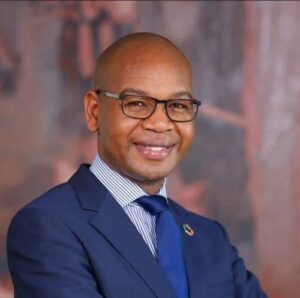
Mutiga Takes Over at Stanbic as Oigara’s Transformation Enters Its Next Phase
Aug 26, 2026 at 01:07 PM
Mutiga will take over on August 1, 2026, subject to regulatory approval, replacing Abraham Ongenge, who has served as Acting Chief Executive since March.

Kamaisi Leads Strong Field as NCBA Limuru Open Tees Off
Jul 16, 2026 at 08:09 PM
By KPC Sports Reporter A stellar field of 96 golfers will converge at Limuru Country Club this weekend for the NCBA Limuru Open & Brackenhurst Trophy, setting the stage for one of the most competitive events on the 2026 Kenya Amateur Golf Championship (KAGC) calendar. The three-day tournament, running from July 17 to 19, has […]

New Heart Machine Brings Hope Closer Home for Cardiac Patients in Western Kenya
Jul 16, 2026 at 08:02 PM
By KPC Reporter For years, a diagnosis requiring open-heart surgery came with a harsh reality for patients in Western Kenya: treatment lay hundreds of kilometres away. Many travelled to Nairobi, Eldoret or the Coast while struggling with severe fatigue, breathlessness and other debilitating symptoms. Some never made it to the operating table, their conditions worsening […]

Media Groups Demand Action as Journalists Attacked During Ol Kalou By-Election
Jul 16, 2026 at 07:53 PM
Attacks on journalists covering the Ol Kalou parliamentary by-election have triggered outrage from media organisations.
Mutiga Takes Over at Stanbic as Oigara’s Transformation Enters Its Next Phase
Jul 16, 2026 at 07:41 PM
By Kurian Musa “Congratulations, Michael. Wishing you wisdom and grace as you step into this new chapter. You join a good house, with great people doing remarkable work, and I have every confidence in what you will build together.” That was the message from Joshua Oigara to Michael Mutiga after Stanbic Bank Kenya appointed the […]
Media Groups Decry Rising Attacks on Journalists, Demand Action on Safety and Pay
Jul 15, 2026 at 02:44 PM
By KPC Reporter Kenya’s media sector has warned of growing threats to press freedom, citing increasing attacks and intimidation targeting journalists across the country. The sector accuses political actors, security agencies and criminal gangs of undermining democratic governance and limiting the public’s access to information. Speaking on behalf of the Kenya Media Sector Working Group […]
Kenya Steps Up AFCON 2027 Connectivity Plans
Jul 15, 2026 at 02:37 PM
By Josiah Kariuki Kenya has intensified preparations for the 2027 Africa Cup of Nations (AFCON), with the government moving to strengthen telecommunications and digital connectivity infrastructure ahead of the continental showpiece. Principal Secretary for Broadcasting and Telecommunications Stephen Motari Isaboke chaired a Joint Steering Committee meeting bringing together mobile network operators and key players in […]