By GPC News Desk
The Media Council of Kenya (MCK) has challenged public communication and information officers to rethink how the government engages citizens as digital platforms reshape how Kenyans access, question and share information.
MCK Chief Executive Officer David Omwoyo said public communicators could no longer rely on traditional channels to get government information to citizens, noting that social media had fundamentally altered the way information moves through society.
Also Read
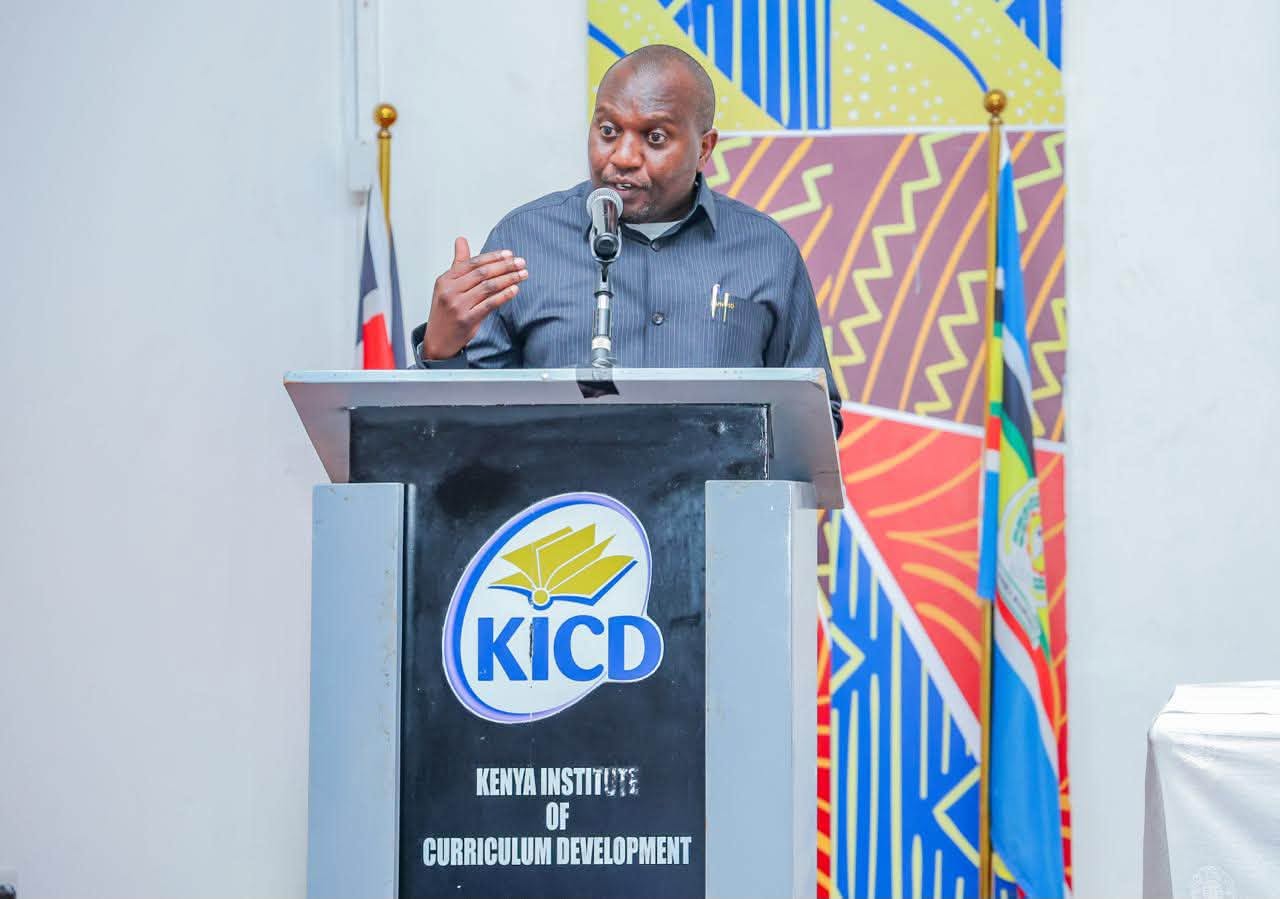
Speaking during a Public Communication and Information Officers’ Sensitisation Forum at the Kenya Institute of Curriculum Development (KICD) on Wednesday, September 16, Omwoyo said public communicators were custodians of government information and had a responsibility to ensure it reaches citizens accurately and on time.
“You are the depositories of government information,” Omwoyo told the officers.
Omwoyo said social media had overtaken traditional platforms as the main source of news for Kenyans, with 39 per cent identifying it as their primary source, compared with 31 per cent for television, 21 per cent for radio, three per cent for online news websites and one per cent for newspapers.
He said the shift had disrupted the conventional flow of information, where government communicated through newsrooms before information eventually reached the public.
“News no longer moves in a straight line. The people found out a way to get the information another way,” he said.
According to Omwoyo, citizens are increasingly forming, sharing and interrogating narratives before government institutions have an opportunity to respond, creating an environment in which misinformation can gain ground.
He urged public communicators to move away from reactive communication and embrace continuous engagement, particularly on digital platforms, while strengthening relationships with journalists to ensure citizens have timely access to verified information.
“Trust cannot be commanded. It has to be earned,” Omwoyo said.
Out-inform misinformation
The MCK chief executive also pointed to inadequate communication budgets as a persistent challenge, saying communication functions require adequate and responsive resources to cope with the demands of the rapidly changing information environment.
He challenged public communicators to recognise that the speed at which information travels digitally has changed the rules of public engagement.
“Government cannot out-shout misinformation. It must out-inform it,” he stressed.

The remarks came as more than 300 government communication officers gathered for the two-day forum, which was convened following the approval of the National Communication Policy 2026.
The forum is intended to familiarise public communication officers with the new policy and related frameworks, while providing a platform to discuss their implementation across Ministries, Departments and Agencies (MDAs).
The National Communication Policy 2026 and an accompanying circular require MDAs to develop communication strategies aligned with the policy and incorporate crisis and risk communication into their operations.
They are also required to establish continuous media engagement frameworks and allocate resources for public communication.
Major government projects will further be required to have communication and risk mitigation plans from the planning stage, placing communication within project planning rather than treating it as an activity to be undertaken after implementation has begun.
Principal Secretary for Broadcasting and Telecommunications Stephen Isaboke, who opened the forum, said the new framework was designed to strengthen coordination, harmonisation and consistency in government communication.
The two-day meeting provides public communication officers with an opportunity to examine how the policy and its accompanying frameworks can be implemented across government institutions as the country’s information environment continues to evolve.
-The original version of this story was published by MCK