By GPC News Desk
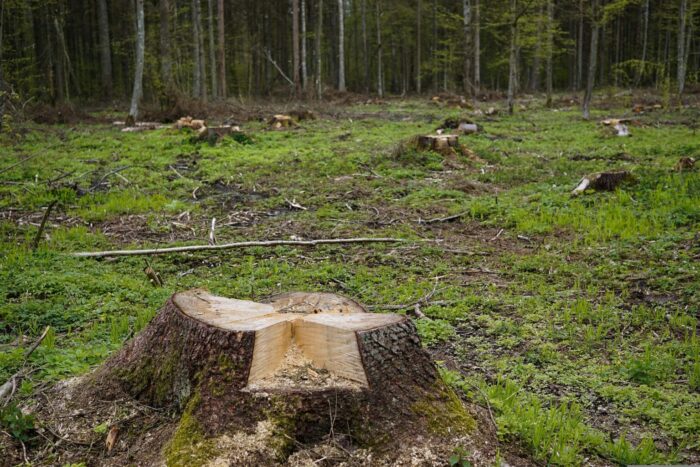
The United Green Movement (UGM) Party has accused President William Ruto’s administration of presiding over widespread destruction of forests and critical ecosystems, despite its public commitment to environmental conservation.
In a statement issued in Nairobi on Thursday, the party claimed the government had compromised Kenya’s water towers and other ecologically sensitive areas through policies it said had encouraged logging and commercial exploitation of forests.
Also Read
UGM also criticised Ruto over his international climate engagements, claiming the President had spent more than Sh1.45 billion on foreign climate-related trips since taking office.
The party contrasted the expenditure with what it described as the administration’s failure to protect Kenya’s forests, despite its launch of a 15-billion-tree growing campaign.
UGM accused the government of allowing extensive logging after the lifting of the logging ban, alleging that some operations were taking place without the required Environmental and Social Impact Assessments (ESIAs) and clear reforestation plans.
“Kenya needs a ‘Green Leap’ economic engine,” the party said, arguing that ecological restoration should be treated as an economic development strategy rather than simply a conservation programme.
The party singled out the Mau Forest Complex, describing it as one of Kenya’s most important water towers, and alleged that logging operations had damaged biodiversity and river catchment areas.
It further claimed that tree harvesting had extended into areas near protected ecosystems, including zones around the Aberdares, while trees along major road corridors linking Nairobi, Nakuru, Eldoret and Kitale had also been cut.
UGM, which is planning to front former Chief Justice David Maraga to run for president said the alleged destruction amounted to violations of constitutional provisions on environmental protection.
The party cited Article 42 of the Constitution, which guarantees the right to a clean and healthy environment, as well as Article 10 on sustainable development and Article 69, which sets out the State’s obligations on environmental conservation and tree cover.
“By treating our environment as a liquid asset to be stripped, the current administration ignores a foundational truth: our environment is Kenya’s baseline macroeconomic infrastructure,” the party said.
UGM also questioned the government’s 15-billion-tree campaign, describing it as inadequate in the face of what it called continued destruction of existing forests.
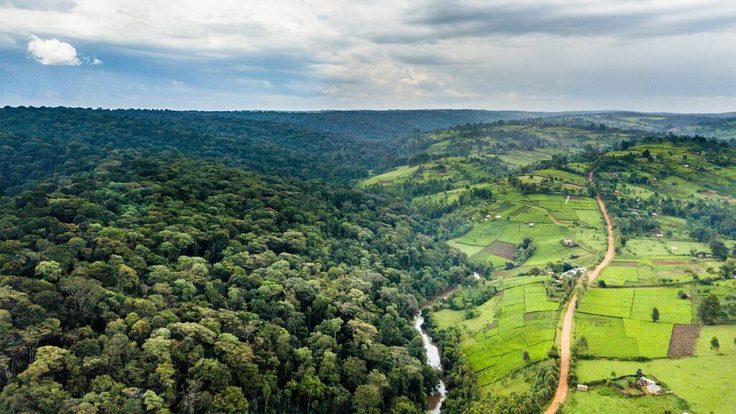
The party said it would instead pursue what it termed a “Green Leap” economic model, placing ecological restoration at the centre of job creation and economic growth.
Under the proposal, UGM said the government would establish a “Green Army” to create employment in seed collection, tree nurseries, reforestation, watershed rehabilitation and ecosystem restoration.
The party also proposed developing regulated carbon and biodiversity financing mechanisms to attract international climate finance while directing more investment to rural communities.
It said sustainable precision agroforestry would be promoted as an alternative to uncontrolled commercial logging, combining food production with structured timber-growing cycles.
UGM further proposed a National Green Bond Sovereign Initiative to finance renewable energy and expand micro-grid systems as part of a broader industrialisation strategy.
The party said the proposed approach would link environmental restoration with employment, clean energy, food security and economic growth.
“We will position our green assets as opposed to relying on volatile foreign debts,” UGM said, outlining its proposed alternative to what it described as the government’s current environmental policies.