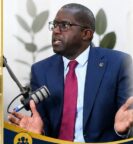
By Ongaga Ongaga
The Law Society of Kenya (LSK) has vowed to defend the country’s constitutional order, warning of rising threats from judicial corruption, political violence, and weakening institutions.
In its inaugural statement for the 2026–2028 Council, led by President Charles Kanjama, the society said it assumes office “at a moment of acute constitutional stress,” pledging to confront threats to justice and democratic governance.
Also Read
“We will defend the constitutional order against all threats, whether arising from corruption, violence, or institutional decay,” Kanjama said.
The LSK raised alarm over corruption within the Judiciary, citing findings that judicial officers received bribes in some service interactions. It warned that such practices undermine the rule of law and public trust.
“Corruption in the Judiciary begets an existential threat to the Constitution itself,” the statement noted, adding that “when justice is rationed by ability to pay, the rule of law becomes commodified.”
The Council called on judges facing serious corruption allegations to step aside during investigations and rejected the practice of transferring officials to cover up incompetence or misconduct.
The society also expressed concern over alleged undue influence in judicial appointments by the Judicial Service Commission (JSC), urging transparency and merit-based selection.
“Merit-based selection is the foundation of judicial independence,” LSK said, warning that compromised processes could erode public confidence in the Judiciary.
On the controversial degazettement of Capitol Hill Police Station infrastructure, the LSK demanded accountability and adherence to the law.
“The rule of law does not contain a carve-out for the powerful,” the Council said, calling for a transparent account of the decision and consequences for any breaches.

The Council strongly condemned recent incidents of violence at political gatherings, including allegations of police complicity.
“Political violence, whether perpetrated by goons or enabled by state actors, is antithetical to the constitutional democracy we fought to build,” the statement said.
It further warned that police officers who fail to act or are used to suppress political activity “betray their oath,” emphasizing that law enforcement must serve the Constitution, not political interests.
The LSK also highlighted growing concerns over the safety of lawyers, citing incidents of abduction and intimidation.
“The safety of advocates is not a professional privilege. It is a constitutional necessity for the functioning of justice,” the Council stated.
With the 2027 General Election approaching, the LSK urged Kenyans to register as voters through the Independent Electoral and Boundaries Commission (IEBC), stressing citizen participation in safeguarding democracy.
“Democracy is not a spectator sport. It requires citizen participation,” the statement said.
The Council outlined plans to enhance accountability, including creating a confidential reporting mechanism for advocates, pursuing strategic litigation, and maintaining public scrutiny of institutions.
“The rule of law is not self-executing. It requires constant vigilance, institutional courage and collective action,” Kanjama said.
The LSK reaffirmed its commitment to defending rights and strengthening institutions, saying it will act “without reservation” to uphold Kenya’s constitutional promise.