By GPC News Desk
Green Congress Party of Kenya leader Hilary Alila has called for transparency and protection of Lamu communities and the environment following the groundbreaking of the proposed Dangote East Africa Petroleum Refinery.
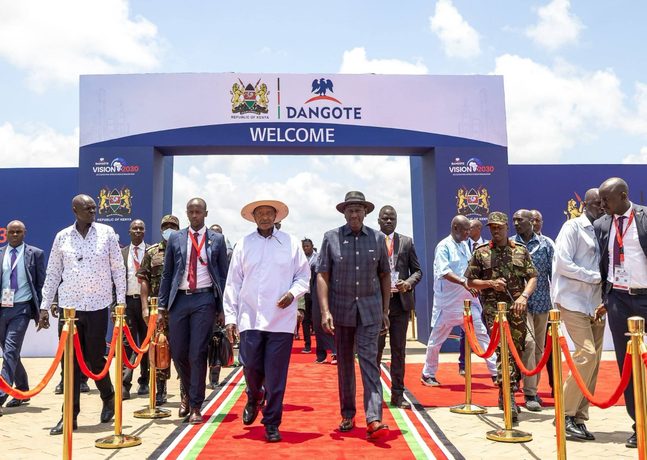
The 700,000-barrel-per-day refinery whose cost is estimated at $16 billion (about Sh2.2 trillion) was officially launched in Lamu on Wednesday, with President William Ruto and several African leaders joining Nigerian industrialist Aliko Dangote for the ceremony.
Also Read
The facility is expected to serve Kenya and the wider East African market by processing crude into petroleum products, reducing the region’s reliance on imported fuel.
In a statement, Alila said the Green Congress Party welcomed the investment because of its potential to create jobs, strengthen energy security and stimulate industries such as fertiliser, chemicals and packaging.
However, he said the scale of the project required strong safeguards to ensure economic development did not undermine the interests of local communities or Lamu’s fragile ecosystem.
“Investment of this size must not come at the expense of Lamu’s people and environment,” Alila said.
He called for the publication of the project’s Environmental and Social Impact Assessment, investment agreement and other key terms to allow members of the public to scrutinise the undertaking.
Alila also demanded meaningful consultation with fishing communities and other residents who could be affected by the development, including fair compensation and protection against displacement or loss of livelihoods.
Lamu is home to extensive mangrove ecosystems, fishing grounds and coral reefs, while Lamu Old Town is recognised as a UNESCO World Heritage Site.
The refinery has also faced legal challenges over land ownership and the rights of residents around the proposed site.
A Kenyan court recently ordered the maintenance of the status quo in a land dispute involving residents claiming interests in the project area, although the ruling did not prevent the groundbreaking ceremony.
On environmental protection, Alila called for enforceable standards covering emissions, effluent discharge, oil-spill preparedness and marine conservation.
He proposed independent monitoring by the National Environment Management Authority (NEMA) and civil society organisations to ensure compliance with environmental requirements.
The GCK leader further urged the project developers to prioritise Kenyans in the recruitment of workers and ensure that Lamu residents benefit from training, employment and supply opportunities.
“The 60,000 jobs promised must go first to Kenyans, with training and opportunities for Lamu youth and local suppliers,” he said.
The government said the wider refinery and petrochemical complex is expected to create more than 60,000 jobs, including skilled positions, while supporting a broader industrial ecosystem around the Coast.
Heavy construction machinery has already arrived at Lamu Port, with about 2,930 tonnes of equipment delivered.
The refinery is expected to take roughly 40 months to complete if the construction schedule proceeds as planned.
Alila also cautioned against allowing the refinery to lock Kenya into long-term dependence on fossil fuels, urging the government to use revenues and industrial growth generated by the project to expand investment in renewable energy.
“Kenya must not lock itself into fossil fuels,” he said, arguing that renewable energy remains an important area of comparative advantage for the country.
He said development and conservation could coexist if the project was implemented transparently and with adequate protections for affected communities and the environment.
“Done right, this project can show that Kenya can grow its economy while protecting its coast, its people and its future,” Alila said.
The Dangote refinery is expected to become one of Africa’s largest refining projects, with a capacity comparable to the company’s flagship refinery in Lagos.
It is intended to supply petroleum products to Kenya and neighbouring countries, while supporting a wider push to process African raw materials within the continent.