By GPCReporter
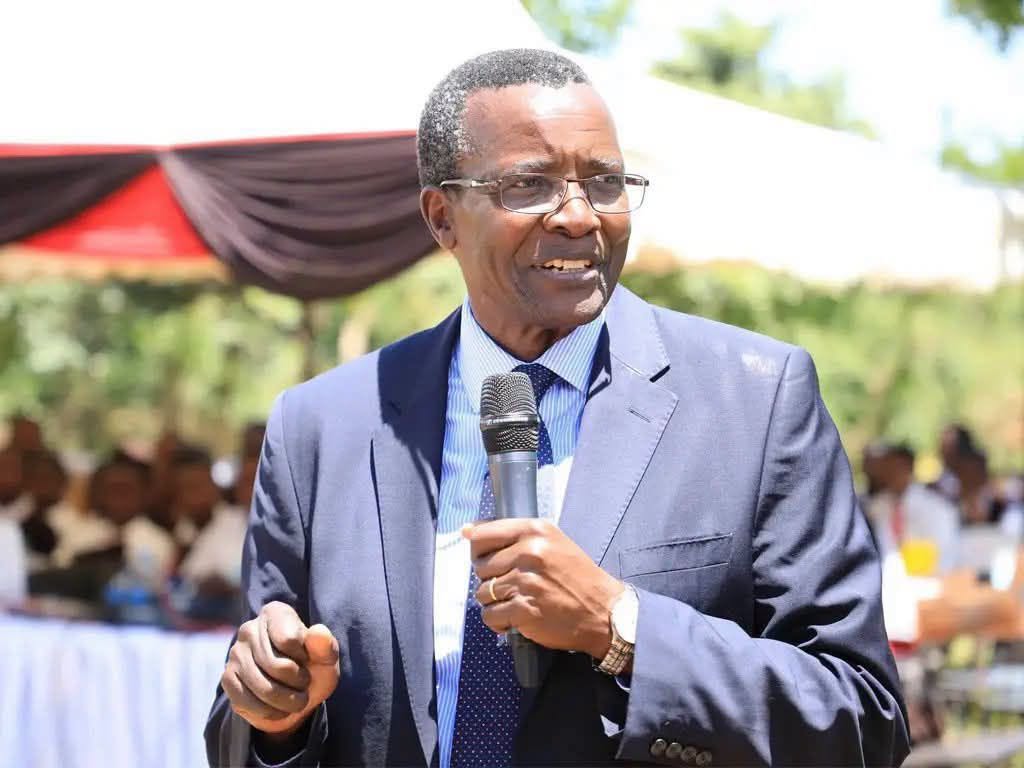
Possible presidential candidate David Maraga has challenged the Independent Electoral and Boundaries Commission (IEBC) to clean up the voters’ register ahead of the 2027 General Election.
Maraga warned that irregularities could undermine public confidence in the outcome.
Also Read
The former Chief Justice said Kenya could not afford to head into the polls with a register containing missing or duplicated names, questionable voter transfers and details of deceased persons.
He maintained that the integrity of the register was central to ensuring that election results reflected the will of the electorate.
“A credible voters’ register is the foundation of a credible election,” Maraga said.
Speaking in Nairobi, Maraga, who co-convenes the People’s Coalition on Electoral Reforms, called for an independent audit of the register to identify and correct anomalies before the election.
The coalition is also pushing for the regular removal of deceased voters and stronger measures to prevent duplicate registrations and unauthorised transfers.
Maraga said voters should have an opportunity to verify their registration details, establish their designated polling stations and raise concerns early enough for the commission to address them.
“The will of the people must be protected from voter registration to the final declaration of results,” he said.
He added: “No Kenyan should be forced to fight to prove that their vote was counted.”
Questions surrounding the accuracy of the voters’ register have featured prominently in previous electoral disputes, particularly over transfers, deceased persons remaining on the roll and the reliability of biometric identification systems.
The IEBC has indicated that the register will undergo an independent forensic audit before being certified for use in the 2027 elections.
However, Maraga insisted that the process must be completed transparently and well ahead of the polls, rather than leaving unresolved concerns to emerge during or after voting.
“We must fix the system before 2027, not after the damage is done,” he said.
His remarks come amid political debate over the integrity of the next General Election, with the Kenya Kwanza administration rejecting suggestions that President William Ruto’s re-election bid would depend on electoral manipulation.
Prime Cabinet Secretary Musalia Mudavadi recently maintained that the President would seek a second term through legitimate votes.
“His Excellency William Ruto will not get victory through shortcuts. He is not looking for shortcuts, so let us not try to invent shortcuts for him,” Mudavadi said.

Government spokesperson Charles Owino has also sought to distance the administration from controversial remarks attributed to a United Democratic Alliance (UDA) official, saying individual statements should not automatically be construed as the official position of either the government or the ruling party.
The controversy followed remarks by UDA Secretary-General Hassan Omar at a political rally in Mombasa that appeared to suggest fingerprints of deceased persons could be used in the biometric voter registration system.
Omar was subsequently summoned before an IEBC disciplinary committee to explain his comments.
He told the commission that he had spoken figuratively to encourage residents of the Coast region to register as voters and participate in the 2027 elections, denying that he had advocated electoral fraud.
“My remarks were a figure of speech,” he said, maintaining that he had no reason to apologise.
IEBC Commissioner Alutalala Mukhwana dismissed suggestions that fingerprints belonging to deceased persons could be used to authenticate voters, explaining that the biometric identification system incorporates several features, including iris recognition.
But Maraga maintained that assurances from the electoral agency alone would not resolve public concerns, insisting on an independent and transparent verification process.
“The register must be independently audited, publicly explained and corrected before Kenyans go to the polls,” he said.