By Josiah Kariuki
President William Ruto began a four-day Gusii tour on Sunday, renewing focus on infrastructure, digital transformation, education, healthcare and economic opportunities in Kisii and Nyamira counties.
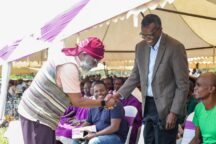
Ruto commenced his engagements with an interdenominational church service at Nyamaiya Stadium in Nyamira County, where he was received by local leaders, religious representatives and residents.
Also Read
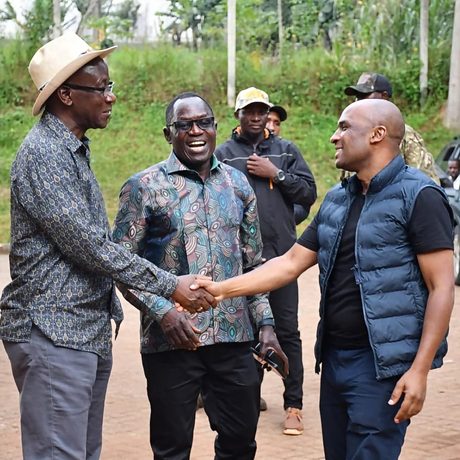
The President was accompanied by Nyamira Governor Amos Nyaribo, Kisii Governor Simba Arati, South Mugirango MP Silvanus Osoro, Nyamira Woman Representative Jerusha Mongina Momanyi and North Mugirango MP Joash Nyamoko, among other elected leaders.
The visit is expected to feature a series of project launches, commissioning ceremonies and inspections targeting roads, education, healthcare, sports and enterprise development.
Among the senior national government officials accompanying the President was Principal Secretary for Broadcasting and Telecommunications Stephen Isaboke, whose department is central to the government’s Digital Superhighway programme.
The first phase of the tour places Nyamira at the centre of the administration’s regional development engagements, with West Mugirango and North Mugirango constituencies featuring prominently in Sunday’s programme.
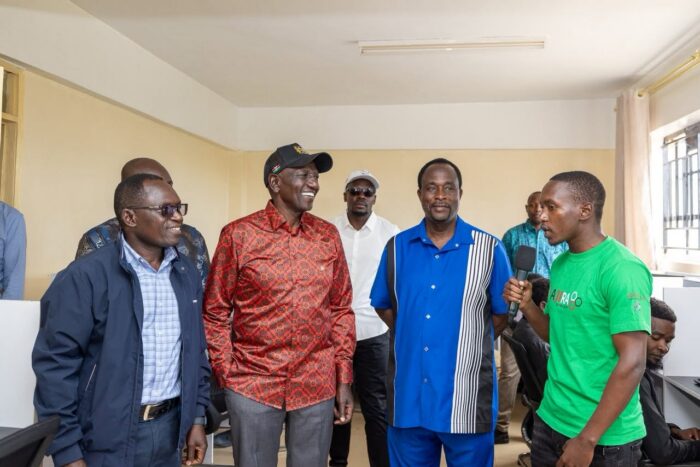
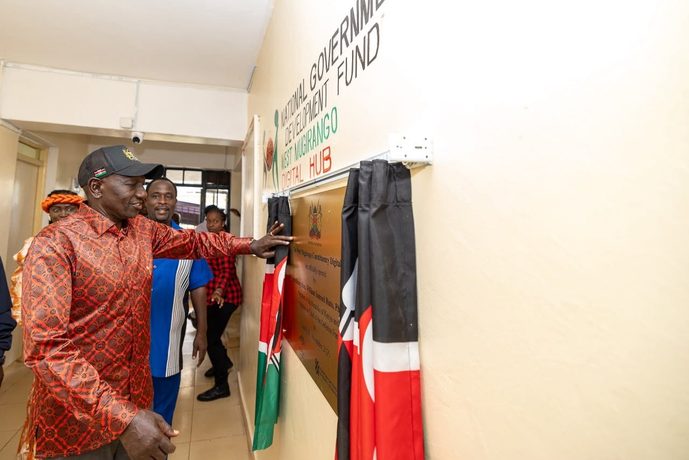
In West Mugirango, Ruto commissioned a constituency digital hub and launched the upgrading of the Bondeni-Magombo Road.
By press time, the President was also expected to proceed to North Mugirango to launch the Tombe-Isinta-Mokomoni Road and preside over the groundbreaking of the proposed Magwagwa Stadium.
The projects are intended to improve transport connectivity, expand access to digital services and create opportunities for young people through sports and skills development.
Digital infrastructure
As the visit gets underway, digital connectivity is emerging as one of the major pillars of the government’s development programme in the Gusii region.
Figures published by the Ministry of Information, Communications and the Digital Economy in April 2026 indicated that Kisii and Nyamira had a combined 140.56 kilometres of installed fibre-optic cable, 28 digital hubs and 32 public Wi-Fi hotspots.
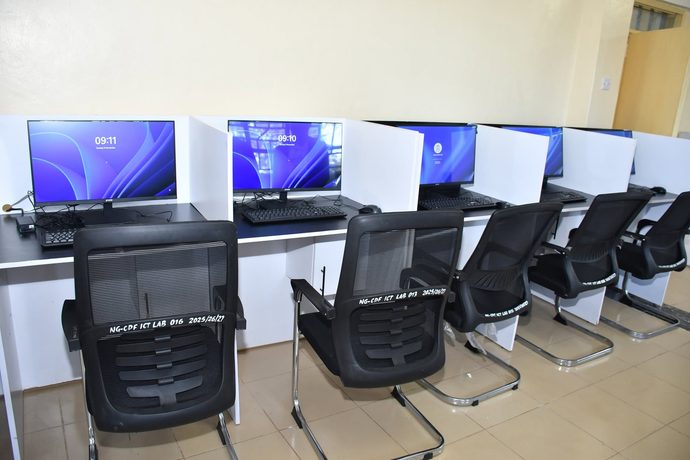
The infrastructure is intended to connect public institutions, improve access to government services and equip young people with digital skills needed to participate in the expanding online economy.
The ministry has identified digital hubs as important centres for training, innovation and access to online employment opportunities.
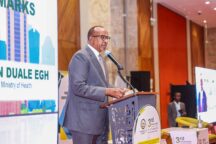
Speaking earlier, Isaboke said several standard digital hubs were at various stages of development across Kisii and Nyamira Counties.
The digital agenda is particularly significant in a region where agriculture, small-scale trade and youth employment remain important economic priorities.
Expanded internet connectivity could enable young people to access remote work, online learning and digital entrepreneurship without having to relocate to major urban centres.
The President’s commissioning of the West Mugirango digital hub is expected to provide an opportunity for the government to demonstrate how its national digital infrastructure investments are being extended to constituency level.
“The centre will expand digital opportunities for young people and entrepreneurs by providing access to online jobs, digital skills, innovation and new business opportunities,” Ruto said.
“The hub will also bring Government services on eCitizen closer to the people.”
West Mugirango MP, Stephen Mogaka welcomed the President, thanking him for actualising various development projects in the constituency, including the hub.
Building development commitments
The latest visit also builds on Ruto’s previous development tour of the Gusii region in April 2026, during which the administration announced and launched several infrastructure and social development projects.
Those engagements included the launch of the Bobaracho-Manyasi-Tinga Road, the commissioning of the Kegogi Economic Stimulus Programme Market and investments in healthcare and education facilities.
The government also initiated a Sh1 billion upgrade of Gusii Stadium in Kisii, a project designed to transform the facility into a modern 14,000-seat sporting arena with a FIFA-standard playing surface.
Kisii Governor Simba Arati welcomed the stadium investment, saying the President had supported the county’s request for the facility’s modernisation.
“We made a request to the President Ruto to improve our Stadium, Gusii. He was gracious enough and gave us KSh.1 billion,” Arati said.
The project is expected to strengthen sporting infrastructure and provide opportunities for local businesses and young people.
Kisii projects on presidential itinerary
The presidential programme is also expected to extend to Kisii County, where the focus will include educational, healthcare and commercial infrastructure.
Projects featuring in the wider development agenda include Kenya Medical Training College (KMTC) facilities at Ibeno and Marani, Ogembo Modern Market and Tongeri Industrial Park, alongside key road infrastructure.
The investments are aimed at improving access to training and healthcare, supporting traders and strengthening local economic activity.
For farmers, improved roads could reduce transportation challenges and make it easier to move agricultural produce to markets.
Modern markets and industrial facilities could also support value addition, enterprise growth and employment.
The four-day tour comes as political activity gathers momentum ahead of the 2027 General Election, giving the President and his allies an opportunity to strengthen engagement with communities in a region that has historically supported opposition presidential candidates.