By Nyang’au Araka
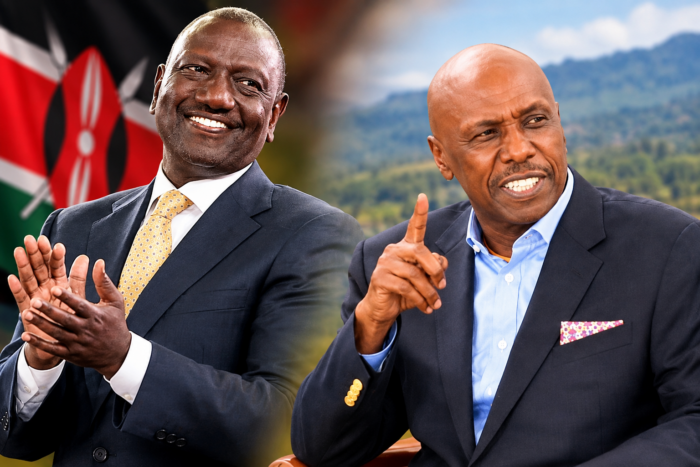
The political question in the North Rift is no longer simply whether Gideon Moi will revive his political ambitions. It is whether his public break with President William Ruto will reshape Kalenjin political loyalties ahead of the 2027 General Election.
Moi’s latest remarks suggest that the October 2025 understanding, presented as a partnership for unity and development, has become a political liability. By apologising to Baringo residents for withdrawing from the senatorial by-election and demanding that Ruto honour their agreement, the KANU chairman is seeking to reclaim ground he surrendered when he stepped aside.
Also Read
“I gave you my best sacrifice. From the bottom of my heart and from a sincere point of view. I apologise to the residents of Baringo County,” Moi said at a meeting with Kalenjin elders and political leaders at his Kabarak home.
His complaint is that he abandoned a potentially competitive Senate race after the President promised to address stalled development projects, including roads and dams. More than a year later, he says he is still waiting.
“Stop the pedestrian talks, sideshows. Fulfil what the agreement was,” he told Ruto.
This is more than a disagreement over development promises. It is a public admission that a political bargain, in which one leader surrendered an electoral opportunity in return for assurances from another, has failed to deliver what he expected.
A costly political sacrifice
The circumstances of Moi’s withdrawal explain why the dispute matters. He had been nominated by KANU to contest the Baringo Senate seat following the death of William Cheptumo in February 2025. But after meeting Ruto at State House on October 9, 2025, he failed to present his nomination papers, clearing the way for UDA candidate Vincent Kiprono Chemitei.
Ruto subsequently confirmed that he had personally persuaded Moi to step aside, describing the arrangement as an effort to unite leaders and allow younger politicians to take up leadership.
At the time, the rapprochement was presented as a significant political development in a region where the two families had competed for influence. Moi had represented Baringo in the Senate from 2013 to 2022, before losing to Cheptumo. In the 2022 election, Cheptumo secured 147,177 votes against Moi’s 71,480.
The former senator therefore had an established electoral base, although there was no guarantee that all those supporters would have backed him in the 2025 by-election. Chemitei eventually won with 56,236 votes, giving UDA the seat.
Moi’s latest apology is an attempt to explain that decision to his supporters and possibly reopen the political space he surrendered. But it also exposes his dilemma: he must convince residents that he remains a credible political alternative without appearing to be driven by personal disappointment over a failed deal.
Ruto is not taking chances in his backyard
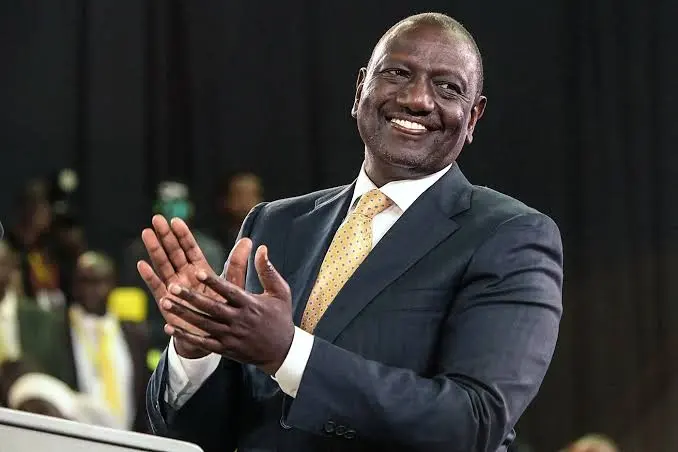
The timing of the fallout is particularly significant. Ruto is already working to consolidate support across the Rift Valley ahead of 2027, a region with considerable electoral weight.
A recent meeting at Eldoret State Lodge brought together more than 5,000 Kalenjin elders and regional leaders, with the President seeking to rally the community behind UDA and his re-election bid.
The gathering reflected an effort to manage internal rivalries while presenting a united political front. However, endorsements by elders do not automatically translate into votes, particularly where local political interests and competing ambitions remain unresolved. <Cite ref=”turn518563search3″/>
Ruto’s broader campaign in the Rift Valley also reflects the importance of the region beyond the Kalenjin voting bloc. He has been visiting counties and appealing for support as he seeks to consolidate his traditional stronghold and make up for political ground lost elsewhere. <Cite ref=”turn518563search7″/>
The public fallout with Gideon therefore presents an unwelcome complication. The President may retain considerable influence through UDA, elected leaders and the machinery of government, but a dispute with a member of the Moi political family carries historical and symbolic significance.
The rivalry is not new. Ruto previously served in KANU before establishing himself as a major political force in the region. His rise gradually displaced the old political order associated with the late President Daniel arap Moi. The 2025 handshake appeared to offer a way of reconciling those competing histories. Its collapse brings the underlying contest for influence back into view.
Can Gideon rebuild a political base?
For Gideon, the immediate opportunity lies in presenting himself as a leader who stood up for Baringo’s development interests but was let down by a political partner. His apology could resonate among residents who believe the county lost an opportunity when he withdrew from the race.
However, his challenge is substantial. He must translate frustration over the unfulfilled commitments into an organised political movement capable of competing with UDA’s established networks. KANU’s historical name recognition and the Moi family’s political legacy may offer him an entry point, but neither guarantees electoral success.
There are also questions about how much room he has to manoeuvre within the wider opposition. Reports have suggested that he could align with the United Opposition, although his next political move remains uncertain. Former KANU secretary-general Nick Salat has publicly urged him to maintain cooperation with Ruto, arguing that political decisions should serve the interests of the Kalenjin community and the country. <Cite ref=”turn518563search1″/>
The dispute has also moved beyond development promises. Moi has raised concerns about alleged provocations against his family, including a property dispute near Eldoret and the treatment of a staff member. He has also rejected claims that the Standard Group’s coverage of the administration is an extension of his personal political interests. These grievances could deepen the rift, but they also risk shifting attention from the development commitments that initially formed the basis of his withdrawal.
A test of regional political loyalty
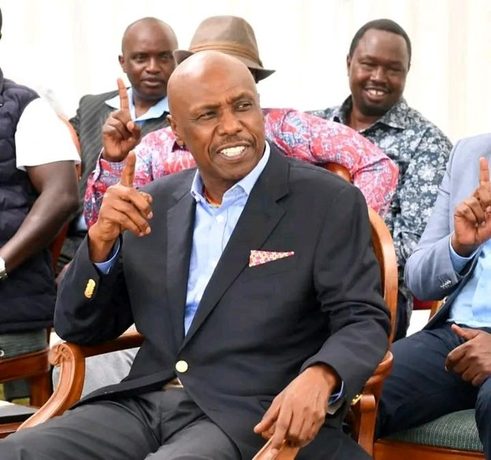
The most important question is whether the disagreement will divide the Kalenjin political establishment or remain a contest between two influential families.
Ruto has the advantage of incumbency, government visibility and a strong UDA political network. Gideon, meanwhile, has the Moi name, KANU’s historical identity and an opportunity to mobilise those who feel that the 2025 political arrangement disadvantaged Baringo.
Yet the Kalenjin electorate is not a single political constituency that can be directed by a handful of leaders. Different communities, counties and local political interests have their own priorities. Even the large gathering of elders in Eldoret cannot, by itself, settle how voters will behave in 2027.
The President’s response to Gideon’s accusations will also matter. A public confrontation could strengthen the perception of a broken partnership, while a negotiated settlement might contain the political damage. But any renewed understanding would have to address the credibility problem created by the first one.
Ultimately, Gideon Moi has put Ruto on notice that political cooperation cannot be sustained by public declarations of unity alone. The President, in turn, must decide whether to accommodate a potentially influential rival or risk turning a manageable disagreement into a wider contest for regional loyalty.
For the North Rift, the 2027 election could therefore become more than a referendum on Ruto’s performance. It may also test whether the region’s political future will remain centred on one dominant leader or accommodate competing centres of influence. The handshake has unravelled; the real contest is now over who can command the confidence of the electorate.
-Mr Araka is a member of the Gusii Press Club Editors’ Desk.