By Josiah Kariuki
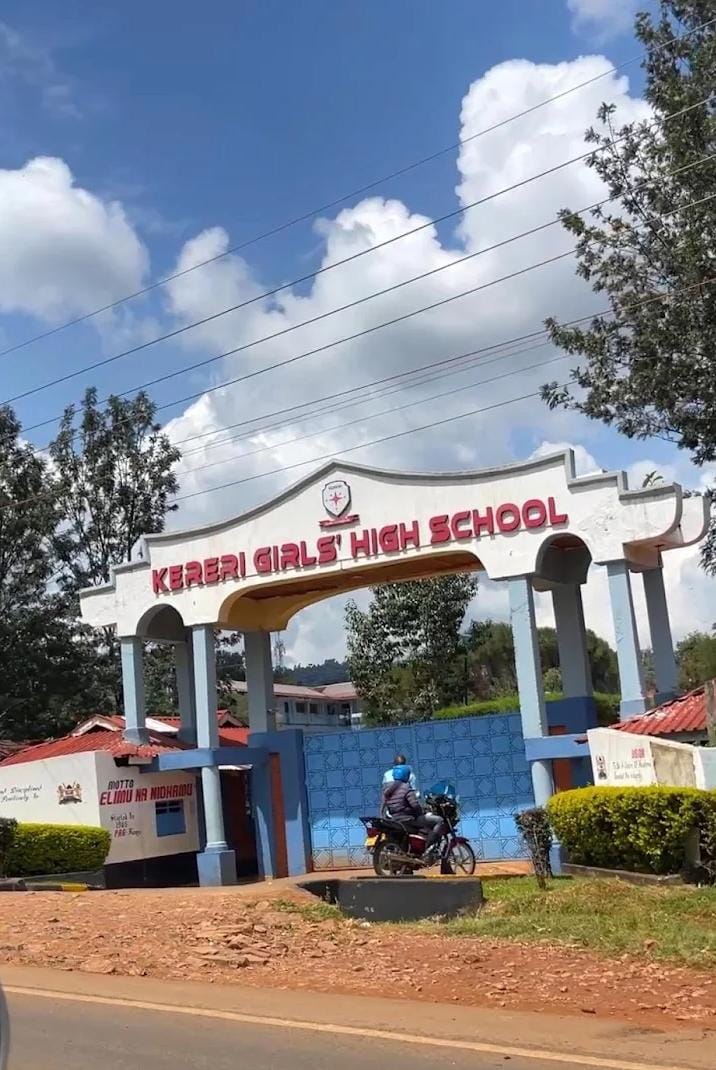
My first visit to Kereri Girls’ Senior School in Kisii County left me with a good impression. I found a school with a rich history, welcoming teachers and cheerful students.
The warmth with which I was received made the visit memorable and reminded me that, beyond buildings and examination results, a school is about the people who give it life.
Also Read
Established in 1965, Kereri Girls opened its doors at a time when many girls faced cultural and social barriers to education.
Its establishment was an important step towards expanding opportunities for young women.
Nearly six decades later, the school’s journey reflects the efforts of successive principals, teachers, parents, alumni and other stakeholders who have contributed to its growth.
Today, the school has approximately 2,900 students, 53 classrooms and four science laboratories.
Its academic achievements and alumni speak to the opportunities that girls can pursue when they have access to education and the support they need to succeed.
Under the leadership of Chief Principal Amb. Dr Tabitha Mogonchi, DHL, HSC, Kereri Girls is also adapting to changes in Kenya’s education system as it transitions to senior school under the Competency-Based Curriculum (CBC).
This transition presents an opportunity to build on the school’s achievements while preparing learners for a world in which technology and digital skills are increasingly important.
One area that deserves attention is ICT.
Digital literacy is no longer an optional extra in education. It is increasingly necessary for further studies, employment, entrepreneurship and participation in a technology-driven economy.
Girls must have the same opportunity as their peers to acquire these skills and explore careers in science, technology and innovation.
Kereri Girls has three ICT laboratories, but two lack computers and essential accessories despite having the necessary infrastructure.
With more than 300 students taking Computer Studies, equipping these facilities would improve access to practical lessons and give more learners an opportunity to develop their digital skills.
The school already has a foundation on which to build. What is needed is investment in equipment, networking facilities and other resources to make the laboratories fully functional.
Such support would also complement the Government’s Digital Superhighway agenda and its wider push to expand digital access.
This is an area where the government, school management, alumni, development partners and the private sector can work together.
Supporting the leaarners
Equipping the laboratories would be a practical way of supporting learners and helping the school respond to changing educational needs.
My visit reinforced the importance of preserving the past while preparing for the future.
Kereri Girls has a proud history, a dedicated school community and students whose ambitions deserve every opportunity to flourish.
I left with an appreciation of what the school has achieved and the people who make it what it is. The friendliness of the teachers and the smiles of the students were as memorable as the institution’s history.
With continued investment in teaching, facilities and digital learning, Kereri Girls can build on its achievements and prepare its students for the opportunities and demands ahead.
Investing in girls’ education is an investment in the future of our communities and our country. Ensuring that girls have access to the tools and skills they need is one way of making that investment count.