By Ongaga Ongaga
Principals have been warned against making unauthorised payments to the Kenya Secondary Schools Heads Association (KESSHA) and the Catholic Principals Schools Association (CAPSA).
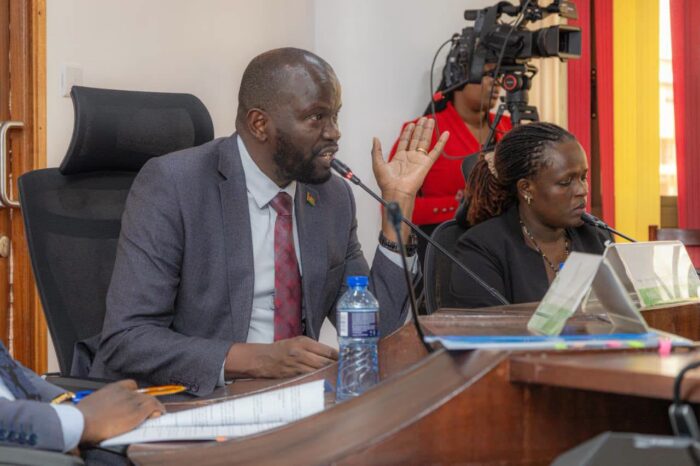
The National Assembly’s Public Investments Committee on Governance and Education said such transfers require approval from the Ministry of Education, warning that principals risk personal surcharges for non-compliance.
Also Read
The committee said principals risk personal surcharges for payments to the associations, which the Auditor-General has questioned because they lack an established government funding framework.
The warning followed scrutiny of Auditor-General’s reports for the 2020/2021 to 2024/2025 financial years involving Meru School, St Mary’s Girls High School-Igoji, Chogoria Girls High School and Ikuu Boys High School.
At the centre of the inquiry was St Mary’s Girls High School-Igoji Chief Principal Florence Mutwiri, whose school transferred Sh992,950 to KESSHA and CAPSA.
The audit report said the auditor could not confirm whether the expenditure represented value for money, citing the absence of an established funding framework and assurances on effective financial management and internal controls.
Bomachoge Chache MP Alpha Miruka questioned the legal basis for the transfers, insisting that school funds were public money that could only be spent for authorised purposes.
“How and why are you transferring money to KESSHA and CAPSA? Under which vote and under which law?” Miruka asked.
He warned that principals could be held personally liable for unauthorised expenditure.
“If you transfer this money to another account, you will be held responsible as an individual and will pay from your own pocket,” he said.
Committee vice-chairperson and Kasipul MP Boyd Were said CAPSA payments would be treated like those made to KESSHA when the committee engages the Ministry of Education.
“Where you transfer any amount to KESSHA or CAPSA, you risk being surcharged as an individual,” Were warned.
Mutwiri told the committee that CAPSA contributions financed activities for Catholic-sponsored schools in Meru and Tharaka Nithi counties, including training for teacher chaplains, principals, boards of management chairpersons and student leaders.
She said the association also organised retreats for principals and leadership programmes for students, arguing that pooling resources enabled schools to undertake activities they might struggle to finance individually.
However, Narok County Woman Representative Rebecca Tonkei challenged her to identify the law authorising the payments.
“What rules or law did you use to transfer this money to CAPSA? This is the first time I am hearing about it,” Tonkei said.
Mutwiri acknowledged that the arrangement was not anchored in a specific law.
“I will explain without quoting the law because it is not law,” she told the committee.