By GPC News Desk
The Council of Governors (CoG) has questioned the neutrality of the Commission on Revenue Allocation (CRA), accusing it of favouring the National Treasury.
The governors raised concerns after both institutions recommended the same shareable revenue allocation for counties in the 2027/2028 financial year.
Also Read
The CRA has recommended Sh440.8 billion in shareable revenue for the 47 counties, alongside an additional Sh10 billion for the Equalisation Fund targeting marginalised areas.
However, governors have criticised the commission for allegedly failing to incorporate their proposals, warning that the recommended allocation does not adequately address the rising cost of delivering devolved services.
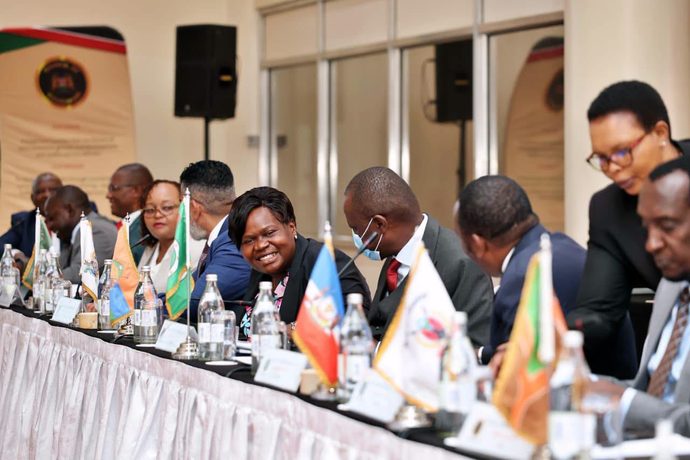
The concerns emerged on Wednesday during an engagement on the vertical sharing of revenue, where it was revealed that the CRA had met the National Assembly and the Senate before engaging governors, despite the counties being key stakeholders in the allocation process.
The governors argued that the commission should have consulted them first to gain a clearer understanding of their expenditure obligations and funding requirements before presenting its recommendations to Parliament.
During the meeting, CRA chairperson was pressed to explain why the commission’s proposed allocation of Sh440.8 billion matched the National Treasury’s recommendation despite concerns raised by county governments.
The CoG maintains that the previous financial year’s allocation of Sh428 billion should increase by at least Sh100 billion to cater for inflation, rising operational costs and salary adjustments affecting county employees.
In its proposals, the council outlined several areas it wants the CRA to consider when determining the allocation for the next financial year.
First, the governors want Sh8.6 billion allocated to meet the salaries of Universal Health Coverage staff who have been absorbed by county governments and issued with permanent and pensionable appointment letters.
They are also seeking an additional Sh2 billion to implement collective bargaining agreements for health workers, including allowances, arguing that the funding is necessary to avert industrial action, particularly during the electioneering period.
The council has further demanded Sh21 billion to cater for salary increases for county employees recommended by the Salaries and Remuneration Commission (SRC).
The governors have described the proposed funding as non-negotiable, warning that failure to provide the resources could create financial difficulties for county governments.
Both the CRA and the CoG have also raised concerns about the SRC’s approach to salary adjustments, accusing the commission of making decisions without adequate consultation with the affected institutions.
Another major issue is the financing of functions transferred to counties without the corresponding resources.
The CoG says Sh65.97 billion is required to finance unbundled functions that, according to a Council of Governors Summit resolution, were transferred to county governments while the associated funds remained with national government ministries.
The governors complained that the matter had become a prolonged dispute, with some ministries retaining the funds while maintaining that the functions had already been devolved.
The council is also seeking Sh10 billion for all 47 counties to meet transitional costs associated with the approaching electioneering period.
In addition, the CRA has factored in a five per cent increase in revenue collection projections. The governors have attached an estimated Sh30 billion to the resulting adjustments in revenue costs, arguing that the projected changes must be adequately reflected in the allocation framework.
In its defence, the CRA said revenue collection projections frequently fall short of targets, forcing revisions to the figures.
The commission argued that its recommendations must take account of actual revenue performance rather than relying solely on projected collections.
The CoG, however, maintained that counties could not continue bearing the consequences of revenue shortfalls and funding decisions without adequate consideration of their financial obligations.
The dispute highlights growing tensions over the determination of resources available to county governments, with governors insisting that the next revenue-sharing formula must reflect the actual cost of devolved functions and the financial pressures facing counties.
The CRA’s recommendations will inform the process of determining how nationally raised revenue is shared between the national and county governments for the 2027/2028 financial year.